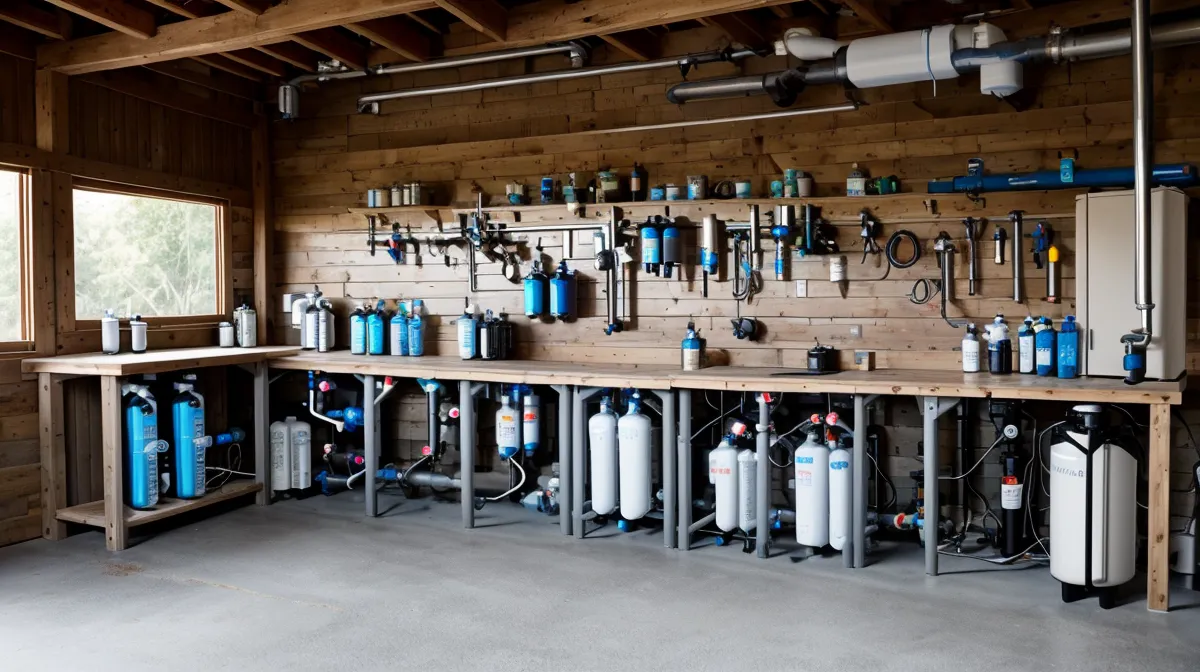
When the tap goes quiet and the only backup is a garage full of mismatched jugs, you learn what you actually reach for first. That question sat with me for a long stretch after Hurricane Beryl knocked our water out for four days, because having emergency water stored is not the same as having a working plan for turning questionable water into something a kid will actually drink. I had the storage side handled. The filtration side was a mess of expensive gear I was almost afraid to use for the dirty jobs, which is an awkward place to be when suburban preparedness is supposed to be your whole thing.
Update (September 2026): Aqua Tower is no longer available for purchase; this article is kept for reference. Our current alternative pick in this category is Water Freedom System.
Before I get into the plumbing, here's the disclosure: this is a water filtration review, and the site runs on affiliate links — if you buy through one, I earn a commission at no extra cost to you. I only recommend gear I've actually run water through myself, usually while my spouse hovers in the kitchen doorway asking when exactly the car gets its spot back. I'm not a water engineer or a survivalist, just an IT support guy who takes failover plans seriously, and the full transparency policy is available elsewhere on the site.
The Budget Water Filter Meets the IT Troubleshooting Mindset
In IT support we talk constantly about redundancy — never trust a single point of failure, always have a fallback that doesn't depend on whatever just broke. My first answer to Beryl, before any of this testing started, was stacking five cases of bottled water from Costco, and that lasted less than two days before we were right back to hauling water from wherever we could find it. So when I already owned a David's Shield unit — a genuinely solid piece of kit for heavy contaminants, just pricier than I wanted my backup to be — I picked up a Dark Reset for around forty bucks to see whether a budget unit could hold its own as the thing you grab when the primary system is tied up. At that price, the cost per gallon filtered is almost a rounding error, which matters when you're budgeting gear for a family instead of just yourself. It's also the difference between a portable, grab-it-and-go filter and the wall of bulk-stored jugs that never leaves the garage. Two different jobs people tend to lump into one category.
My troubleshooting instinct kicked in the moment it arrived. I spent a solid forty-five minutes convinced the unit was defective and leaking, before I realized I'd installed the O-ring upside down, the water-filter equivalent of jamming a USB-C cable into a slot it was never going to fit. Simple gear still punishes you for skipping the manual when the power's out and you're rushing. For a deeper technical side-by-side, I already covered this in David's Shield vs Dark Reset: Which Emergency Filter Is Reliable?, so I won't repeat all of it here.
Running 56 Gallons Through the Dark Reset
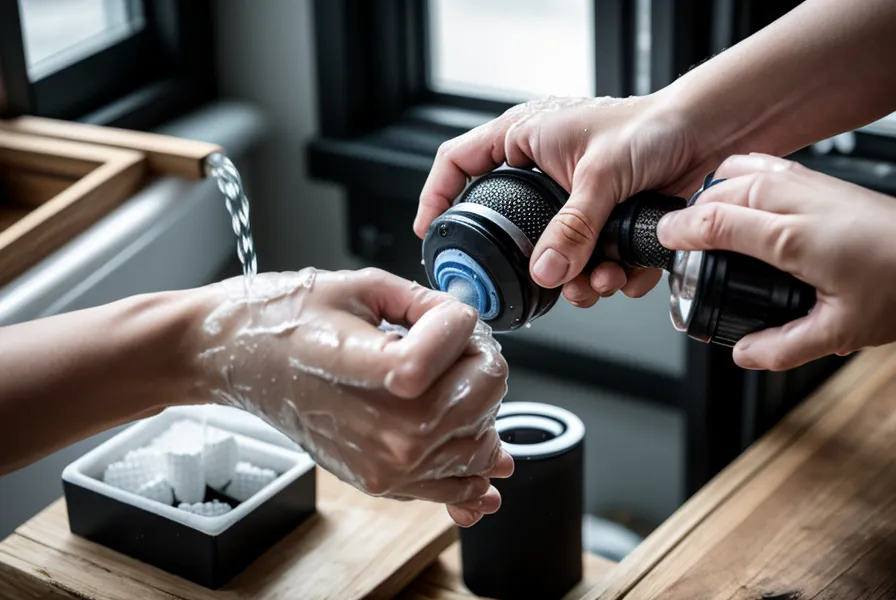
By the second week of testing I was deep into it. FEMA's baseline is one gallon per person per day, and for my household that works out to 56 gallons over two weeks — I won't rehash the full math since I've broken that down elsewhere on the site. I ran that exact volume through the Dark Reset to see how it handled real use instead of a single test pour.
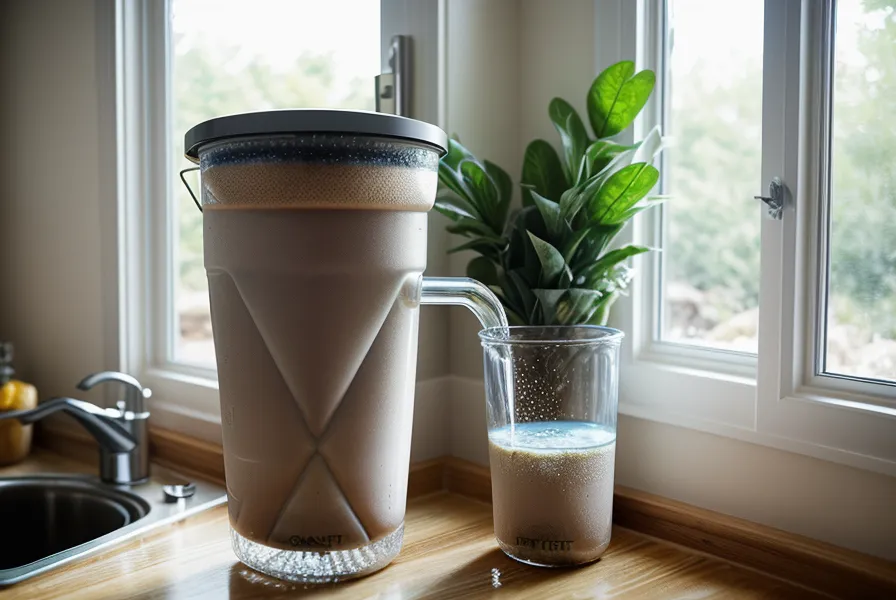
My spouse walked in while I was hauling water from the guest bathtub to the kitchen counter and asked, flatly, whether the house had officially become a hydro-lab or if the sink was still available for brushing teeth. Fair question — the counter looked like a chemistry set for most of that week. To push the unit harder, I mixed sediment into some of the batches to see how it handled turbidity, the cloudiness that kills cheap filters faster than almost anything else. Mel Okonkwo, my neighbor and my most reliable extra pair of hands for these tests, took one look at the sediment water and said it looked like something out of a horror movie — Mel's the one keeping a running mental scorecard of every piece of prep gear that's died on us across the last few Houston storms, so a filter has to actually perform to get his approval.
The gravity feed itself made a steady, rhythmic sound the whole time it worked through a batch, and I clocked the flow at a bit over a liter a minute — slow enough that you plan around it, fast enough to keep a pitcher full without babysitting it. I'll leave the deeper flow-rate breakdowns to the article where I actually compare gravity units side by side. What stuck with me was somewhere around week five of running the thing daily: I held a glass of the treated batch up to the bare garage bulb and could see my hand clearly through it on the other side, no haze, no floaters left over from the sediment tests. Good enough for a forty-dollar backup unit.
Comparing Dark Reset to the Heavy Hitters
I've written a full breakdown on the troubleshooting guide to emergency water purification methods. Purification and filtration solve different problems, and mixing them up is one of the more common mistakes I see people make when they're panic-shopping during a storm warning. I usually lean toward modular systems for that reason, but the Dark Reset is built as one integrated unit meant for fast deployment, and that changes the comparison.
My David's Shield unit is the more capable filter on paper, but it demanded more scrubbing every time I ran high-sediment water through it, as the ceramic elements clog and need real maintenance. The Dark Reset, with its simpler internal pathing, just kept moving water without complaint. It's the difference between an enterprise server that needs a climate-controlled room and a ruggedized laptop you can throw in a bag. Sometimes you want the thing that works in the dirt, not the thing that works best in ideal conditions. Neither of these has the shelf-life problem that chemical treatment options carry, by the way. Tablets and drops degrade sitting in a cabinet in a way a mechanical filter simply doesn't.
I had one of those uncomfortable realizations that evening: if a forty-dollar piece of plastic performs anywhere close to my two-hundred-dollar ceramic setup for basic backup duty, I owe my spouse an honest conversation about our prep budget. Integrated units simply deploy faster. When the power's out and everyone's stressed, you don't want to be hunting for the right hose clamp; you want to pour water in the top and get clean water out the bottom.
Suburban Backup Options Compared (2026 Data)
Once you line up capacity, footprint, and price side by side, the differences get easier to see. I go deeper on storage capacity planning across these exact units in another piece, and on the Aqua Tower's vertical footprint specifically in a separate one, so consider this the summary version.
| Product | Price Point | Primary Strength | Best For |
|---|---|---|---|
| Dark Reset | ~$40 | Simple Setup | Budget "Failover" Backup |
| SmartWaterBox | ~$43 | Space Efficiency | Closet Storage |
| Aqua Tower | ~$47 | Verticality | Small Garage Footprints |
| David's Shield | ~$67 | Heavy Filtration | Long-term Contaminants |
Dark Reset as Your Ultimate Backup
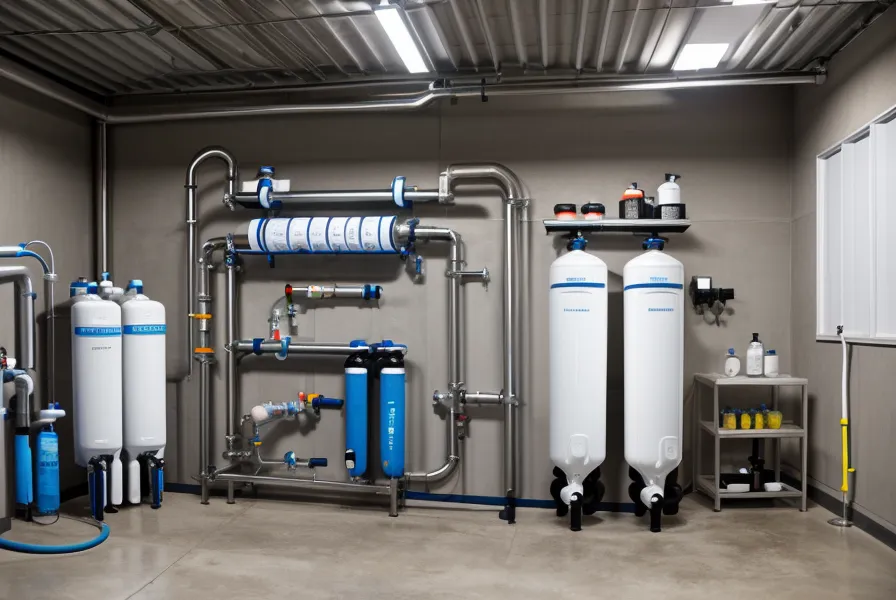
By week five and a half, the Dark Reset had pushed through the full 56 gallons without another hiccup, once the O-ring saga was behind me. The SmartWaterBox still wins on sheer volume — I covered that in 30 Days with the SmartWaterBox — but the Dark Reset wins on simplicity. It's the filter that lives in the hall closet for when your main storage runs dry.
Sandra Kwan, a neighbor who found my prep notes on the local neighborhood app, messaged me asking which of these four she should actually buy as a cheap backup for a family of four. I gave her the same answer I'm giving you, plus two things that have nothing to do with the filter itself: rotate stored water on a real schedule instead of assuming it keeps forever, and clean your containers between fills instead of just topping them off. True to form, she reported back afterward on what she actually bought versus what she'd originally planned, which is more follow-through than most people manage.
For a suburban family, the best backup isn't the most tactical option; it's the one simple enough for a teenager to operate when you're busy boarding up windows and the power's already out. It doesn't have the bells and whistles of a full reverse osmosis setup, and it doesn't need to. I have zero medical training and I'm not a doctor, so check your local water quality reports and talk to an actual professional if you're worried about specific contaminants like heavy metals or industrial runoff in your area.
If you need a primary system, look at something with more capacity like the SmartWaterBox first. But as the secondary unit, the one redundant filter you keep specifically because the primary system might be busy, broken, or just not built for this kind of abuse, the Dark Reset earned its spot in my closet. It passed the garage test. Just remember the O-ring goes flat side down; I've already burned the forty-five minutes so you don't have to.