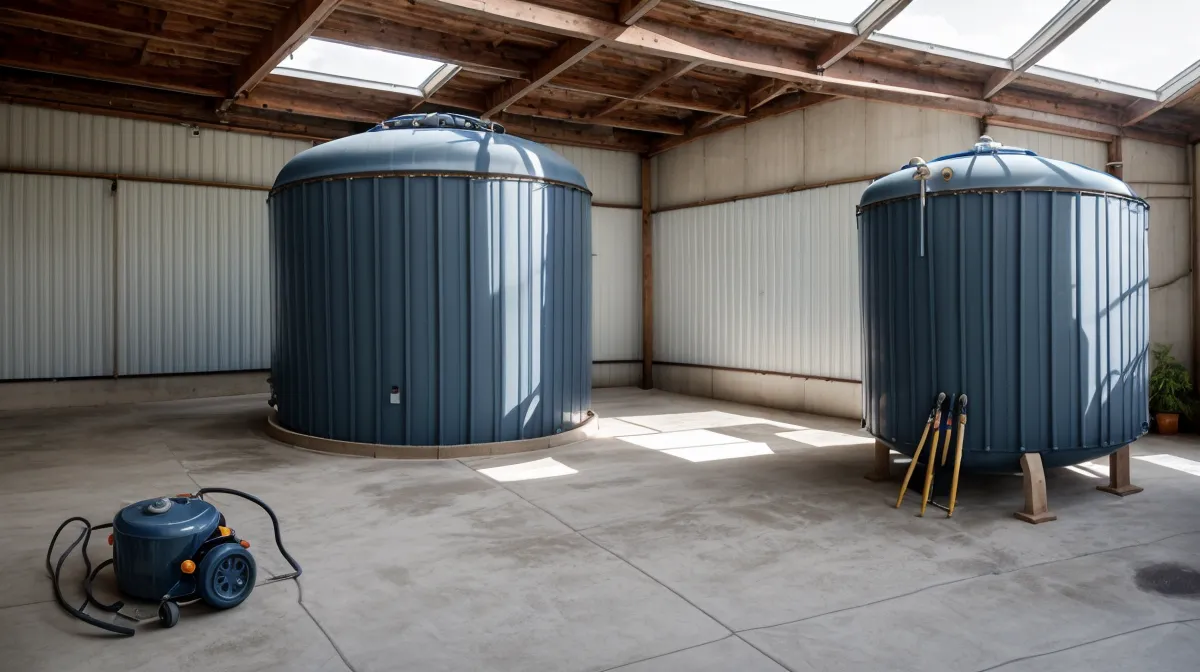
How many gallons of water could your household actually reach right now, no car, no store run, no truck showing up to save the day? For a couple of years my honest answer was a guess based on a leaning stack of plastic bottles in the garage (the kind of guess that feels responsible until you actually test it). Water storage sounds simple until you plan for it as real emergency prep, and if you live anywhere near Houston, where the taps have a habit of going quiet for reasons that have nothing to do with the weather forecast, that gap between guessing and knowing is where the trouble starts. What changed for me wasn't one dramatic event but running the actual arithmetic and admitting my home infrastructure for something as basic as drinking water didn't add up to a real number.
Update (September 2026): Aqua Tower is no longer available for purchase; this article is kept for reference. Our current alternative pick in this category is Water Freedom System.
Quick note before this goes any further: a few of the links below are affiliate links, and I earn a small commission if you buy through them, at no extra cost to you. Every product mentioned here has actually sat in my garage and been filled, drained, or occasionally cursed at. Nobody pays me to say nice things, so when something disappointed me, you'll hear that too.
The Bottle Myth That Doesn't Hold Up for Real Emergency Prep
The idea that a corner full of bottled water cases counts as a real plan is the myth I want to take apart, because it's the one I believed the longest. Bottles feel like preparedness — they're visible, they stack, they look like effort. But each bottle is its own tiny point of failure: its own seal, its own plastic that can go stale, its own chance of getting knocked over or forgotten in a closet nobody checks. In my day job doing IT support, I spend a lot of time explaining why one unsynced file on somebody's desktop isn't a backup. A garage full of individual bottles is the same mistake, just repeated fifty times over instead of once.
None of that means bottled water is useless — it's fine for a weekend, and it's what most people reach for first. Problems show up when a short outage turns into a long one and the math nobody did finally catches up with them. The standard minimum water recommendation lands around a gallon per person per day, and once you fold in WHO guidance that accounts for hygiene and cooking, not just drinking, the number climbs fast enough that a few cases from the store stop looking like a plan and start looking like a rounding error.
What Actually Happens When You Do the Math?
Once I ran my own household's number, real emergency water supply stopped being abstract. It's not about counting bottles anymore, it's about counting gallons, and those are very different exercises, closer to the difference between counting emails in an inbox and knowing how much storage space you actually have left. A neighbor named Sandra messaged me after finding some notes I'd posted on our neighborhood app, asking if she could copy my spreadsheet. We ended up spending an afternoon in her garage running her family of four through the same math, and her first guess for daily use came in almost double what four people actually need. That's the myth in miniature: the mistake isn't being unprepared, it's trusting a guess that was never tested against a real number.
Building a System That Doesn't Depend on the Store
Getting past bottles meant getting one centralized system instead of a scattered pile, which is how I ended up giving up a chunk of garage floor space that used to be nobody's problem. I ordered the SmartWaterBox once grocery runs stopped feeling like something I could count on, and it's built for one job: sitting in one spot, staying full, and not asking much of me beyond an occasional check-in — though sizing the right capacity in the first place turned out to be its own planning question, separate from which brand you eventually land on.
Water is heavier than most people plan for once you're storing it by the tank instead of the case, and figuring out where that weight could safely sit took some real thought before I filled anything. My testing space is a two-car garage west of Houston that's slowly turned into a year-round water lab — a pegboard of hose fittings and spare filter cartridges on one wall, rows of labeled containers along another, and a utility sink I keep just for fill and flush tests. I didn't get the intake valve right on the first attempt either. I spent a stretch trying to prime the pump, convinced something was broken, before realizing the valve was turned a quarter-turn wrong, the exact feeling of troubleshooting a dead connection only to find the cable was never plugged in.
This doesn't solve apartment living, and I'd rather say that outright than pretend a hundred-gallon tank is a universal answer. Large storage systems are frequently out of reach in a high-rise, whether it's a lease restriction or simply not having the floor space, and that's a real constraint, not an excuse to skip planning. For smaller households or anyone without a garage, something more compact like the Dark Reset makes more sense, and I go deeper into those trade-offs in The Houston Backup: My Garage-Based Quest for the Ultimate Family Water System. Countertop gravity filters are a different route still, and once you're filtering enough for more than a person or two, their flow rate becomes the actual bottleneck — worth its own comparison rather than a footnote here. There's also a real ceiling on how far a portable setup scales: something built for a backpack or a car kit is genuinely useful, but it stops functioning as a household solution somewhere around the second or third person you're covering, and pretending otherwise is how people end up under-prepared.
Layers, Not a Single Tank
A tank full of water isn't automatically safe water, and treating storage and treatment as the same step is its own small myth worth correcting. Before I settled into a routine that worked, I tried pool-shock purification tablets expecting a fast fix, and the instructions wanted a full twenty-four hours before the water was supposedly safe to drink, useless on a day when the entire point was having something ready by dinner. These days I lean on Best Emergency Water Purification Drops for Long Term Potable Storage instead, mostly because they've held up in storage far longer than the tablets ever did. Filtration and purification are not interchangeable either — one clears out particles and organisms, the other neutralizes what's dissolved in the water, and mixing up which problem you actually have is an easy way to spend money solving the wrong one.
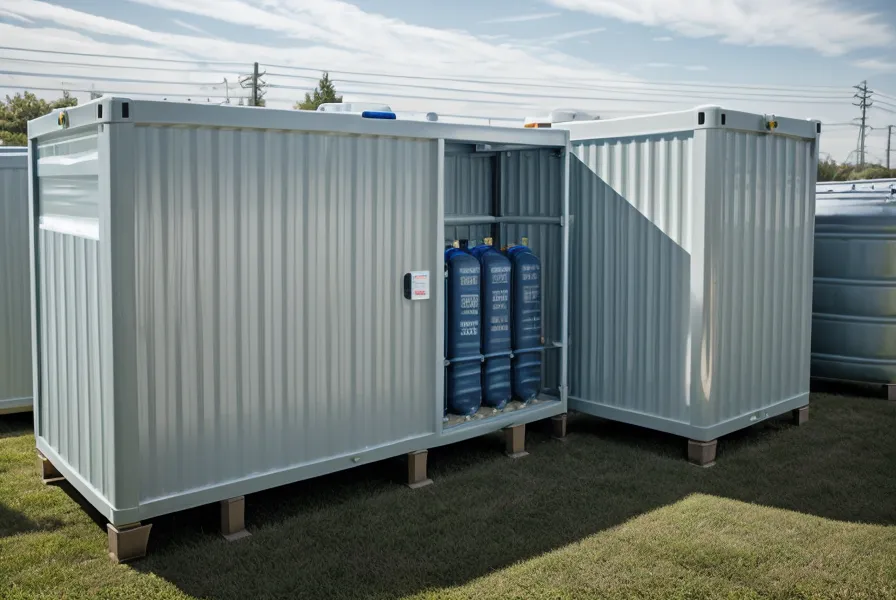
For a secondary source I keep an Aqua Tower around, which trades some of the SmartWaterBox's bulk for a taller, narrower footprint, a real trade-off if floor space is the constraint you're actually solving for, not just an alternate brand. When the municipal supply itself is the questionable part, still flowing but not something I'd trust straight out of the tap, I run it through a David's Shield filter before it ever reaches storage. My neighbor Mel, who fixes HVAC systems for a living, wandered over during one of these setups and started talking about water pressure with the same intensity I usually reserve for router throughput, something that coming from him was oddly reassuring.
Storage containers matter just as much as the tank itself, which is an easy detail to overlook when you're focused on total capacity. Long-term containers need to be BPA-free and shielded from UV, or the plastic itself becomes part of what's in the water. Cleaning one properly before it goes back into rotation is its own process I'll point you toward elsewhere rather than shortcut here.
The Actual Rule
Rotating stored water is on my never-skip list too, treated as maintenance rather than an afterthought — the same way I'd never skip patching software just because nothing looks broken yet. How often to cycle water out before it sits too long depends on your setup more than people expect, and it's genuinely its own question rather than a one-line answer. What I will say plainly is the rule that actually replaces the bottle myth: measure your storage in gallons your household can reach without leaving the property, not in cases or bottles or how full the garage looks. If you can't say that gallon number out loud, you don't have a real plan, you have a guess wearing a plan's clothes.
Preparedness that actually holds up doesn't look dramatic but rather looks like a number you already know and a system that doesn't depend on a store shelf being stocked. If a leaning tower of bottles is still the whole plan in your garage, running the real math is the place to start, and something like the SmartWaterBox is a reasonable place to land once you know the number you're actually solving for. My spouse still thinks the whole setup is a bit much, right up until the tap goes quiet for reasons that have nothing to do with the evening news, and then somehow nobody's arguing about the garage space anymore.