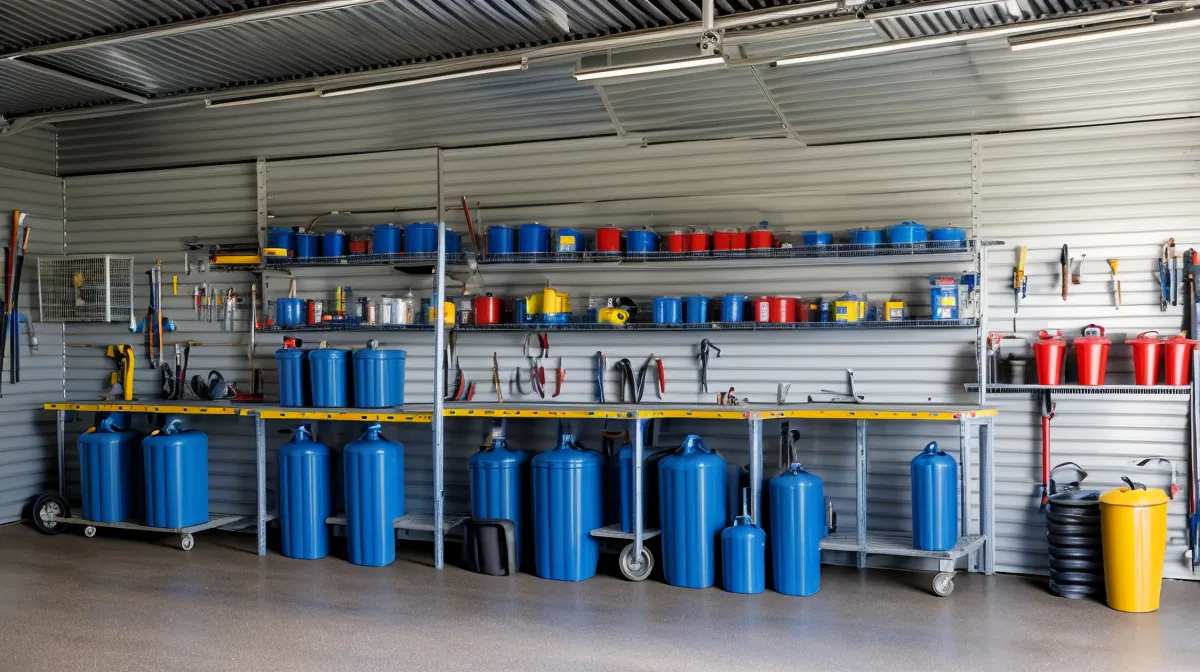
A hard drive you never back up and a water jug you never check are the same problem wearing different clothes. I've spent my career in IT troubleshooting exactly that kind of complacency, and it still took a run of bad storm seasons to make me apply the lesson to my own garage. Somewhere between forty unlabeled jugs and a spouse who'd started calling our garage "the warehouse," it became obvious that emergency preparedness treated like a shopping list — buy the gear, feel better, move on — is barely different from a water storage plan with no inventory management behind it: something that only works if somebody's actually watching the shelf life.
Hurricane Beryl is what kicked off the habit — four days without water taught our house that lesson fast. Once the power and the taps came back, I did what plenty of people do and just kept buying containers: some legitimate stackable jugs, some old juice bottles I'd rinsed out, which in retrospect was not my finest engineering decision. The federal guidance most people quote is a gallon per person per day as a bare minimum, and that number's worth knowing, though the real math behind how much a given household needs is its own calculation I'd rather point you toward than redo here. What nobody tells you is that having enough gallons doesn't mean much if you can't tell which ones are still good.
The Home Organization Problem Nobody Budgets For
My neighbor turns his garage into a furniture shop most weekends — sawhorses out, sanding dust everywhere, a side table drying by Sunday afternoon. Mine had turned into something closer to a server closet nobody had cleaned out in years: plenty of hardware, zero labeling, no way to tell what was current from what had been sitting since the last hurricane season. That comparison is what convinced me the fix wasn't more water. It was a system, the same way a messy closet doesn't need more shirts. It needs hangers and a rule for what goes where.
Water that just sits still for months at a time starts developing a taste and a smell you don't want anywhere near your kitchen, and there's a whole separate conversation about exactly how often you should be cycling stored water through a Houston summer that deserves its own post rather than a paragraph here. For now, just know that the FIFO habit (first in, first out, straight out of the warehouse world) solves both problems: it keeps the water moving and keeps you honest about what's actually in the queue.
Reading the Bottom of a Water Jug
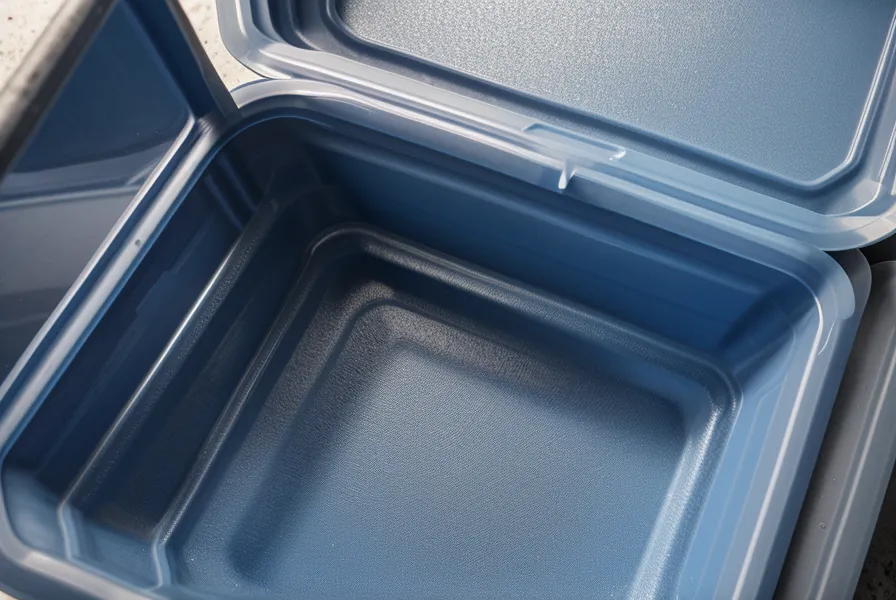
Not every footer-a116d1 deserves shelf space. Flip a jug over and look for a small triangle with the number 2 inside it — that's the high-density polyethylene marking, and it's the food-grade plastic that holds up over time instead of cracking or tainting the water with a plastic aftertaste. I moved away from thin gallon jugs and rinsed-out juice containers early on, replacing them with stackable 5-gallon containers and a couple of 55-gallon drums for bulk.
Those drums come with a catch worth knowing before you buy one: full, a 55-gallon drum runs somewhere around 480 pounds, and once it's filled, that's its permanent address until you pump it back out. I found that out wrestling a drum bung closed on a humid morning, wrench slipping off the fitting twice before it finally caught (no injuries, just muttering and a change of shirt). Keep those drums away from the gas cans and the mower, too. Plastic can pick up fumes over time, which is one more reason I don't store water anywhere near my tools.
Building a Rotation You'll Actually Maintain
Hardware without a workflow is just clutter with a purpose, so I went looking for the simplest tracking method that wouldn't require a spreadsheet nobody opens. Color-coded zip ties turned out to be the answer: green means filled within the last six months, yellow means it's approaching the one-year mark, red means use it now and refill it today. My spouse doesn't have to ask whether a jug is from last year anymore. She just looks at the handle. If you're still relying on a shelf of individual bottles and want the broader case for why that approach falls apart, there's a longer piece on the reality of storing water in a suburban garage worth reading before you scale up.
The other half of any rotation is sanitation, and folding it into the same cycle is what actually makes the whole thing stick: every footer-a116d1 gets cleaned and re-sanitized the moment it's emptied and slotted back into the queue, rather than sitting on a mental to-do list you'll ignore for a year. I'm not going to walk through the whole cleaning process here since there's a dedicated guide to cleaning plastic water storage containers that already covers it properly.
What Happens When the Filter Can't Keep Up?
Some of the gear in my garage earned its spot through failure, not success. I ran water through a gravity filter one weekend just to test it and watched the thing take about forty-five minutes to produce a single gallon. Fine for a slow Sunday, useless if you've got a family of four and an actual countdown running. Gravity filters as a category have wildly different flow rates depending on the model, and that comparison deserves its own deep dive rather than a detour here.
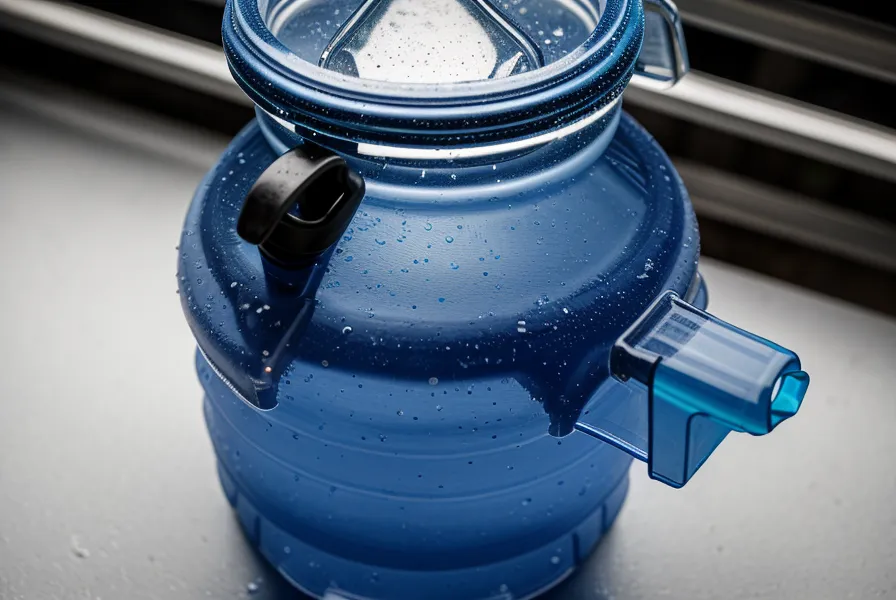
What that slow filter did teach me was how to judge the water itself. I remember holding the glass carafe up toward the light coming through the garage door and being able to see my hand clearly through the water on the other side, which told me the filtration was doing exactly what it should even while the clock kept crawling. Filtration and purification get treated like synonyms constantly, and they're not solving the same problem. That distinction is worth a full explanation somewhere else rather than a footnote here. Whatever chemical treatment you keep as backup — bleach, tablets, drops — has a shelf life of its own too, which is a separate rabbit hole from today's topic.
Ten Weeks of Autopilot, and a Leak I Almost Missed
By week ten of running the color-tie system, swapping tags and topping off containers had become as routine as clearing out the fridge before grocery day. Then, during a full dry-run of pulling stored water for a day of actual cooking and cleaning, I noticed a thin wet line on the concrete under one of the stackable containers: a hairline crack that would have quietly drained five gallons onto the floor if that jug had never come up in rotation.
Catching it only happened because the footer-a116d1 was moving through the system instead of sitting untouched for years, which is really the point of any rotation schedule: it turns storage into a process you check, not a purchase you forget about. How much total capacity a household actually needs, and whether that's better solved with a few tall units or a wall of small ones, is its own calculation depending on your garage's footprint. Vertical space efficiency matters more than most people expect once you start stacking drums and jugs. None of this replaces having something portable for the car in case you have to leave the house entirely, which is a different problem with a different answer. If you're still figuring out which containers fit your own space, I'd point you toward the comparison of garage water systems I put together after testing a stack of them myself.
The One Thing I'd Tell Any Neighbor Starting From Zero
Some mornings the light comes through the garage door in stripes and lands right across the row of labeled lids, which is a small, oddly satisfying confirmation that everything's where it's supposed to be. That's really the whole lesson, if there's one worth keeping: the goal was never to own the most water. It's to own a system simple enough that you'll actually maintain it a year from now, and honest enough that someone other than you can read it at a glance.
Buy two 5-gallon containers, write the fill date on them with a marker, and put them on a shelf. You can scale the rest up once that basic habit is running on its own. My spouse stopped rolling her eyes at the garage a while back, mostly because she's the one who taught our kids to check the zip-tie colors before anyone else remembered to.