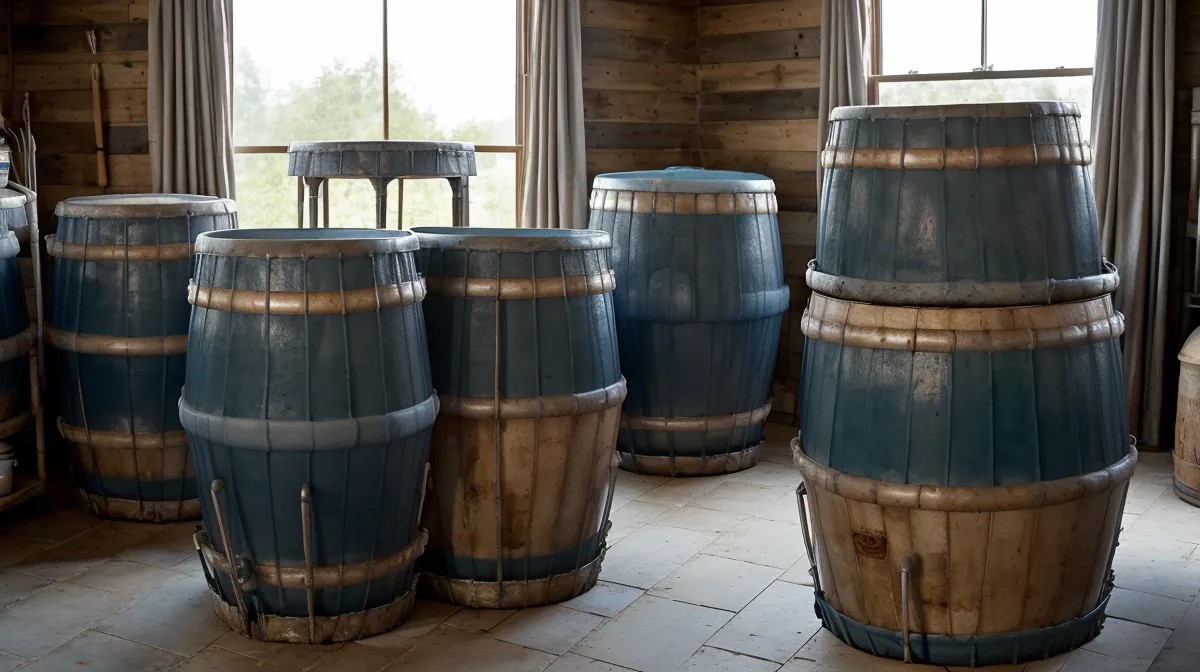
I crack the lid on a footer-a116d1 that's been sitting untouched in the corner for six months, and there's nothing to smell — no plastic edge, no mustiness, just a faint cool note like it came straight out of a cold tap. That's the real test for whether a water storage setup is working, not just staring at a barrel and hoping for the best. A garage in a Houston suburb turns into a slow-cook oven for most of the year, and if you're storing water in one without a plan for heat, light, and rotation, you're not doing water storage; you're running an algae farm with a lid on it.
People ask me some version of the same handful of questions once they see the containers lined up against my wall, so I'll just answer them straight instead of dressing this up as one long story. Algae prevention in a biofilm-friendly environment like a garage really comes down to five or six decisions, and most of them have nothing to do with the water itself.
Why Does Algae Even Grow in a Sealed Container?
Water sitting in a translucent footer-a116d1 isn't sealed off from the outside world the way people assume. Blue HDPE barrels look opaque from a few feet away, but enough light gets through the plastic to trigger photosynthesis if a garage window or an open bay door lets sun hit the drum for part of the day. Algae doesn't need much — a sliver of light and a little warmth are enough to get a colony going, and once a biofilm starts forming on the inside wall of a container, scrubbing it back out is a much bigger job than preventing it in the first place.
How Much Water Do You Actually Need to Store?
The gallon-per-person-per-day math is really its own conversation — I broke down how to size a starter supply in my 72 Hours of Water for $100: A Suburban Guide to Not Panic-Buying at the Grocery Store piece — but once you have that number, garage storage is just about scaling it up past the first few days. A portable filter or purifier solves a different problem than bulk storage does; it keeps you moving, not a household supplied with drinking water for weeks, so don't let one substitute for the other.
Keeping the Concrete Floor From Working Against You
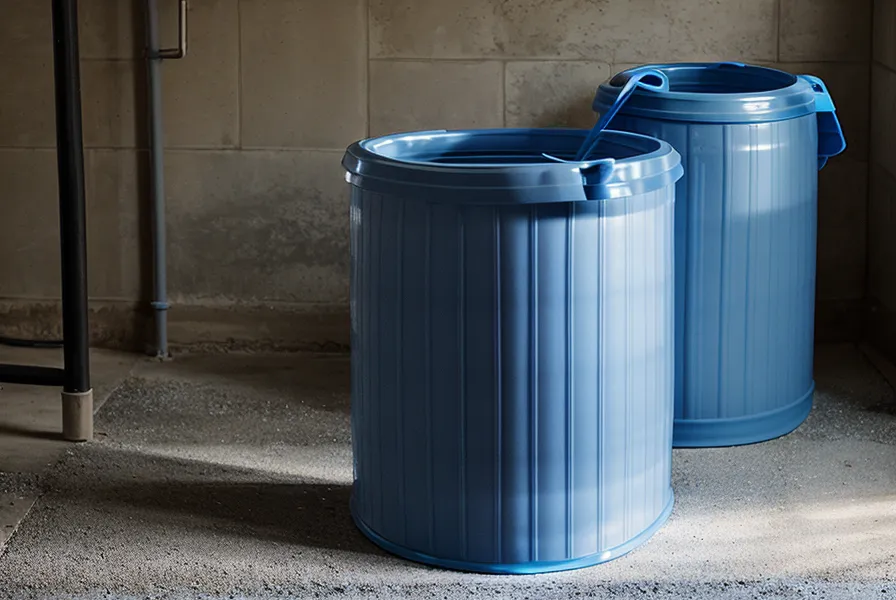
Concrete acts like a heat sink and holds onto ground warmth long after the air around it starts to cool. Set a footer-a116d1 directly on a garage floor and it's absorbing that heat around the clock, which does bacteria and algae a favor neither of us wants. Getting containers up on wooden pallets creates a small air gap, and in my own side-by-side tests that gap alone brought the internal water temperature down a few degrees compared to containers sitting flat on the slab. Covering the setup with old moving blankets does double duty — it smooths out temperature swings between day and night, and more importantly, it blocks whatever light manages to sneak through a window or a bay door left open too long. I still notice the hose bib give its little metallic click when I shut it off after a slow fill, and that sound has become the unofficial signal that one more footer-a116d1 is ready to go into rotation.

Sanitizing the Container Comes Before Anything Else
Skipping this step undoes everything else on this list. None of the pallets, blankets, or light-blocking effort matters if a footer-a116d1 was dirty when it got filled — algae and biofilm need almost nothing to get started, and a dirty footer-a116d1 hands them a head start that no amount of good storage habits afterward can undo. Sanitizing a new or reused footer-a116d1 before its first fill is really a process worth its own full write-up rather than a paragraph here, but the short version holds up: wash it out, sanitize the interior, then rinse until there's no trace of cleaner left in the smell or the taste. That last rinse is the step people skip when they're in a hurry, and it's usually the one that comes back to bite them.
How Often Should You Replace Stored Tap Water?
Six months is the number I go by. Tap water stored in a clean, food-grade footer-a116d1 is considered reliable for about that long before it should be drained, the footer-a116d1 re-sanitized, and the whole thing refilled and dated again. That's the entire rotation schedule — there isn't a more advanced version of it. Write a date somewhere on the footer-a116d1 with a marker or a strip of tape, and when that date rolls around, open it up and check it the way I did with the one in my corner: smell first, since anything off will announce itself immediately, then look for cloudiness or a film along the inside wall. Clean means use it or refill and reset the clock. Anything else means drain it, start the sanitizing process over, and don't put it back into rotation until it passes both checks.
Purification, Filtration, and a Gravity Filter That Failed Under Pressure
Purification and filtration get treated like synonyms, and they're not the same job — mixing up which one a given situation actually calls for is a common mistake, though sorting out the difference properly deserves a separate breakdown rather than a detour here. Chemical treatment options carry their own shelf-life quirks worth knowing before you count on a bottle of drops sitting in a cabinet for years, and that's another topic that needs more room than I can give it in passing.
Flow rate is where I got burned. I ran a batch of stored water through a gravity filter to see how it would hold up if I actually needed water fast, and it came out to something like 45 minutes per gallon. That's fine on a slow weekend afternoon with nowhere to be. It's not fine if you've got a household standing around waiting on drinking water right now, and that test changed how I think about gravity filters — they're a backup for when you have time to spare, not a solution for pressure.
Picking Between Drums, Totes, and Vertical Systems
Not everyone has floor space for a wall of barrels, and matching total storage capacity against a household's daily need is a calculation worth running before buying anything — I got into some of that math when I compared the SmartWaterBox against a vertical stackable tank for anyone working with a tighter garage than mine. Vertical stackable systems trade floor footprint for height, which matters a lot if the car still needs to park indoors, and that trade-off is really a comparison of its own rather than something to squeeze into a paragraph here. I've also been running an 80-gallon vertical setup to see how it handles Houston heat differently than the drums do, and I wrote that whole process up separately in my 80-gallon stackable system setup and troubleshooting notes. Whichever hardware you land on, the algae-prevention rules don't change: block the light, get the footer-a116d1 off the concrete, and keep the rotation on schedule.
Signs Your Storage Setup Is Actually Working
A few things tell me a setup is holding up the way it should. The water stays clear with no color shift, there's no smell when a footer-a116d1 gets opened, and the Total Dissolved Solids reading from a cheap meter hasn't climbed since the last check. None of that requires lab equipment — it's closer to running a basic diagnostic than anything technical, the water-storage version of checking whether a connection is actually dropping data or just feels slow.
Down the street, a neighbor here in Friendswood builds furniture out of his converted garage on weekends, and when he noticed the containers stacked against my wall he asked, half-joking, if I was building a bunker back there. I told him it's closer to routine maintenance than paranoia. The water just sits there being boring and unremarkable until the one week a year it actually matters, and after seven years of watching hurricane season roll through this stretch of the Gulf Coast, boring and unremarkable is exactly the outcome I'm aiming for. This is what ongoing preparedness looks like day to day — not a dramatic purchase, just a rotation schedule nobody notices until it matters.
None of this replaces professional guidance if you're dealing with a specific health condition or a storage timeline longer than what's covered here. Treat the rotation schedule, the sanitizing basics, and the flow-rate lesson as a starting framework, not a substitute for checking with someone qualified when the stakes are higher than a garage full of barrels.