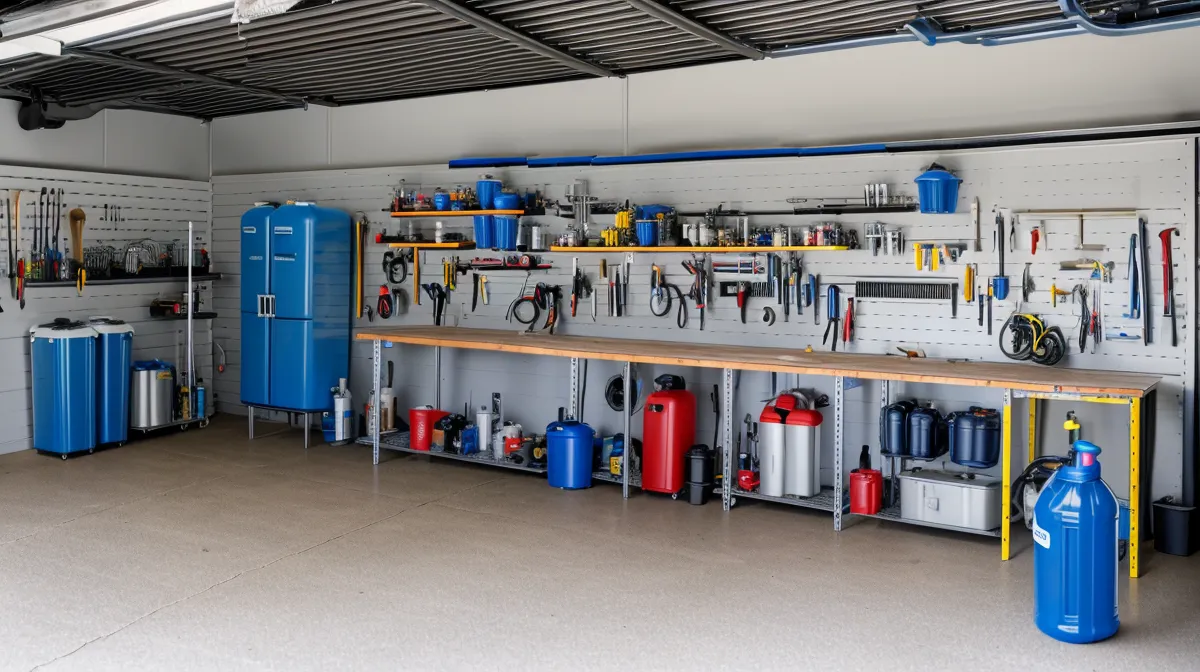
A kitchen faucet makes a specific sound when city water pressure drops to zero: not a trickle, not a sputter, just a dry metallic click. That's the sound that turned me into the neighborhood's go-to guy for emergency water questions, back when Hurricane Beryl left my corner of Houston without water pressure for four days. Since then, suburban preparedness has stopped being a hobby and started being a habit, and the biggest lesson I keep repeating to neighbors is that budget water storage doesn't require a five-figure setup — a family of four can build a solid 72-hour supply for right around $100, if you actually understand what the water is for.
How Much Water Does a Family of Four Actually Need?
FEMA and CDC both land on the same number: one gallon of water per person per day as the bare minimum, covering both drinking and basic sanitation. Their recommended planning horizon runs from three days on the short end up to two weeks if you want real margin. That's the actual baseline, not a marketing number, and it means a family of four should be storing at least three gallons a day at minimum, and more if anyone in the house is a kid, a pet owner, or someone who cooks anything besides cereal. Think of it like your home network's bandwidth cap: one gallon a day is the plan that keeps the lights on, not the plan that lets you stream video and back up the laptop at the same time. Push toward a gallon and a half per person if your household runs hot, and the number holds up through a real 72-hour outage without anyone feeling like they're rationing.
A Realistic Budget Water Storage Kit for $100
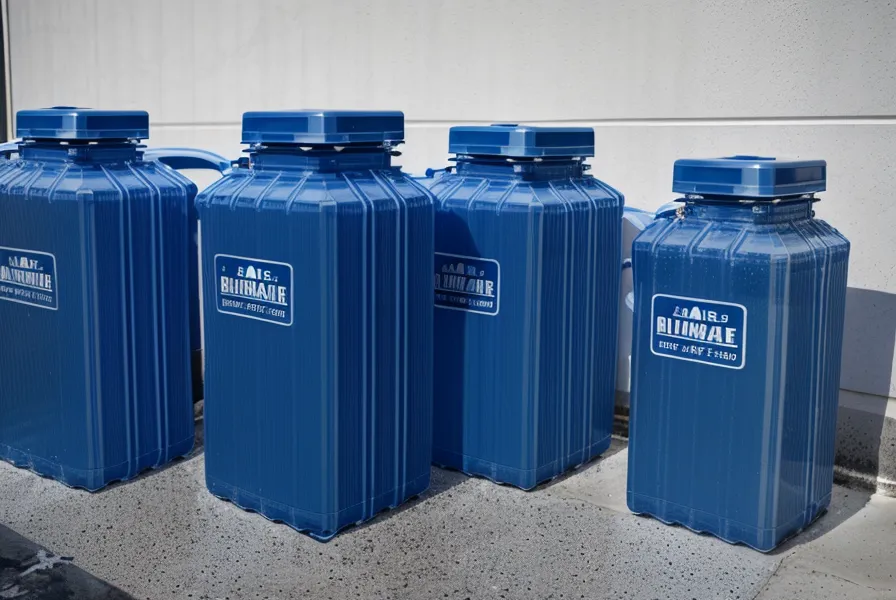
Here's what actually fits inside that number. Three rigid five-gallon plastic water containers run around eighteen dollars each, so call it fifty-four dollars for primary storage. Two twenty-four packs of plain bottled water add roughly six dollars apiece, about another twelve dollars, as a secondary backup that needs zero prep. A bottle of regular, unscented liquid bleach plus a glass dropper covers treatment for about eight dollars (skip anything scented or labeled splashless). Round it out with a basic gravity-fed bag filter or a personal filter straw for around twenty-five dollars, and the whole kit lands at ninety-nine dollars before tax, give or take whatever your local municipality tacks on. None of it is tactical gear. It's hardware that works, bought at a big-box home improvement store and a regular grocery aisle. If you want the full head-to-head on capacity, cost, and setup time across every water storage option out there, I laid it out in the IT guide to not dying of thirst — this $100 kit is the fast-start version.
Barrels, Bottles, or Rigid Jugs — What Actually Works for Storage?
Rigid containers beat almost everything else for a starter kit: they stack reasonably well (though I wouldn't go more than two high), they carry a built-in handle and spout, and they don't fail quietly the way soft-sided options sometimes do. I learned that lesson the expensive way after buying a fifty-five-gallon blue barrel, on the theory that bigger meant better. Once it was full, I couldn't move it: not roll it, not tip it, not shift it an inch toward the door if we'd ever needed to load it into a car (a design flaw entirely of my own making, not the barrel's). A barrel that size works fine as a stationary supply you'll never need to relocate. It's a poor fit for a 72-hour kit built around the idea that you might have to grab water and go. Smaller, more numerous containers beat one big one almost every time speed actually matters.
Does Water Sitting in a Garage for Six Months Still Need Treatment?
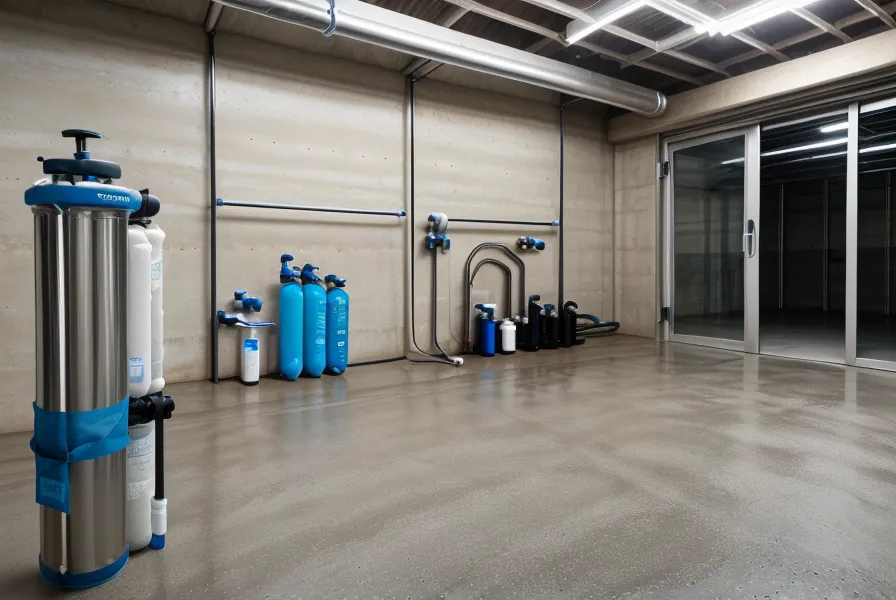
Water straight from a municipal tap in a place like Houston is already treated, but six months sitting in a garage is enough time for that protection to fade. I'm not a doctor and I don't have medical training, so treat this as personal practice rather than professional guidance. Check with your local health department for the actual standard. What works for my own family is plain, unscented liquid bleach: no splashless formula, no added scent, just sodium hypochlorite at roughly eight drops per gallon of clear water. For a five-gallon jug that's about forty drops, or roughly half a teaspoon, and I keep a small bottle and a glass dropper taped to the side of one footer-a116d1 so I'm not hunting for it later. There's a chemical sting at the back of my throat every time I crack open a fresh bottle of bleach with the garage door down, and it's a decent reminder to prop the door open first. Bleach doesn't stay potent forever sitting on a shelf; I replace mine on the same schedule I use for smoke detector batteries rather than treating it as a one-time purchase. That same swap-it-out habit is why the water itself stays on a rotation schedule too, and I've written up the full routine separately in how to store water in a Houston garage without growing algae if you're dealing with a Texas summer.
Why a Filter Still Earns a Spot in the Kit
Seventy-two hours has a way of turning into a week. During Beryl, some houses on my street didn't get full pressure back for seven or eight days, and at that point your stored supply is running low no matter how well you planned. That's when a filter earns its spot in the kit: not as a replacement for stored water, but as the next line of defense once the rain barrel, the pool, or the water heater tank becomes the only source left. A basic gravity-fed bag filter or a personal filter straw runs around twenty-five dollars and handles bacteria and protozoa, the stuff behind the stomach issues nobody wants when the toilets aren't flushing either. Give me the gravity bag over the straw any day; nobody wants to lie on their stomach sucking water out of a puddle (survival shows make that look a lot cooler than it is). Fill the bag, hang it from something sturdy, and let it drip through on its own. The flow rate on a basic gravity setup is slower than most people expect, and patience matters as much as the gear itself. Filtration and treatment aren't solving the same problem, and knowing which one you actually need matters more than people think. The first time I held a jar of gravity-filtered water up to the light in my garage, I could see my own hand clearly through it, with no cloudiness and nothing settling at the bottom. That's still the test I trust before drinking a batch.
Water Beyond the House
A house kit doesn't cover every scenario. A neighbor of mine coaches a youth soccer league on Saturday mornings out along the Terry Hershey Park trail in the Energy Corridor, and after Beryl he asked me what he was supposed to do about water if a storm rolled through mid-practice with two dozen kids on a field and no working tap nearby. That's a different problem than a 72-hour home supply: it's about what you can carry, not what you can stack in a garage. Portable options trade capacity for convenience in a way bulk storage never has to, and for anyone spending real time away from the house — coaching, commuting, just running errands during storm season — that trade-off is worth thinking through on its own terms. My answer for him was simple: keep something small and reliable in the car, and let the garage handle everything else.
Keeping the Footprint Small and the Containers Clean
Twenty to twenty-four gallons for a family of four sounds like a lot until you actually see it stacked; it's roughly four or five containers, taking up less floor space than a stack of moving boxes. Planning for that footprint matters more once you're fitting it around a car, a lawnmower, and everything else already living in a two-car garage, and going vertical instead of spreading containers across the floor is usually the better use of limited square footage. Keeping the containers themselves clean between refills is its own small discipline: a quick rinse-and-air-dry routine prevents the kind of buildup that makes people distrust their own stored water for no good reason. Twice a year, I rotate everything: pour the old water into the yard, check expiration dates on the bottled cases, swap anything close to expiring into daily use, and refill from scratch. It takes about thirty minutes, and it's the only maintenance a $100 kit really asks for. Families who outgrow this starter setup usually move to a larger stackable system next — I documented my own troubleshooting experience with a new 80-gallon stackable system for anyone ready to scale past the basics.
Suburban Preparedness Without Overthinking It
None of this requires becoming a different kind of person. Building a 72-hour water supply is closer to keeping a spare tire inflated than it is to prepping for the end of the world: routine maintenance, not identity.
The one rule I'd give any neighbor just getting started: buy the boring, rigid containers first, get the ratio right before adding filters, and put a date on the calendar to rotate everything twice a year. A kit nobody maintains is worse than no kit at all. For most families in a place where the power and the water tend to go out together every few years, that's enough to get through the first rough days without standing in a two-hour line for the last case on the shelf.