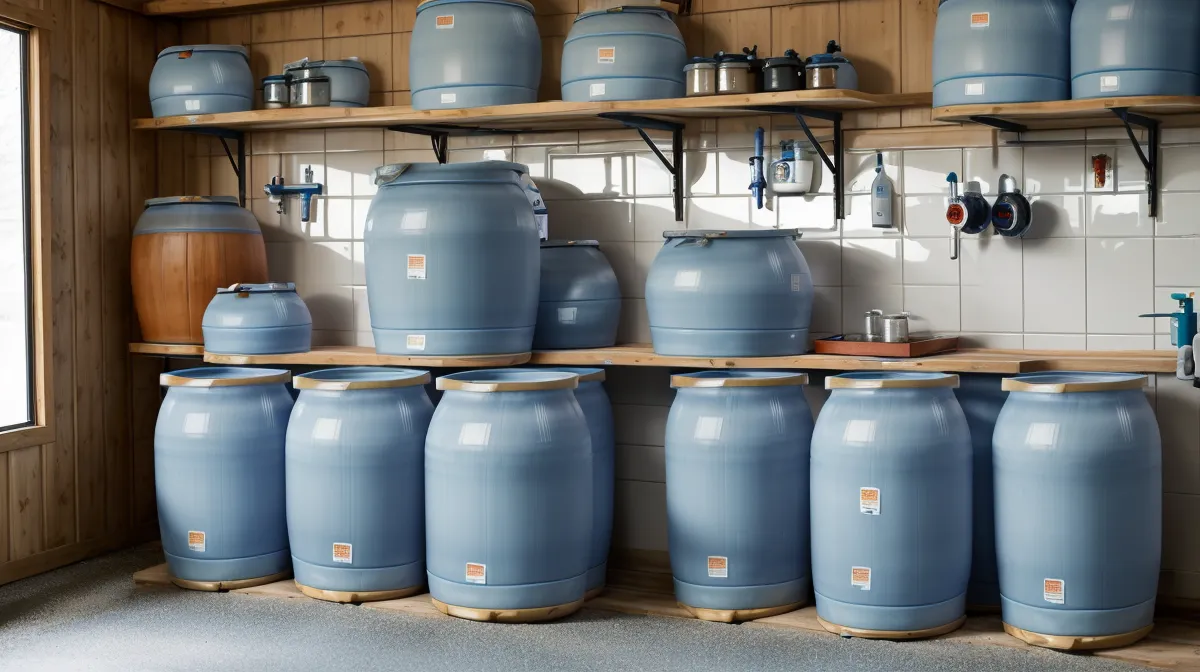
One humid Saturday morning last spring, I grabbed my bung wrench and cracked open the plug on my primary garage barrel expecting fresh municipal water, only to catch a faint, stale odor that instantly triggered my IT troubleshooting instincts. Something in my storage protocol had failed silently, like an unattended server throwing disk errors in the middle of the night.
The Reality Check After Hurricane Beryl
To understand how I ended up hovering over blue drums with test strips, you have to rewind to Hurricane Beryl in 2024. When that storm blew through our suburb outside Houston, municipal tap water vanished for four long days. You never realize how thoroughly civilization runs on pressurized water until the pipes sputter dry and your toilet stops refilling. After that mess, I swore I would never let my family get caught flat-footed again.
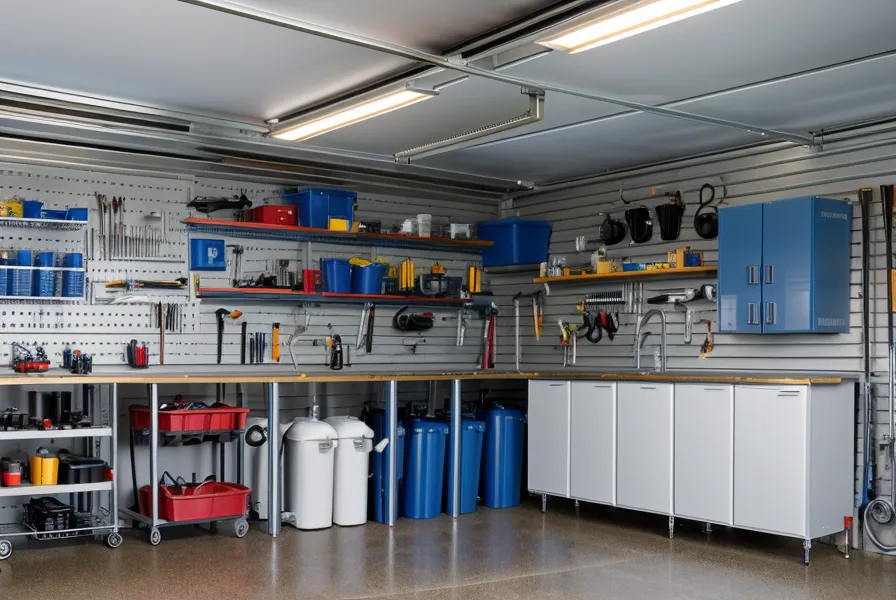
My solution was buying two heavy-duty blue drums. My wife eyed them across the garage floor with visible skepticism, gently asking where the lawnmower was supposed to go now that we had an industrial depot next to the water heater. But in theory, bulk storage is the most straightforward insurance policy on the planet. You take a standard industrial closed-head poly drum with a liquid capacity of 55 gallons, scrub it, screw in a drinking-water hose, fill it up, and seal it. Done, right?
Not quite. Treating stored water like a closed zip file that you can extract two years down the road is where most suburban homeowners stumble. Water is dynamic, and plastic barrels are not impervious vaults.
Physics, Floor Contact, and the Rookie Weight Mistake
My first practical lesson came before I even ran water quality tests. I dragged the empty drum to the center of the garage, hooked up a dedicated RV drinking hose, and filled it completely. The rubbery squeak of a threaded bung wrench loosening plastic caps, followed by the cool, hollow echo inside an empty 55-gallon shell, made me feel intensely productive. That feeling lasted until the water stopped running.
Water has a physical density of 8.34 pounds per gallon. Once you run the basic arithmetic, a full 55-gallon barrel clocks in at roughly 460 pounds of dead weight. Realizing after filling the barrel to the brim that 460 pounds of water cannot be nudged even an inch across the garage floor was an immediate, humbling failure. I had filled it three feet away from its intended corner, meaning I had to manually siphon dozens of gallons just to slide the drum back against the wall.
Worse, I initially left that barrel sitting flat against bare concrete. That is a serious oversight. Food-grade drums are molded from high-density polyethylene (HDPE, resin code #2). HDPE is fantastic because it blocks UV rays to inhibit algae growth and resists plasticizer leaching. However, polymers are semi-permeable over long timelines. Direct contact between plastic drums and unsealed garage concrete floors can allow volatile hydrocarbons, garage oils, and alkaline moisture from the slab to migrate through the polymer over prolonged periods. If you store gasoline for your generator nearby or park a dripping car on the same slab, you are asking for chemical cross-contamination.
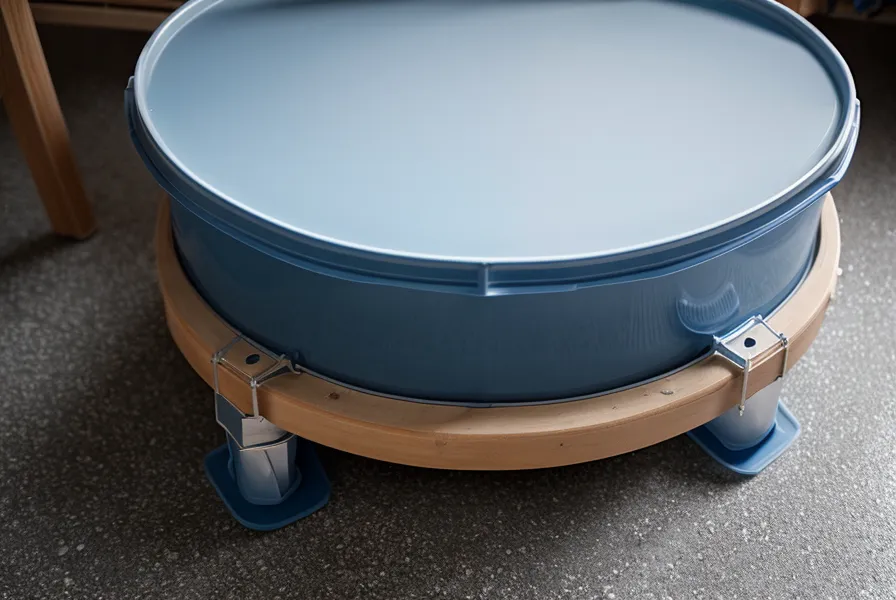
The fix was dead simple: I elevated both barrels onto treated 2x4 wooden stringers and heavy plastic pallets to ensure clear airflow and zero floor contact.
The Biofilm Blindspot: Why Bleach Isn't Fire-and-Forget
When I inspected my stale barrel after about three months of Texas summer heat, I had to figure out why the water smelled off despite following the standard advice. Most emergency preparedness guides tell you to dose your water with household bleach and walk away. The common benchmark—reinforced by the CDC emergency water treatment guideline—calls for 2 tablespoons of regular 6% unscented bleach per 55 gallons of clear tap water.
I followed that guidance to the letter. But here is the contrarian reality that almost nobody discusses: standard bleach-only sanitization often fails in long-term storage because it lacks the residual chemical stability required to prevent biofilm development inside porous plastic drum walls.
Bleach relies on sodium hypochlorite. It is an aggressive, fast-acting disinfectant, but it degrades rapidly in the presence of ambient heat and organic trace particles. A suburban garage in a Gulf Coast summer easily turns into an oven exceeding 95 degrees Fahrenheit. In that kind of heat, free chlorine levels drop precipitously within weeks. Once that residual chlorine drops to zero, opportunistic micro-organisms attach to the microscopic imperfections of the HDPE lining, spinning a protective polysaccharide matrix known as biofilm. You cannot see it easily from the top opening, but it leaves your water tasting stale, earthy, or distinctly plastic.
I am an IT support specialist by trade, not a doctor or a public health professional—so please verify sanitation guidelines with your local water authority or county health department before drinking anything you have stored. But from my own troubleshooting on the bench, relying entirely on grocery-store bleach for a multi-year garage reserve is a recipe for frequent re-dos. If you want a deeper look at alternative oxidizers that hold up better under temperature spikes, I put together notes on how to treat water for long term storage using liquid chlorine and explored how to stabilize stored water for multiple years without using bleach.
My Systematic Barrel Maintenance Checklist
By late September, I had completely overhauled my drum maintenance cycle. Instead of treating the barrels like set-it-and-forget-it hardware appliances, I treat them like an annual maintenance patch. Here is the operational routine that actually keeps large barrels clean and drinkable:
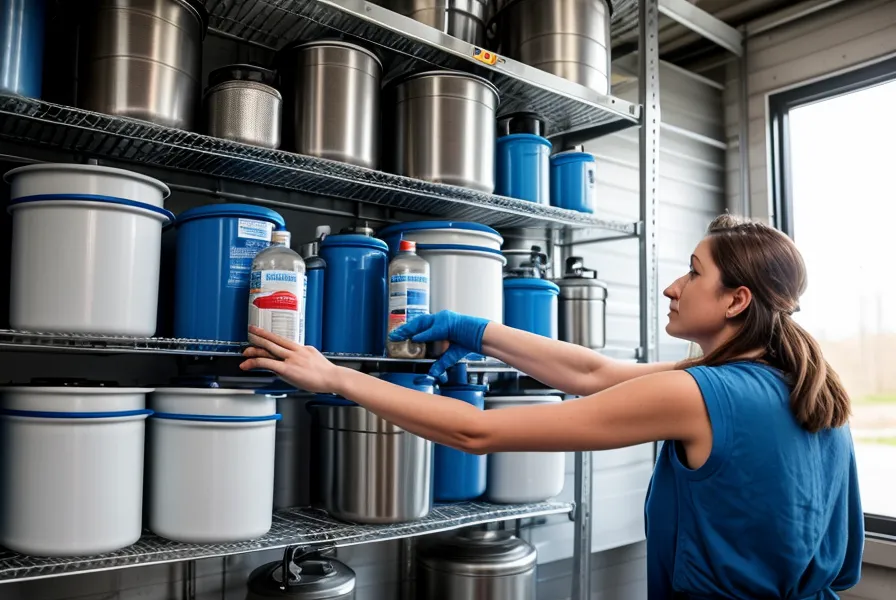
- Decontaminate before refilling: Never just rinse an old barrel with garden water. Wash the interior with a mild dish soap solution, rinse thoroughly, and swirl a sanitizing charge through the empty drum before any long-term fill.
- Use drinking-grade transfer gear: Standard green garden hoses contain phthalates, lead, and plasticizers that impart foul taste and chemicals immediately. Always fill with an NSF-61 certified drinking water hose.
- Seal check the bung gaskets: Inspect the EPDM or silicone O-rings on the bung plugs every time you open them. If the gasket is dry, cracked, or deformed, replace it. A loose bung allows dust, spiders, and airborne mold spores to drift inside.
- Dedicated extraction tools: Never shove a random garden hose into the bung hole to create a mouth siphon. If you want a sanitary transfer during a freeze or boil-water notice, look into the best emergency water siphon pumps for rotating large storage barrels so you never contaminate the reservoir while pulling water out.
- Rotate systematically: Even under optimal conditions, rotate garage drum water once every 12 to 18 months. Use the old water for the lawn or flushing toilets, sanitize the interior, and reload with fresh municipal water.
The Peace of Mind in the Garage
A few weeks ago, during our regular autumn garage cleanout, I cracked open the secondary barrel to test its residual safety profile. The water was crystalline, crisp, and completely neutral on the palate. No musty basement odors, no slippery slime on the inner barrel walls, and no strange chemical tang from the concrete slab below.
Keeping 110 gallons of clean water in your garage does not require tactical gear or an apocalyptic mindset. It just takes an understanding of basic physics, an eye on temperature degradation, and a little respect for the microbiology living inside plastic containers. Once you establish a routine, maintaining your bulk reserves feels less like a survivalist chore and more like checking the smoke detector batteries or updating the firmware on your home router—ordinary, reliable household maintenance.