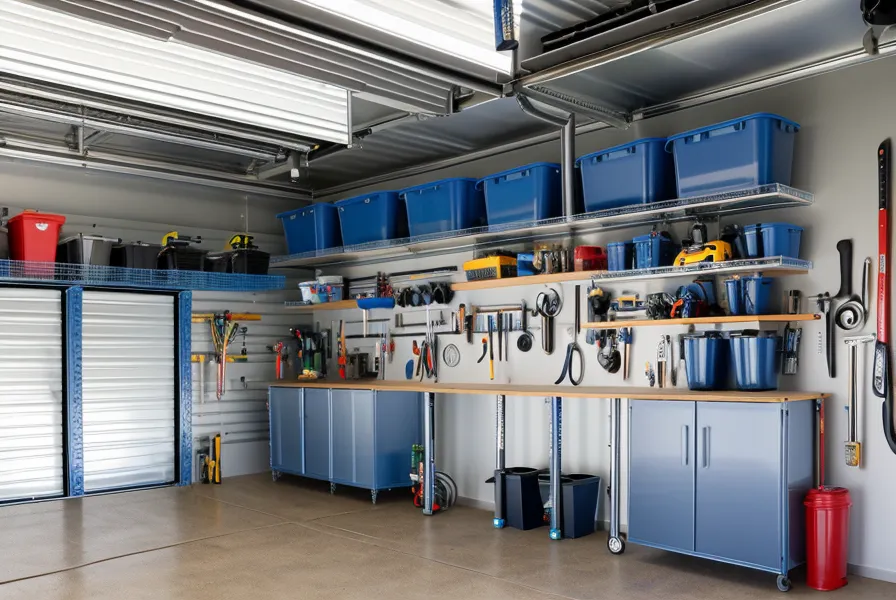
Fifty-five gallons of stored water doesn't do your family any good if nobody home during the next hurricane can actually lift the barrel it sits in. That's what sparked my slow, occasionally humbling overhaul of my emergency water storage setup here in Katy, trading a garage full of dead weight for an actual backup water filtration system.
Quick housekeeping before the story: a few of the links below are affiliate links, and if you buy through them I earn a commission at no extra cost to you. I only write about gear I've run through my own testing in that garage, for reasons that will make more sense in a minute.
Bulk Storage Isn't the Same as a Backup Plan
Hurricane Beryl knocking out our water for four days back in 2024 is what started all of this. Like most of my neighbors, I did the obvious suburban-dad thing and bought polyethylene drums built for long-term storage. They hold a lot, they're the industry-standard footer-a116d1 for a reason, and that was the entire appeal — right up until I needed to move one.
A full drum works out to a few hundred pounds of dead weight once you actually fill it — I've broken down the exact math in more detail elsewhere on the site — but you don't need the number to feel the problem. Nothing about a full barrel is easy to relocate on short notice, and a backup system nobody can move isn't really a backup system. It's closer to an obstacle with a lid on it (one my spouse still brings up whenever garage space comes up).
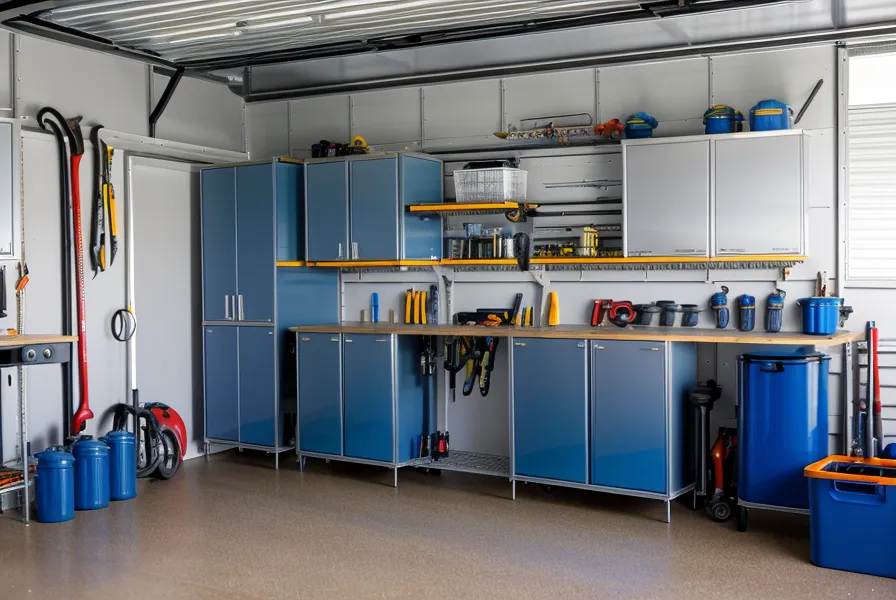
The week before Beryl made landfall, I remember standing in the water aisle at the H-E-B on Mason Road, watching bottled water disappear off the shelf in real time. That was about as much of a plan as I had back then — grab what's left and hope for the best. Not everyone reading this has a two-car garage to dedicate to backup storage, either. Plenty of people here in the Katy area are in townhomes with about as much extra space as a hall closet, and "just buy bigger barrels" isn't advice they can actually use.
What Actually Changed My Mind
A coworker of mine, Tiffany Bui, is part of why I started taking this more seriously. She doesn't accept a claim unless it comes with a number or a published guideline attached. The first time I mentioned switching from pure storage to an actual filtration setup, she pushed back hard. I had to go look things up instead of repeating what I'd read somewhere. I ended up giving her the real baseline instead — one gallon per person per day at minimum, doubled for a Houston summer — rather than the vague reassurance I'd have given a year earlier.
My first attempt at fixing the problem was embarrassingly low-tech. During a boil-water notice, I ran tap water through an old Brita pitcher on the counter, assuming any filter was better than none. That pitcher is built to improve chlorine taste, not to make questionable water safe, and it was far too slow to keep up with what four people actually go through in a day — a genuine miss on my part, and a good reminder that not every filter is rated for the job you're asking it to do.
The Camp Stove Moment That Reset My Priorities
Somewhere around week eight of taking all this more seriously, I was standing over a camp stove cooking pasta from the stored food supply, feeling fairly proud of how organized the pantry side of things had become, when it hit me that I'd planned every meal down to the last package without once mapping out how much water that same meal would actually cost me. Food planning had gotten sophisticated. Water planning was still an afterthought wearing a nicer barrel.
That gap between food prep and water logistics pushed me to look at the whole system, not just add more containers. Real hurricane preparedness and real home resilience are different from supplies sitting in a closet you've never tested under pressure. In IT terms, it's the difference between backing up your files and actually confirming the restore works.
Swapping Dead Weight for a Real Water Filtration System
This is what eventually led me to the SmartWaterBox, a compact filtration unit built around active management instead of passive storage. The idea is that you actually run water through it regularly, rather than letting it sit in a corner and hoping. I also spent time with the Water Freedom System, which is more of a knowledge resource than a physical device. It's genuinely useful if you want to understand your options in depth, though it takes a lot more hands-on effort to turn into a working setup than something that arrives ready to use.
I tested the filter cartridge against hose water from the garage spigot instead of anything from the tap. I wanted a rougher input than usual, and it processed the batch without any trouble. The unit relies on mechanical filtration rather than chemical treatment, built around hollow fiber membrane technology that screens particles and organisms out physically instead of neutralizing them with a chemical. That distinction between filtration and purification matters more than most people realize when they're deciding what a setup actually protects them against. I won't get into the specific pore-size numbers here, since that's a rabbit hole I've covered in more detail elsewhere on the site.
The Garage Has Basically Become a Lab
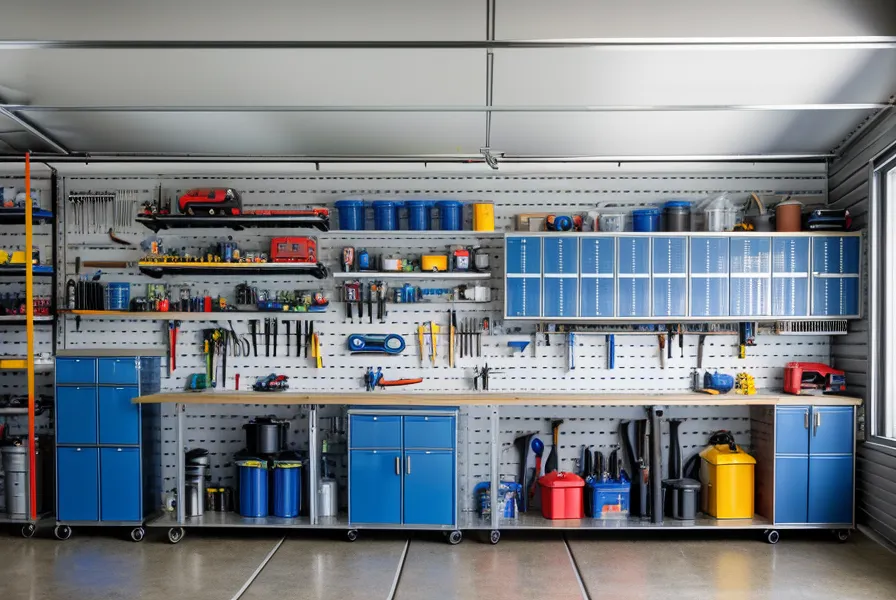
The garage itself has slowly turned into its own testing setup. Hose fittings and spare filter cartridges hang on a pegboard where the yard tools used to live. A row of labeled food-grade containers lines one wall, stacked up to about shoulder height, and I plumbed in a sink with just a cold line so I can run fill-and-flush tests without dragging everything into the house. The floor still has the drain it came with, near the back wall — and for once, it actually earns its keep.
None of this replaces having something portable for the truck or a go-bag. That's a different kind of setup than what lives bolted to the garage wall, and it deserves its own separate conversation. Every footer-a116d1 in that lineup also gets cleaned on an actual rotation now, instead of the guess-and-hope schedule I used to run; which turned out to matter more than I expected once I started paying attention to it.
Where the Old Blue Barrels Still Fit In
I still keep a couple of the barrels around. Call them cold storage — the stuff I don't touch unless everything else has failed. But the primary plan now is compact, filtration-based, and something my spouse could actually run without me standing over her shoulder explaining a spreadsheet. A reader named Darnell Fontenot has emailed me more than once about this. He grew up watching Louisiana floodwater behave in ways most of us in Katy have never had to think about, before he relocated here after last year's flooding season. He's pointed out that contamination from actual floodwater spreads differently than what you'd see after a routine boil-water notice — and he's right that a setup built for a clean outage isn't automatically built for a flood.
The lesson that actually stuck has less to do with gear than with who can operate it. A backup plan only counts as a plan if whoever is home alone during the next outage can run it themselves, without a phone call to me first. It's the same test I'd apply to any system at work before trusting it under real conditions. For the fuller rundown of how the pieces compare, I put together 5 Hidden Mistakes in Your Suburban Water Preparedness Plan and From Dry Taps to a Working System: My Top Home Water Backup Systems After a Year of Testing, both pulled from the same year of testing.
If moving heavy containers around your garage during an actual emergency sounds like the last thing you want to be doing, the SmartWaterBox is the closest thing I've found to a setup that just works when the pressure is actually dropping — no lower-back gamble required.