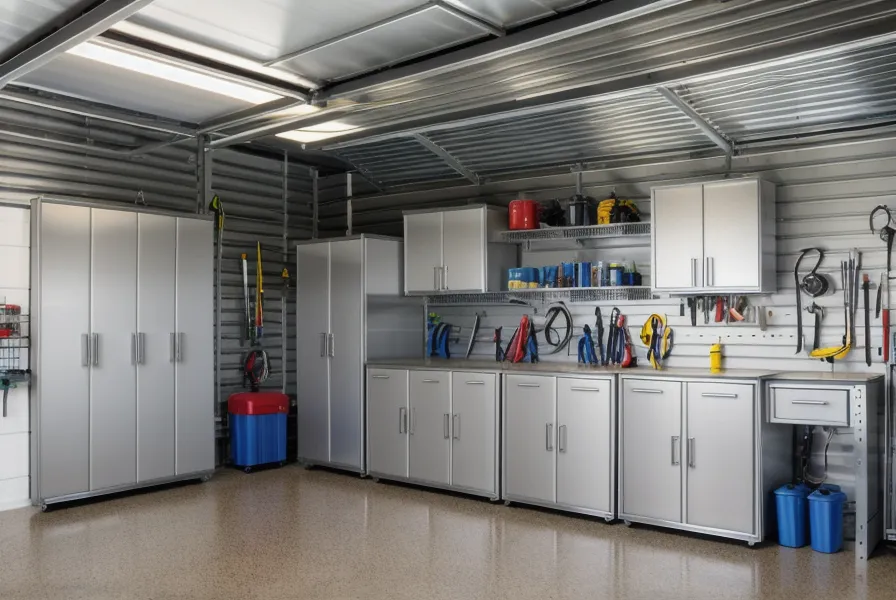
Every gallon of stored water weighs 8.34 pounds, and that single number is the reason most emergency water backup plans fall apart before a storm ever gets close. Most hurricane prep advice starts and ends with one question, how many gallons you own, and skips the one that actually decides whether you're okay: can you move it, filter it, and keep it usable once city pressure and the power are both gone. That gap between owning water and running an actual home redundancy system is where I spent a long stretch of last year, testing storage containers and water filtration setups in my garage until I had a system instead of a pile of jugs.
Quick disclosure before we get into it, since I'd want to know this from a stranger giving me product advice: this site runs on affiliate links, and if you buy something through one of mine, I earn a commission at no extra cost to you. I've physically tested every system named below in my own garage — not read a spec sheet and called it a review. I'm not a water safety professional, so treat this as one very thorough neighbor's notes, not licensed guidance, and check with a professional before making major changes to your home's water setup.
Home Redundancy Isn't About How Many Gallons You Own
The common assumption I ran into constantly, from neighbors and forum threads alike, was that the biggest or cheapest footer-a116d1 wins the whole game — buy a drum, fill it, done. That's backwards. In IT support, redundancy never means one giant server loaded with storage; it means several independent systems that can each fail without taking the whole operation down. Emergency water works the same way. A single, oversized footer-a116d1 full of water isn't a home redundancy plan. It's a liability with a lid on it.
That starting point is usually FEMA's guideline of one gallon per person per day, and doing that multiplication for your own household is worth ten minutes before you spend money on containers — everything else here assumes you've already done that math.
The Weight Problem Nobody Mentions
Water is heavy in a way that spreadsheets never quite capture. One gallon comes in at 8.34 pounds, so a stack meant to cover a family for a month adds up to serious weight sitting in one corner of a garage. I like a walk along the Terry Hershey Park trail out by the Energy Corridor as much as anyone, but try carrying even a handful of gallons that distance and "grab and go" stops sounding like a real plan; it's a workout, not an emergency water system. How much of that total weight your garage can realistically hold, and whether you stack it vertically or spread it across the floor, is its own planning question I won't fully unpack here, but it changes which footer-a116d1 size actually makes sense for your space.
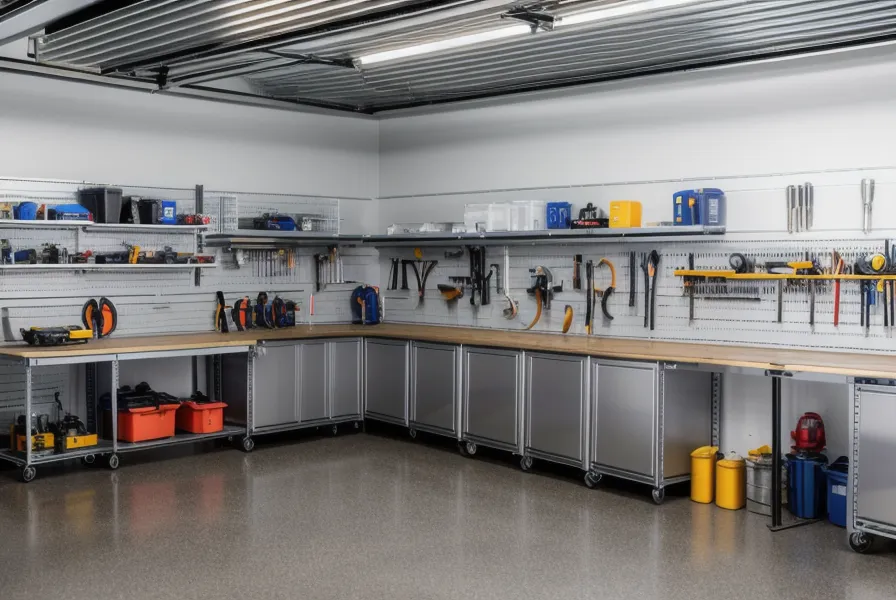
None of that stopped me from buying a 55-gallon blue barrel early on, since the math looked great on paper — more gallons per dollar than almost anything else I found. Once it was full, I could not move it an inch. Water doesn't feel that heavy until you're standing next to 450 pounds of it sitting exactly where you don't need it, and if a storm forces you to shift supply into a different room — or into a car — a barrel that size might as well be bolted to the floor. If you want the long version of why I moved away from big drums, I wrote up finding the sweet spot for suburban water storage after that whole experiment.
So What Actually Keeps Water Usable, Not Just Stored?
Storage alone fails in two ways: water that sits untouched for months without a rotation habit becomes questionable, and water you can't get out of a footer-a116d1 fast enough is useless to a thirsty household. This is the layer people skip, and it's also where filtration and purification get treated as the same thing when they solve different problems — a filter that's excellent at one can be completely beside the point for the other, and mixing them up is one of the more common mistakes I ran into while testing.
A minor water-main break near us this past May turned into an unplanned stress test of exactly that gap. It wasn't a hurricane, but it proved that owning a footer-a116d1 and a filter is worthless if you haven't practiced using them together. I found the SmartWaterBox was the closest thing to a plug-and-play answer for my setup — it balanced volume with something I could actually carry, which matters the moment you need to move supply to a different part of the house. I remember the first slow fill test mostly for the small metallic click when I finally shut the hose bib off, the sound that meant the tedious part was over. The tension between something portable enough to grab and something bulky enough to actually matter is, honestly, the whole game with home water systems.
One neighbor of mine — a guy who spends his Saturday mornings coaching a youth soccer league — asked why I even bothered with any of this, since "the city fixes stuff fast." He wasn't wrong about the city. He was wrong about how long fast can feel when your own tap is the one that's dry.
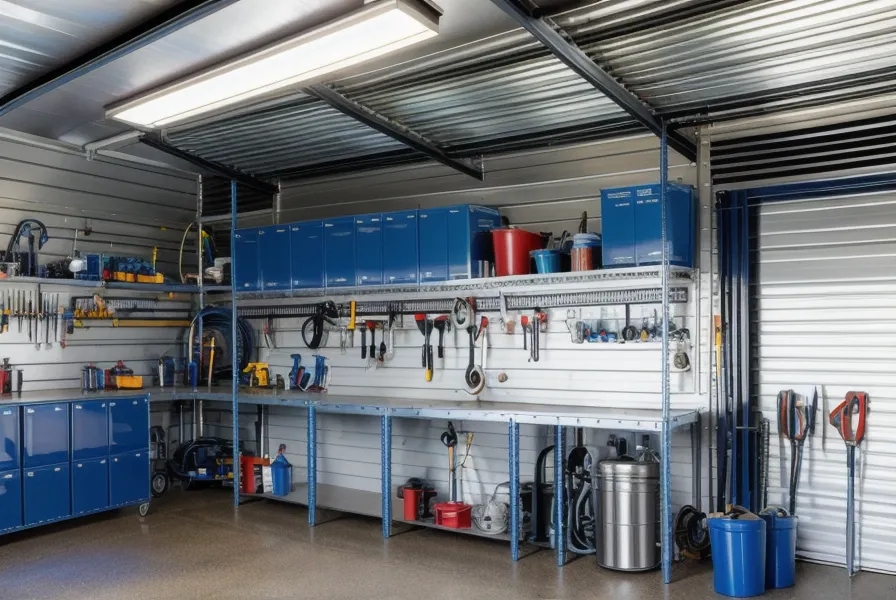
The Water Freedom System takes a completely different approach — it isn't a box you buy, it's a blueprint for pulling water from humid air, which is actually efficient in a Gulf Coast climate that's thick with moisture most of the year. Think of it as a backup generator, except for water instead of electricity. It comes with a 60-day, 100% money-back guarantee, which appealed to my skeptical streak, though the printed edition tacks on a $9.95 shipping fee if you want a physical copy instead of the digital one.
Testing the Systems That Actually Held Up
None of this matters much if you're guessing about safety afterward, so here's my standard caveat: I'm not a health professional and I have no medical training, so I lean on CDC guidance and manufacturer instructions for everything I store and drink, and you should too.
After a year of rotating supply, testing filters, and nearly flooding the garage floor once (a story for a different post), four systems earned a permanent spot in my actual setup. The SmartWaterBox is still my hero pick, because it treats water storage as a system you're meant to use, not a footer-a116d1 you're meant to forget about. The Water Freedom System stays in the rotation as a fail-safe blueprint, useful the moment a stored supply runs dry and you need a second option that isn't just "buy more bottles." David's Shield sits behind both of those as a secondary filtration layer — the redundant power supply of the water world — and I keep it around specifically because what a filter strips out of water varies more between brands than most people assume, which is a comparison worth its own deep dive rather than a paragraph here. And if you're just getting started, Dark Reset covers a baseline supply without the gear-obsessed price tag some of this hobby carries; I put it head-to-head with my top pick in a detailed storage comparison if you want the specifics.
Maintenance Is the Part Everyone Skips
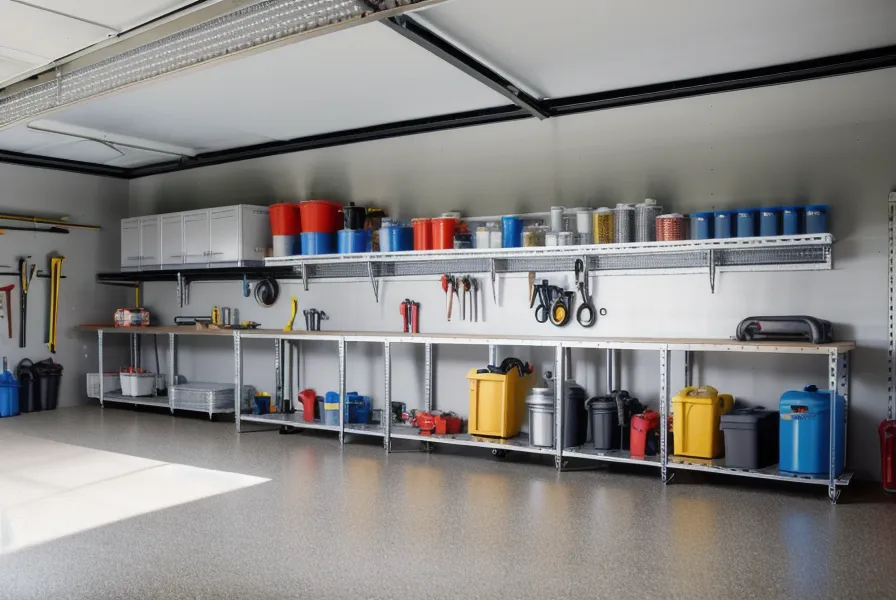
Storing water isn't a set-it-and-forget-it task, and treating it that way is how good systems quietly go bad. It's closer to patch management for a server. Tap water most people store needs to be rotated roughly every six months unless you're using proper stabilizers, and skipping that step is how a good plan turns into a bucket of water nobody trusts anymore. Exactly how to time and log that rotation is its own checklist, and so is the process for actually cleaning containers out between refills. I won't repeat either one in full here, but don't skip them just because they're boring.
My routine also leans on documentation, mostly because my spouse needs to be able to run the whole system without calling me for tech support if I'm not home. I keep a written rotation routine taped up near the containers, and it walks through using the older water for the yard while refilling with fresh, filtered tap water. I also keep a bottle of plain, unscented household bleach on hand — the kind sitting between 5% and 9% sodium hypochlorite on the label — in case I ever need to disinfect a questionable batch in a pinch, though I'd still tell you to check with a professional before trusting any water after a serious flood.
The Redundancy Rule I Actually Follow Now
This was never about becoming a survivalist, and it never was — it's about building a documented, tested backup system the same way you'd build failover into anything else you depend on. I still think about it in layers rather than gallons: stored water sized to what I can actually move, a filtration layer behind it that doesn't rely on one method, and a rotation habit I'll actually keep instead of one I meant to keep. That's the rule I'd hand anyone starting from zero, instead of "buy the biggest footer-a116d1 you can afford." My garage is still full of containers, and my spouse still thinks it's a bit much, but the next time the sky turns that weird shade of green, I won't be standing in front of an empty bathtub wondering what to do.
If you're starting from zero and want one system to anchor the rest of your setup, start with the SmartWaterBox — it's the piece of hardware I trust most for the job, and everything else in my garage exists to back it up.
| Product | Rating | |
|---|---|---|
| SmartWaterBox Hero Pick | 9.4 | Read More → |
| Water Freedom System | 8.9 | Read More → |
| David's Shield | 8.5 | Read More → |
| Dark Reset | 7.8 | Read More → |
SmartWaterBox
Pros
- ✔ True 'plug-and-play' redundancy for suburban homes
- ✔ Rugged enough for garage storage but surprisingly portable
- ✔ Design prioritizes ease of use during high-stress outages
Cons
- ○ Requires a dedicated footprint in the garage
- ○ Initial setup takes an afternoon of 'IT-style' troubleshooting