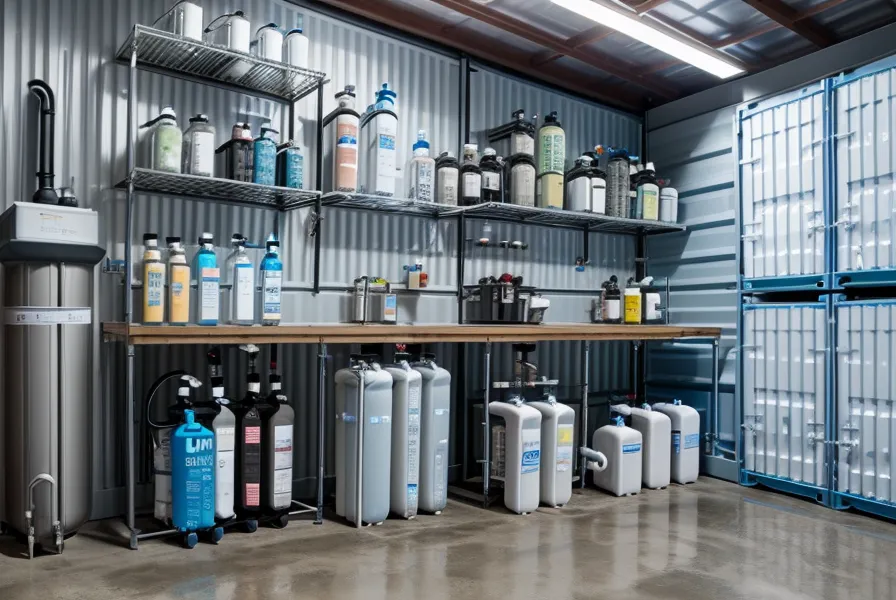
How many gallons does an average family actually burn through in one single day, before an emergency even enters the picture? I didn't know the real number until I turned half my garage into a running experiment in water storage — jugs, barrels, a kitchen scale, and a spouse who was losing patience with the whole project. Months of testing later, I can say emergency preparedness in a Houston suburb has less to do with how many containers you own and more to do with how your home's infrastructure and daily habits behave once the tap stops working.
My neighbor spends his Saturday mornings coaching a youth soccer league two streets over. I spend mine standing in the garage with a luggage scale, weighing five-gallon jugs and timing how long it takes to carry one across the garage to the kitchen sink — which turns out to be closer to a workout than either of us expected. Carrying one the length of the Terry Hershey Park trail would have put my back out days before Hurricane Beryl ever showed up on a forecast.
The One-Gallon Rule Doesn't Survive A Houston Summer
FEMA's standard advice — one gallon per person per day — is a reasonable floor, but it isn't built for actually living on top of it during a Houston summer, and my own testing weekend made that painfully clear.
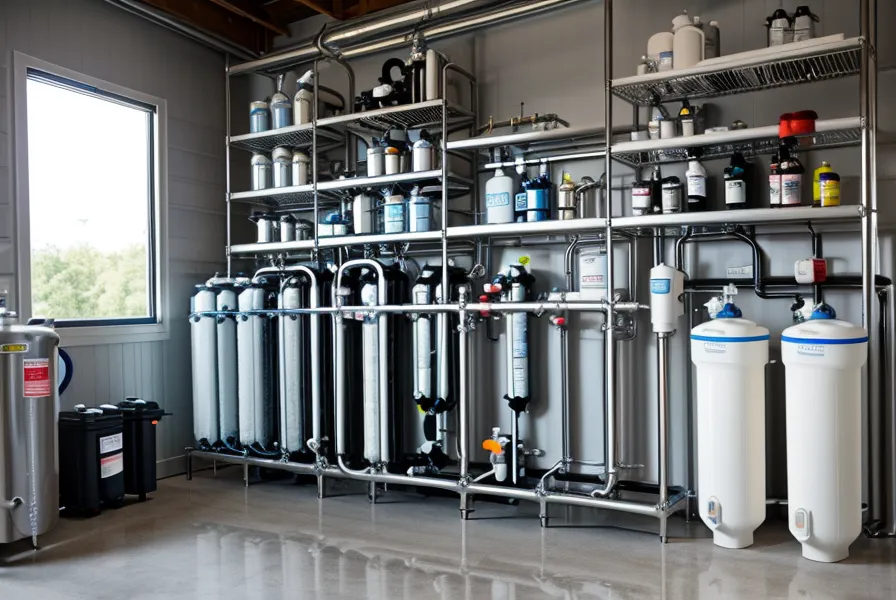
I gave myself a weekend last August to live on that ration alone while doing normal chores in the garage, no cheating, no extra water for anything but drinking. By early afternoon I had a headache no amount of ibuprofen touched and a mouth that felt lined with cotton. I'm not a doctor, and you should talk to your own physician about your hydration needs, but for someone my size in that heat, a single gallon wasn't close to enough.
Weight turned out to be the bigger surprise. A single five-gallon footer-a116d1 comes in at over forty pounds once you account for the water itself, and hauling just one of those across the garage floor left my lower back sore for two days. Multiply that by however many containers a family actually needs, and water storage stops being a shelf-space problem and becomes a moving problem — closer to rearranging a server rack than stacking boxes in a closet.
The Blue Barrel Mistake
The worst purchase I made during all this testing was a 55-gallon blue barrel, the kind every prep list recommends for bulk storage. It filled just fine. Once it was full, I could not move it — not an inch, not with a hand truck, not on my own. It stayed exactly where I'd filled it for a full week before I admitted the barrel had become a fixed piece of furniture I'd have to drain before I could ever actually use it.
That single barrel taught me more about vertical storage footprint than any spec sheet could — a footer-a116d1 that can't be repositioned once it's full isn't really storage, it's a permanent fixture, and now I think about how tall and how heavy something gets before I think about how many gallons it holds. Capacity planning only matters once you've confirmed you can actually get the water back out in an emergency, not just fit it on a shelf.
Cracking a fresh bottle of bleach in a closed garage hits the back of my throat before I've poured a drop, enough that I prop the door open every time now. Skipping that whole cleaning step between rotations is how stored water quietly goes from an asset to a liability, and I've broken the actual steps down in how to clean plastic water storage containers rather than repeat them here.
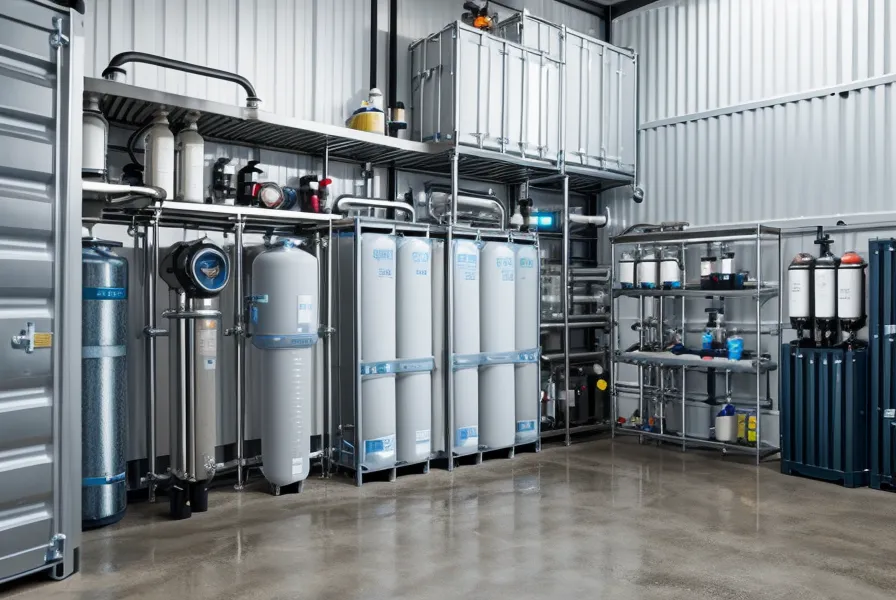
One of the six-month-old containers I opened during this stretch had no smell worth mentioning, no plastic, no staleness, just a faint, clean coldness when I cracked the seal. That was close to week twelve of tracking rotations, and it's the clearest evidence I have that a footer-a116d1 rotated and capped properly holds up the way the label promises.
I've also written before about the reality of storing water in a suburban garage, and month after month of testing kept confirming the same thing: the equipment is rarely the hard part. The habits are — remembering to check a cap, remembering to rotate a footer-a116d1 before it's been sitting untouched for a year, remembering that stored water needs a plan as much as it needs a shelf.
How Much Water Does A Single Flush Actually Cost You?
The number that actually changed how I planned everything came from the back of our guest toilet, not from a prepper checklist. Every modern toilet is capped at 1.6 gallons per flush under the U.S. Energy Policy Act of 1992, which means one single flush uses roughly 60% more water than an entire day's drinking ration.
Run that math across a family of four flushing three times a day each, and you're looking at close to twenty gallons a day just to keep the bathroom functioning, before anyone drinks, cooks, or washes a dish. A garage full of jugs isn't a reserve at that rate. It's a countdown, and putting that supply on a real rotation schedule, the kind I laid out in the garage water rotation system, matters less than accepting how much smaller the number on your shelf actually is once flushing gets counted in.
Building Water Storage Into Home Infrastructure, Not Just Piling It Up
Filtration and purification get treated as interchangeable constantly, though they solve different problems, and gravity filters in particular carry a flow-rate tradeoff worth understanding before you're relying on one under pressure. Chemical treatments carry their own shelf-life limits that most people never check until the bottle's already expired, and a portable purifier solves a different problem entirely than a bulk household supply does — one is built for a person on the move, not a family sheltering in place.
Beyond stored volume entirely, I've been testing what atmospheric water generation can add to the system, essentially a heavy-duty dehumidifier that filters what it pulls from the air, which works well given how much humidity Houston already carries most of the year. Pairing that with a greywater setup that reuses sink and shower water for flushing closes part of the loop the barrel math above can't close on its own.
Whether is collecting rainwater safe in a suburban area like this one is a question I get asked constantly, and the honest answer is that it depends on what's upwind of your roof, which is its own separate rabbit hole I won't get into here.
The lesson that stuck after months of this is simple: volume was never the actual problem. Consumption rate was — how fast a household burns through what's on the shelf, and how much effort it takes to move that water from the garage to wherever it's actually needed. Anyone deciding what comes next, including the point where I finally switched to a high-capacity home water system, should run that math before buying another single container.