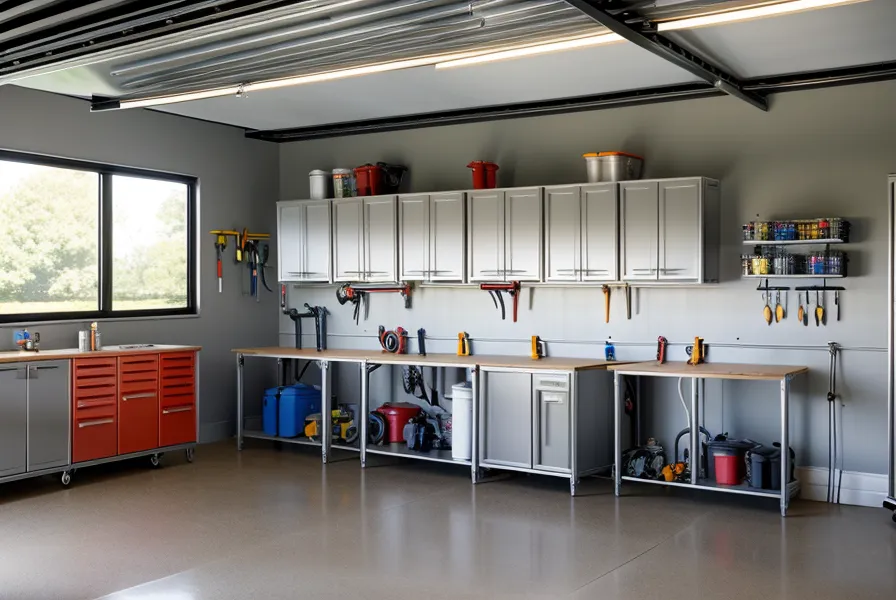
A gravity-fed tower needs clear air under its spigot to work at all. A modular box needs a flat shelf and nothing else. That's the entire disagreement between the SmartWaterBox and the Aqua Tower, and it's the deciding factor behind almost every emergency water storage question I get from readers doing garage organization around a minivan, a workbench, and a breaker panel that code says you can't block. Suburban preparedness comes down to fitting reality into a two-car garage, not fitting your garage around a marketing photo. This water storage review answers the questions people actually ask me before they buy either system.
Update (September 2026): Aqua Tower is no longer available for purchase; this article is kept for reference. Our current alternative pick in this category is Water Freedom System.
Before any of that: this article contains affiliate links, including for the SmartWaterBox and the Aqua Tower. If you buy through them, I earn a commission at no extra cost to you. I only put a product in front of you after dragging it across my own garage floor, and that habit hasn't changed since Hurricane Beryl knocked our water out for four days back in 2024 and turned me into the guy neighbors call before a storm.
How Much Water Storage Does a Suburban Garage Actually Need?
Start with the math nobody wants to do. FEMA's guideline is roughly a gallon per person, per day — a number most sites quote and move past without doing much with it — and for a household of four planning a week without water, that's twenty-eight gallons at the bare minimum. I plan for closer to a hundred once pets, cooking, and Houston humidity get added in, since the humidity alone makes you drink more than you'd think. The instinct after that is to reach for a standard 55-gallon drum, and on paper it looks efficient — one container, one fill, done.
Do the measurements before you commit, though. At about thirty-five inches tall, a drum like that has the footprint of a small refrigerator, and once it's full — water weighs 8.34 pounds per gallon — you're looking at over 450 pounds sitting in one spot on your slab, permanently, whether or not you can still reach the breaker panel behind it. Cleaning and rotating a single giant footer-a116d1 is its own project too, with a whole sanitation routine most people skip until the water starts tasting wrong. That matters more with one big tank than with several small ones.
None of this is theoretical for me. Long before either of these systems, my water sat in stackable plastic jugs — the kind everyone starts with — and after one Texas summer in the garage, the seams had split along every fold. That failure is the reason I stopped trusting containers rated for a mild climate and started testing things built to survive a garage that hits triple digits by June.
My colleague Tiffany Bui — we work the same IT support rotation — asked me almost this exact question, spreadsheet already open before I'd finished my coffee (tab labeled, I'm told, "Water — Do Not Ignore"). Her version was simpler than the FEMA math: how many gallons, in how much floor space, for two adults and a dog. That's really the only question that matters once you've accepted you need water stored at all, not which brand has the flashiest reviews. Being this close to Addicks Reservoir doesn't make the question hypothetical, either — west Houston deals with its own flood-control releases and pressure interruptions separate from whatever a hurricane brings.
Why the Aqua Tower Needs Clearance You Might Not Have
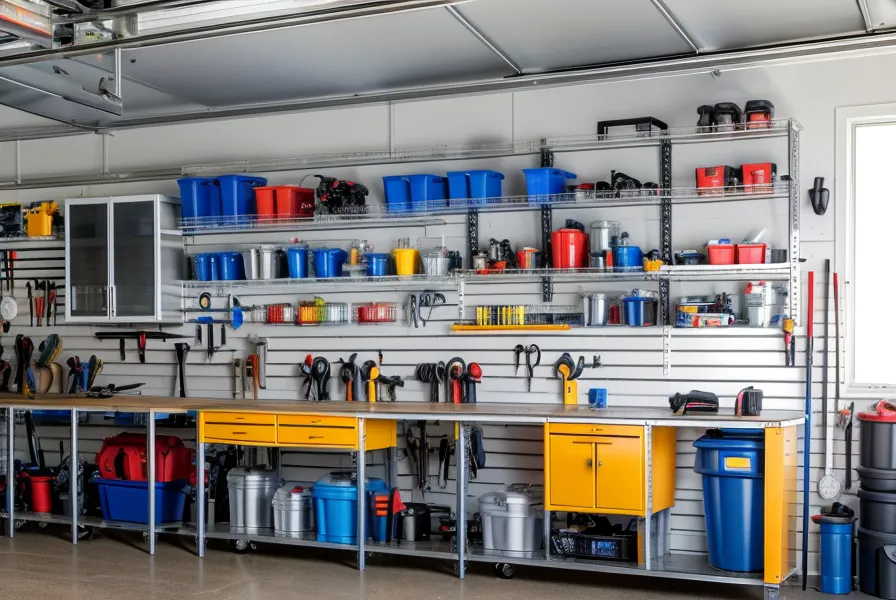
Testing the Aqua Tower is where the clearance problem shows up first. It's built to stack tall and hold a serious volume of potable water in a footprint smaller than that drum, and the build quality held up fine under everything I threw at it. I've gone deeper on that in my Aqua Tower vs Blue Barrels comparison, including the full footprint math for anyone who wants the long version instead of the short one here.
Getting water out, though, depends entirely on a gravity-fed spigot at the bottom, which means the whole unit needs either elevation or enough floor clearance underneath to fit a pitcher. Share your garage with a minivan and a workbench, the way most of us do, and finding a spot with both the height for the tower and the clearance to actually use the tap gets surprisingly hard. It's closer to fitting a desktop tower into a laptop bag than any product photo admits.
Rotating the stock is the other cost. Water sitting in a Houston garage needs refreshing on its own schedule, and I've written a full breakdown on Storing water in a Houston garage for anyone who wants the rotation schedule instead of the short version here. With one large vertical tower, you're committed to a single drain-and-refill event rather than spreading the work out. It's not difficult. It's just a Saturday-morning project instead of a five-minute one.
Fitting the SmartWaterBox Into Dead Space
Unboxing the SmartWaterBox answers the clearance question by removing it. Where the tower is one big gravity system, this one is modular — smaller units built to stack or spread out, whichever the space allows. I fit more than a hundred gallons into the dead space behind my workbench without blocking the breaker panel, which is the single biggest win for a garage where every square foot already has a job.
The first time I opened the spigot on one of those boxes, what came out was cold with nothing settled at the bottom of the glass — no ring, no film, just water that had clearly been sitting somewhere sealed and dark instead of somewhere it could pick up sediment.
Weight is the other advantage. That 8.34-pounds-per-gallon figure adds up fast — a hundred gallons is 834 pounds of static load on a concrete slab — and spreading it across several smaller, movable-when-empty boxes is a lot easier for one person to manage than one immovable tank. Seven years of IT support work trained me to check physical constraints like this before anything else: rack space, cable runs, clearance. A water system isn't any different.
The Trade-Off: Pressure vs. Gravity
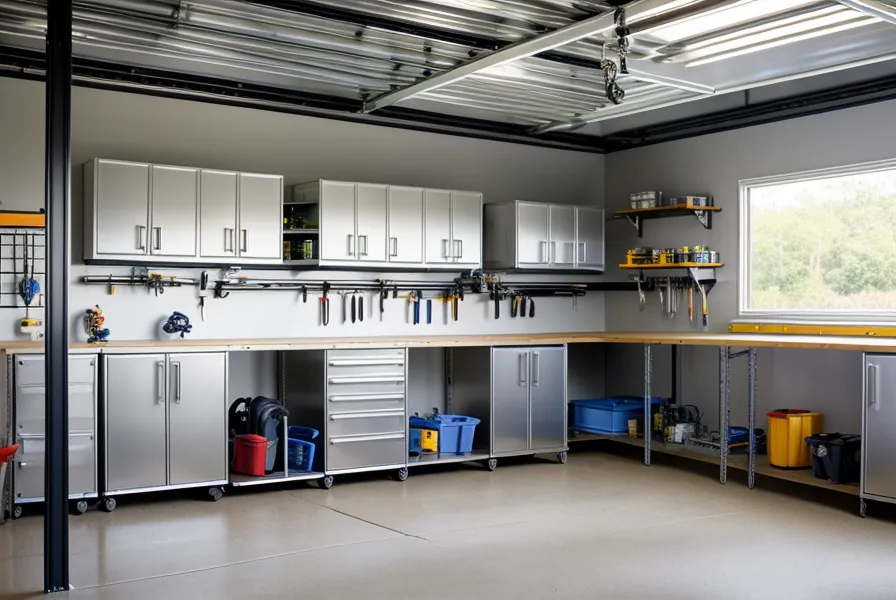
Here's the trade-off the marketing pages leave out. The Aqua Tower is a set-it-and-forget-it gravity system — as long as water is in there and the valve's open, physics does the work on its own, with no maintenance beyond that vertical clearance requirement.
The SmartWaterBox, because it sits lower and splits across modules, needs more frequent manual pressure checks to keep a steady flow, especially when boxes are stacked in certain configurations. That's a different problem from how fast a gravity filter can process water — filter flow rate is its own question, separate from how quickly a storage footer-a116d1 releases what's already treated — worth keeping straight so you're not troubleshooting the wrong system when a tap runs slow. In IT terms, this is like checking router logs: not hard, but a manual touchpoint the tower simply doesn't have.
Which System Fits Your Garage Layout?
Darnell Fontenot's emails always end up back at this question. He's a reader who's sent me more storage follow-ups than anyone else on the list, and every answer he gives me gets measured against what actually held up during storms back in Louisiana before he moved to the Katy area. His conclusion, and mine, is that there's no universal winner. There's only what your garage will physically allow.
If you've got a high-ceiling garage corner that's never going to double as anything else, the Aqua Tower is a genuinely solid tank solution — simple, robust, minimal moving parts. But for most suburban garages, the ones sharing space with a car, a gym bench, and a workbench, the SmartWaterBox's modularity wins. It fits into the gaps you already have instead of asking you to build your life around one fixed footprint.
Storage only solves half the problem, though. I keep a Dark Reset kit and some David's Shield treatment nearby, because a full footer-a116d1 is just stagnant water until it's actually treated. Storage, purification, and filtration are three different questions with three different answers, and mixing them up is how people end up with a hundred gallons they're afraid to drink. Treatment products carry their own shelf life too, separate from the container's own timeline, so I check both on the same day I check the boxes. I'm not a doctor or a water-quality scientist — I'm someone who treats his home's systems the way I'd treat a server closet, and you should check your local water reports and talk to a professional if you have specific health concerns about long-term storage.
Final Verdict for the Suburban Garage
Don't wait for the next outage to think this through. Losing tap water turns a normal house into a stressful one faster than people expect. Everything above is about bulk, stationary storage for a fixed location — how much to keep at home versus how much to carry with you is a genuinely different question for anyone thinking about a car kit or a grab-and-go bag, and it deserves its own answer rather than a rushed paragraph at the end of this one.
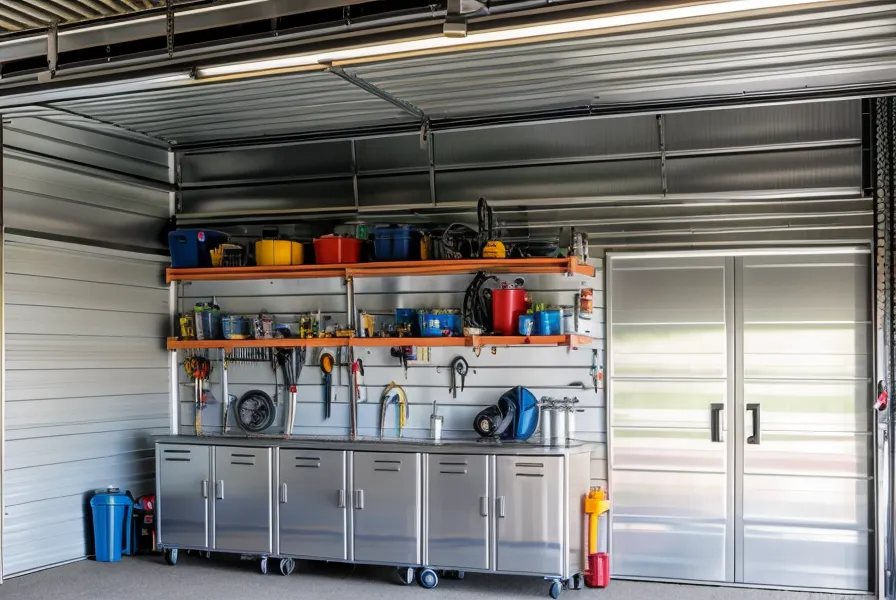
If you're just starting out and feeling overwhelmed by all of this, my 5 Hidden Mistakes in Your Suburban Water Preparedness Plan will save you from buying gear you don't actually need. But if you already know you need bulk storage and your garage looks anything like mine — shared, cramped, one workbench away from chaos — start with the SmartWaterBox. It's stayed my daily driver for the simple reason that it fits the space I actually have, not the space a warehouse photo assumes I have.