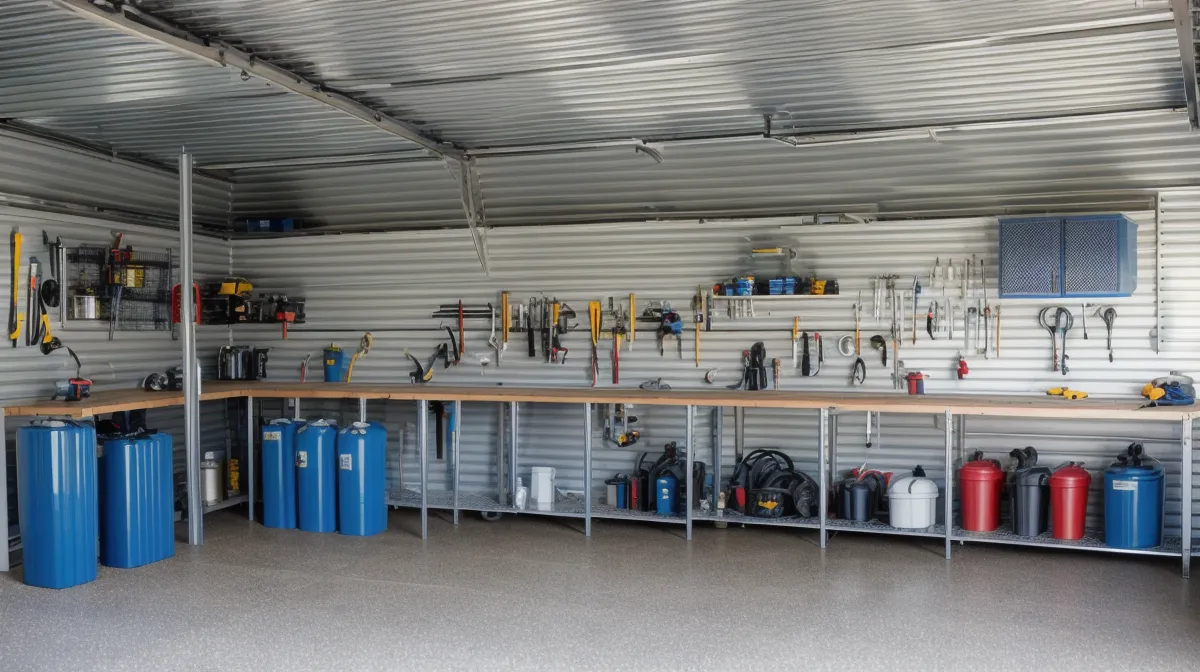
Forty-five minutes. That's roughly how long it took a gravity filter to push a single gallon through its cartridge the first time I timed it — a number that told me everything about why filtration and storage are not the same emergency water problem. I'd bought the filter thinking it would back up my bulk water storage, and instead it taught me that when pressure and time actually matter, a slow trickle doesn't cut it. That test ended up shaping how I run every gear comparison I do now for hurricane preparedness, including the one I keep coming back to: a modular SmartWaterBox setup against an old-school Dark Reset barrel.
Update (September 2026): Aqua Tower is no longer available for purchase; this article is kept for reference. Our current alternative pick in this category is Water Freedom System.
Quick disclosure before we get into it: I test this gear myself, in my own garage (except the one marked "not yet tested"), and some of the links below are affiliate links — if you buy through one, I earn a commission at no extra cost to you (my wife has opinions about how much garage space this hobby takes up). I'm not a survivalist or a medical professional, just someone in IT support who got serious about this after Hurricane Beryl left us without water for four days. If you need specific health guidance around hydration, that's a conversation for your doctor, not a blog post.
Static Water Solves a Different Problem Than Portable Water
In IT terms, a server lives in a rack and a laptop goes home in a bag — two different jobs, even though both hold data. Our water setup for years was all server: the Dark Reset barrels sat in the garage as reliable bulk storage, while the SmartWaterBox units, once I finally started testing them, filled the laptop role, since I could grab and move them without a workout. The gallon-per-person-per-day math is its own whole topic, but it's basically what pushed me toward keeping water in both formats instead of betting everything on one.
The FEMA minimum for a household supply is three days, and public health guidance points to roughly a gallon per person per day as the baseline — arithmetic that adds up fast for a family of four. A single Dark Reset barrel clears that baseline without much thought, but it also turns into a fixture the moment you fill it. If your bulk supply lives in the garage and your family is in the living room during an actual outage, that's a logistics problem, not a supply problem.
The Case for Bulk Water Storage
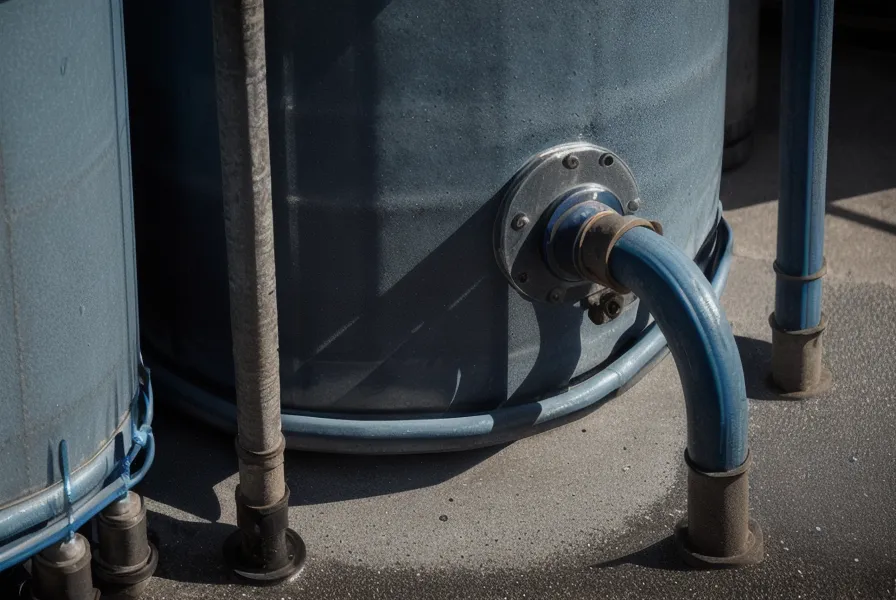
By week four of running both systems side by side, the difference in upkeep was already showing. The Dark Reset barrel had sat untouched on the same spot the whole time, while the SmartWaterBox units had already made several trips to the kitchen counter and back. The Dark Reset setup earns its keep on cost per gallon and sheer capacity if you've got the floor space and no plans to relocate it. Try shifting a full one by hand a few inches, though, and you'll feel a slow, unsettling wobble roll through all fifty-five gallons before it settles — not an experience I care to repeat.
Rotating that much water isn't hard, exactly, just tedious — siphoning fifty-five gallons out to the driveway twice a year eats an afternoon, and I've written a whole separate piece on the schedule I use so it doesn't sneak up on me: The Garage Water Rotation System That Actually Works Without Annoying My Spouse. Sanitizing the footer-a116d1 before you refill it is its own short checklist that I won't get into here, but skipping it is how stored water quietly turns from a backup plan into a science experiment.
What Makes the SmartWaterBox Different?
Portability was the whole point when I started testing the SmartWaterBox instead of just adding another barrel. Rather than one massive container, you're working with modular units a single adult can actually carry — into the kitchen, out to the car, wherever the plan changes that day. Figuring out how many of those units your household actually needs is its own bit of arithmetic, separate from the per-person-per-day math, and worth sitting down with before you buy anything.
I looked at the Aqua Tower and David's Shield around the same time, mostly to see whether a taller, narrower footprint would beat modularity in a garage with limited floor space — the Aqua Tower in particular leans into that vertical stacking approach, which is a comparison worth its own post someday. What sold me on the SmartWaterBox specifically was that it didn't feel like a flimsy jug engineered down to a price point; the material held up to getting knocked around the garage the way gear you're actually counting on needs to.
Testing Both Systems the Day the Water Main Broke
A water main broke under our street in Friendswood on an otherwise unremarkable afternoon, and it turned into the live test I hadn't planned for. It wasn't a hurricane, just ordinary suburban infrastructure failing, but the neighborhood group chat lit up like it was one. My neighbor, who spends most weekends building furniture in his converted garage workshop, wandered over to ask if I actually had water on hand or just talked about it a lot.
It reminded me of a dumber moment months earlier, when I fired up the camp stove to test our stored pasta and only realized halfway through boiling it that every ounce of that water had to come from a supply I'd actually planned for — food prep was never the part of this hobby I thought I'd forget about, until suddenly it was.
My Dark Reset barrel was sitting there full, as always, but nobody wants to mess with a siphon in Houston heat just to prove a point to the group chat. I grabbed two pre-filled SmartWaterBox units instead, and inside a few minutes there was water on the kitchen counter for cooking and cleanup, no bucket brigade required.
That same portable-versus-bulk trade-off shows up outside the garage too — it's basically the same decision people face when they're stocking a car emergency kit instead of a whole house. And whatever purification method backs up your storage, whether that's a filter or chemical treatment drops, has its own shelf life worth tracking, a separate maintenance job from rotating the water itself.

Portability Versus Capacity: The Real Trade-Off
Most families serious about this probably need both formats, not one or the other. I still keep one Dark Reset barrel as the baseline supply I hope to never touch, but for the everyday stuff like pipe freezes, water main breaks, and the situations that actually happen in a Houston suburb, the SmartWaterBox units are what I reach for first.
It also helps to keep storage and purification as separate questions instead of one blurry decision — a full footer-a116d1 solves a supply problem, while a filter or chemical treatment solves a safety problem, and mixing the two up is how people end up under-prepared on one side while feeling covered on both. I go deeper on how I balance different backup systems in Why I Chose David's Shield for My Family's Emergency Backup, if you want the fuller picture.
If you only take one thing from all this testing, let it be a simple question: if you had ten minutes to leave the house, how much of your water supply would actually go with you? For most people with only static drums, the honest answer is none of it — and that gap, more than any single product, is what decided how I split my own setup between the two.
Water storage doesn't need to turn into a second job, but it does need an honest look at your own house, your own family, and how much distance realistically sits between your supply and the door.
| Product | Rating | |
|---|---|---|
| SmartWaterBox Top Pick | 9.2 | Read More → |
| Water Freedom System (not yet tested) | - | Read More → |
| David's Shield | 8.5 | Read More → |
| Dark Reset | 7.9 | Read More → |
SmartWaterBox
Pros
- ✔ Modular design allows for easy transport and rapid evacuation
- ✔ Manageable weight per unit compared to bulk drums
- ✔ Simplifies the water rotation process significantly
- ✔ Extremely durable, high-grade materials
Cons
- ○ Higher initial cost per gallon than large static barrels
- ○ Takes up more horizontal footprint for large volumes