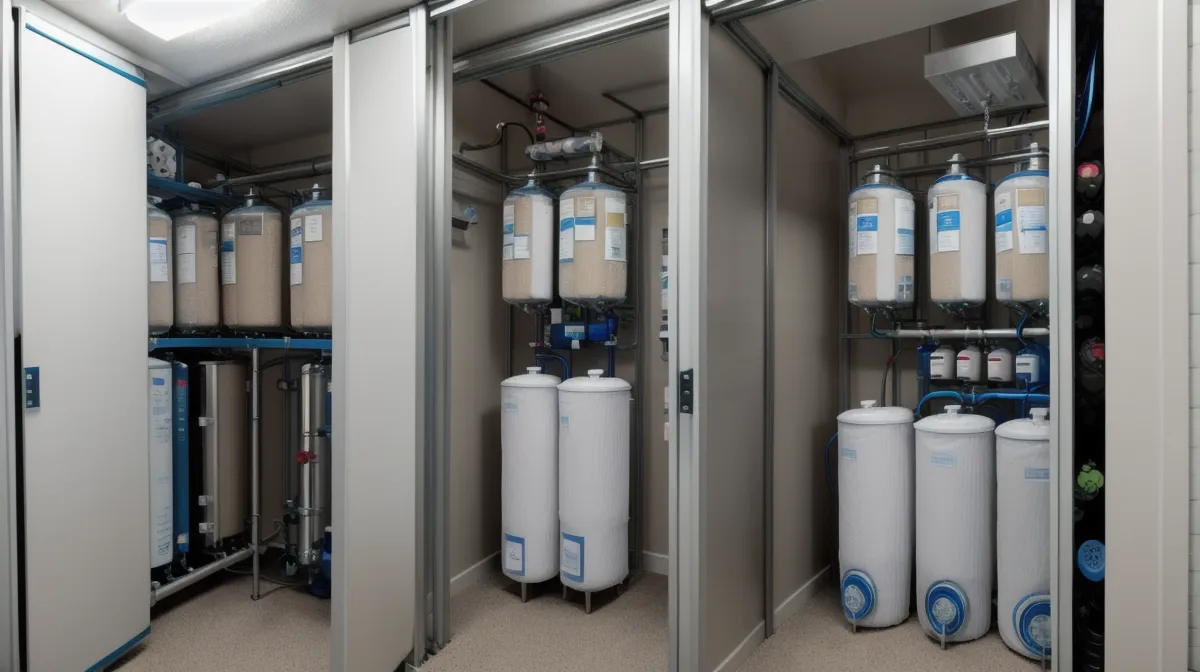
How many pounds of water can your bedroom closet floor actually take before something underneath starts to complain? That's the question that sent me out to the garage with a tape measure one summer, and it turned out to be the wrong starting point for a different reason than I expected. Floor joists were never the real problem. Heat was. A sip of warm, plastic-tasting water from a garage-stored jug was what finally pushed our water storage plan out of the garage and into the master closet, and food-grade containers built to survive closet life turn out to be a different category entirely from the jugs marketed for sheds and garages. That's really what emergency preparedness looks like in a suburban house: not a bunker, just the least terrible spot for something heavy and necessary, worked out through a home preparedness plan that fits the house you actually have.
Quick disclosure before any of that: some of the links below are affiliate links, and I earn a commission if you buy through them, at no extra cost to you. I only link to gear I've personally hauled into my own closet, tested, and lived with — not anything that just showed up well-reviewed in a search result.
Can a Bedroom Closet Actually Double as Water Storage?
When you work in IT support, the first instinct during any outage is to map out physical constraints before touching anything. You don't cram a server into a rack without checking ventilation and weight ratings, and treating the master closet like a backup server closet felt completely natural, even with my spouse watching me measure baseboards with visible concern. She had a point.
The ground rules were non-negotiable: no industrial drums in the bedroom, zero odor, and nothing that risks the carpet or the shoe racks. That narrowed the search fast, to containers certified for drinking water specifically — not general-purpose jugs rated for antifreeze one week and lemonade the next.
The Food-Grade Checklist Nobody Reads Until It's Too Late
Any container meant to hold drinking water long-term needs to be molded from virgin, BPA-free resin, marked clearly with the HDPE #2 recycling symbol. Cheaper utility jugs leach plasticizers into standing water over time, which explains that chemical tang from the garage jug. It wasn't contamination exactly, it was the container itself breaking down.

Keeping a certified container food-grade over its full lifespan is its own separate problem from buying one. There's a whole container sanitation protocol around cleaning, re-certifying, and knowing when an older jug needs to be retired. That deserves more than a paragraph here. For now, the short version: buy HDPE #2, keep the cap sealed when you're not filling it, and don't assume a container is food-grade just because it once held something edible.
A Two-Week Reserve Weighs More Than Most Closets Expect
Potable water weighs approximately 8.34 pounds per gallon. Follow the standard FEMA guideline of a bare minimum of 1 gallon per person per day — the baseline for the gallon-per-person-per-day math that shows up in pretty much every water prep calculation — and a two-week reserve for a small family lands somewhere between forty and sixty gallons. That means somewhere around 300 to 500 pounds of dead static weight sitting directly on the flooring, not spread across a foundation slab the way a garage handles it.
Running those numbers is basically an inventory audit, the same exercise I'd use to size storage capacity for a server closet at work, except the thing being stored is forty-plus gallons of static weight instead of hard drives. How much total capacity a household actually needs, separate from which specific container holds it, is a planning question worth working through on paper before buying anything — bedroom placement specifically is covered in more depth in my guide on how to store emergency water in a guest bedroom without making a mess.
Rigid Jugs or Flexible Bladders — Which One Actually Wins in a Closet?
Prepper forums love rigid five-gallon stackable bricks, and in a garage that makes sense. Living with them in an active closet reveals friction fast. Stack three rigid cubes and you concentrate roughly 125 pounds onto a footprint smaller than a shoebox. Resting that against drywall, or on a builder-grade shelf, is asking for a warped stud or a sudden bracket failure. Keeping them flat on the floor slab, not shelved, is close to mandatory.
Flexible bladder systems spread that same weight broadly across the floor, which protects the structure, but they sprawl across square footage a closet usually can't spare. Deep into closet testing, the rigid jugs also started bowing out the bifold doors whenever hanging coats shifted against them. This failure mode nobody mentions because nobody tests gear against actual clothes. My neighbor, Mel Okonkwo, who still keeps a running mental tally of every piece of storm gear that's failed on our street across the last three hurricanes, wasn't even surprised when I told her. She'd written off rigid jugs for anything indoors a while ago.
Heat is a separate stress test from weight entirely, and how these plastics hold up through a Houston summer is a deep enough topic on its own; the short version for a closet is that indoor temperatures are far gentler than anything baking in a garage. Stacking vertically to save floor space carries its own tradeoffs too, worth working through separately rather than folding into this comparison. For a broader side-by-side across a whole house, see my notes comparing stackable food grade water containers for suburban homes.
Four Closet-Ready Systems Worth a Look
Cycling gear through real closet conditions across a full season turned up four systems that actually manage to stay fresh, invisible, and safe inside living space rather than a garage.
SmartWaterBox — The One That Disappears Under Your Shirts
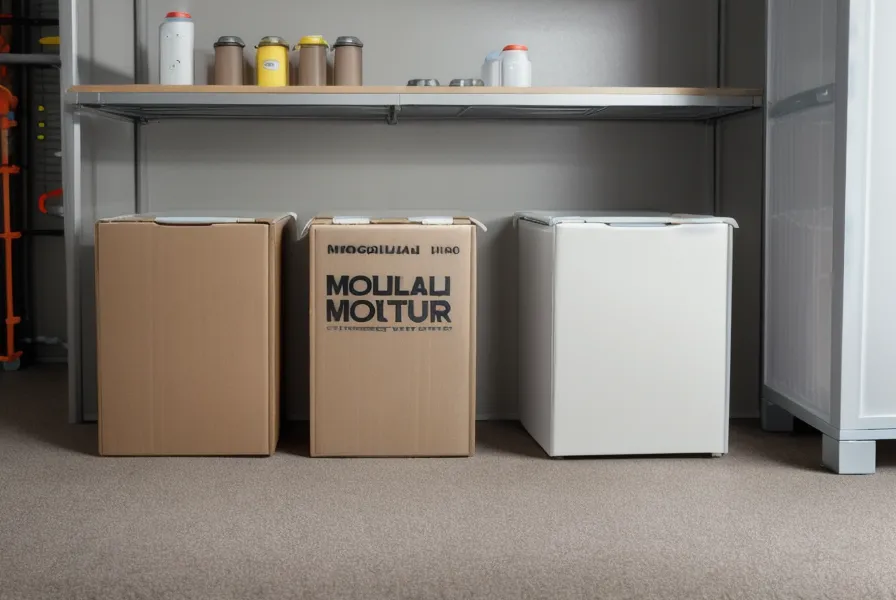
The SmartWaterBox became the clear favorite for indoor storage. Instead of exposing water to stray bedroom light or risking a hairline crack on a rigid corner, it uses food-grade inner bladders housed inside rigid, stackable outer boxes — closer to boxed wine than anything marketed as "survival gear."
Because the outer shell is a plain, uniform box, it tucks completely under hanging dress shirts without looking like staging for an emergency. The dispense valve stays recessed behind a cardboard flap until pulled through, which cuts down on the accidental-bump leaks that flexible systems are usually prone to. Current pricing is on the vendor's page, since kit configurations shift. A longer breakdown of long-term trials lives in my SmartWaterBox testing experience.
Water Freedom System Skips the Containers Entirely
If closet floor space is already at zero, hoarding more boxes isn't realistic. That's where an extraction approach like the Water Freedom System enters the picture. Rather than focusing on static plastic vessels, it's a guide to pulling moisture from the air to keep smaller containers topped off continuously.
It comes with a 60-day 100% money-back guarantee and instant digital access, which makes exploring the method low-risk. One note: it's an instructional bundle rather than a ready-to-fill container, and the printed edition adds $9.95 shipping if you want it on paper. Treat it as a supplemental layer rather than a replacement for actual stored gallons.
David's Shield Is Built Like Modular Armor
For anyone set on rigid, heavy-gauge plastic, David's Shield offers purpose-molded, food-grade blocks that interlock with tight tolerances. The walls are noticeably thicker than standard camping jugs, so there's no outward bulging once they're completely full.
Two problems here need separating: storage and contaminant removal aren't the same job, and David's Shield only solves the first one. It's a vessel, not a filter, and conflating the two is a common mix-up worth avoiding before buying anything. The integrated carry handles make moving twenty-plus pounds through a narrow hallway manageable, though stacking two units high in a shallow closet means sliding the whole stack forward to reach the lower spigot (closet yoga, basically). Pricing and package options are on their site directly.
Dark Reset: The Budget Pick That Still Passed My Leak Test
Dark Reset is the option for anyone who wants something economical that slides under a low hanging rod. It leans on opaque, UV-blocking material built to stop algae growth even with the closet doors left open.
The molding around the cap threads is a little less refined than the top pick, but it sat through a slow-drip leak test on paper towels without releasing a single drop. No complicated fittings, no learning curve — just dependable potable storage at a lower price point. Check the vendor page for current package pricing.
How Do You Rotate Water You Almost Never Look At?
Storage only solves half the problem. The other half is knowing whether the water inside is still good months later, without opening every container to check.
Set up a full water rotation schedule, a system for cycling older containers to the front and newer ones to the back, similar to grocery stocking. That system is detailed elsewhere rather than repeated here. Stored water does have a shelf life to understand, separate from whether the container itself is holding up. A sealed, food-grade container in a stable closet environment holds up far longer than most people assume. When I finally cracked open a container that had sat sealed for six months, there wasn't a hint of plastic funk waiting inside, just a faint, clean coolness, like water that had never been near a tap.
Purification and filtration get treated as interchangeable online, and they aren't. One removes particles and some pathogens as water passes through, the other treats water chemically or kills pathogens outright, and knowing which one you're actually doing matters before you drink anything stored long-term. That distinction is why one failed experiment still bugs me: pool-shock purification tablets, pulled out during a supply gap, that required a full 24-hour wait before the water was even safe to drink. For an actual emergency, where the whole point is water today, a treatment method with a built-in day-long delay defeats its own purpose. Chemical treatments also carry their own shelf life. A half-used, years-old bottle of tablets isn't something to trust blindly, which is a separate mistake from the 24-hour wait but one that compounds it.
A neighbor, Sandra Kwan, messaged me through our neighborhood app after seeing some of my notes, asking to copy my spreadsheet for her own household. She'd originally planned on two rigid stackable towers, but once she saw how much closet floor they'd actually eat, she switched to a single boxed bladder system instead. She still checks in occasionally to report what she ended up keeping versus what was on her original shopping list, which rarely match.
Before refilling anything after a storm, do a basic water quality check on your tap source rather than assuming service is back to normal just because the water is running again. A boil-water notice can stay active well after pressure returns. None of this is medical guidance: for sanitation specifics around emergency drinking water, your own physician or local health department is the right source, not a water-prep blog.
Keep the Leak Risk Off the Carpet Before It Happens
A shallow utility tray under closet containers takes up almost zero vertical space and acts as cheap insurance against a cracked seam or failed gasket ruining the carpet underneath. It's a five-minute addition that solves a problem you'd otherwise discover the hard way.
This closet setup is one layer in a larger plan, not the whole plan. It's the kind of layered redundancy an IT background makes you build by instinct, where no single point of failure is allowed to take down the whole system. Seven years into testing water storage setups for a house that sits in hurricane territory, the short list that actually matters hasn't changed much: certify HDPE #2, keep rigid containers flat on the slab instead of shelved, add a tray underneath, and rotate on a schedule instead of trusting memory. Everything past that is optimization. The closet itself, done right, quietly becomes one of the more dependable parts of the house.
| Product | Rating | |
|---|---|---|
| SmartWaterBox Top Pick | 9.3 | Read More → |
| Water Freedom System | 8.8 | Read More → |
| David's Shield | 8.4 | Read More → |
| Dark Reset | 7.9 | Read More → |
SmartWaterBox
Pros
- ✔ Boxed bladder design shields water completely from degrading ambient light
- ✔ Uniform rectangular footprint fits cleanly under low-hanging closet garments
- ✔ Recessed spigot design eliminates accidental knocks and slow wardrobe leaks
- ✔ Discreet cardboard exterior looks like tidy household storage rather than tactical gear
Cons
- ○ Outer cardboard shells must be kept away from standing floor moisture
- ○ Requires careful initial filling to avoid over-stretching bladder seams