Two hundred and thirty-three pounds of water does not announce itself until it is already sitting on your bedroom floor. That is roughly what two adults need stashed for the standard two-week emergency water target, and it is exactly the kind of weight that turns indoor water storage into a different problem than parking jugs in the garage. For months mine sat wedged in a guest room closet, pressing a slow dent into the carpet pad that nobody noticed until it was almost too late to catch.
Hurricane Beryl is what started all of this — four days without municipal water pressure in our corner of the Houston suburbs back in 2024. During the boil notice that followed, I pulled out a Brita pitcher, figuring any filter beats no filter. It turned out painfully slow and never built for treating tap water under a boil notice, and standing around waiting for a few cups at a time made it obvious I needed an actual system, not a kitchen gadget.
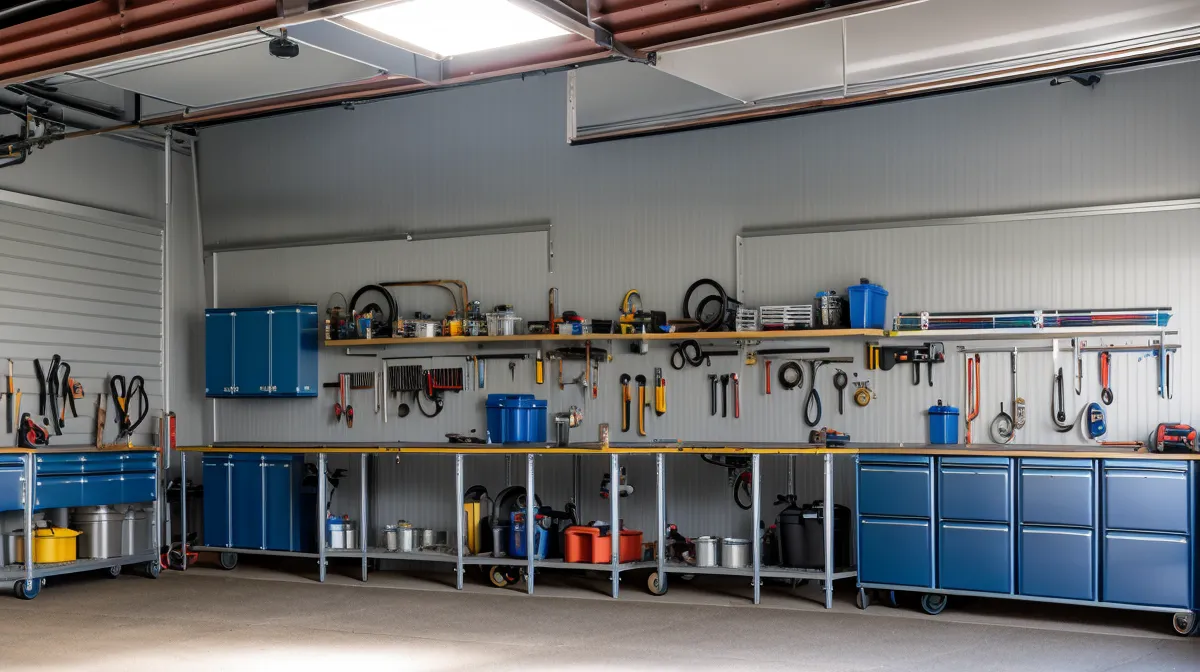
For the first year, the plan lived entirely in the garage. Half of it turned into a testing setup — a utility sink for filling and dumping containers, a pegboard of hose fittings and spare filter parts within reach, a wall of labeled jugs stacked higher than my shoulder by the time hurricane season rolled around. I can still feel the cold of that bare concrete floor under my feet on an early morning before the Texas heat turned the place into an oven, back when every gallon I owned for emergencies lived out there instead of in the house (much to my spouse's mild bewilderment).
Garage heat is brutal on plastic over a Texas summer, which is reason enough on its own to keep long-term containers somewhere climate controlled instead. The math pushes you indoors too. The baseline recommendation from the Federal Emergency Management Agency (FEMA) is at least a gallon of water per person per day for two weeks, which puts two adults around twenty-eight gallons — add a dog or a couple of sponge baths and you are closer to forty. That is not a small amount of liquid to find room for anywhere in a house, and it is exactly the gap most home preparedness advice glosses over.
Why a Closet Isn't the Answer
A closet felt like the obvious answer at first, mostly because it stays out of sight. Under the bed gives you six or eight inches of clearance at best, which rules out anything but thin bottles you cannot inspect without lying on the floor. A closet stacks all that weight into a two-foot-square patch of subfloor and hides any leak behind coats and shoe boxes until the damage is already done. On concrete in a garage, a slow drip is a mess you mop up. Inside a bedroom with drywall, carpet tack strips, and a subfloor you cannot see under, it turns into a repair job fast — a tradeoff I had already run into while managing bulk water storage in a suburban garage, where a drip is just a drip until you track the same weight problem indoors.
What Changed When I Moved the Water Into the Open
My coworker Tiffany Bui is the one who made me rethink hiding the water at all. She sits a few desks over in IT support, and after a handful of water-prep questions, she landed on one I had not actually worked out myself: what happens to the floor under forty gallons you cannot see. That question is what pushed me toward spreading the weight out in the open instead of packing it into a corner.
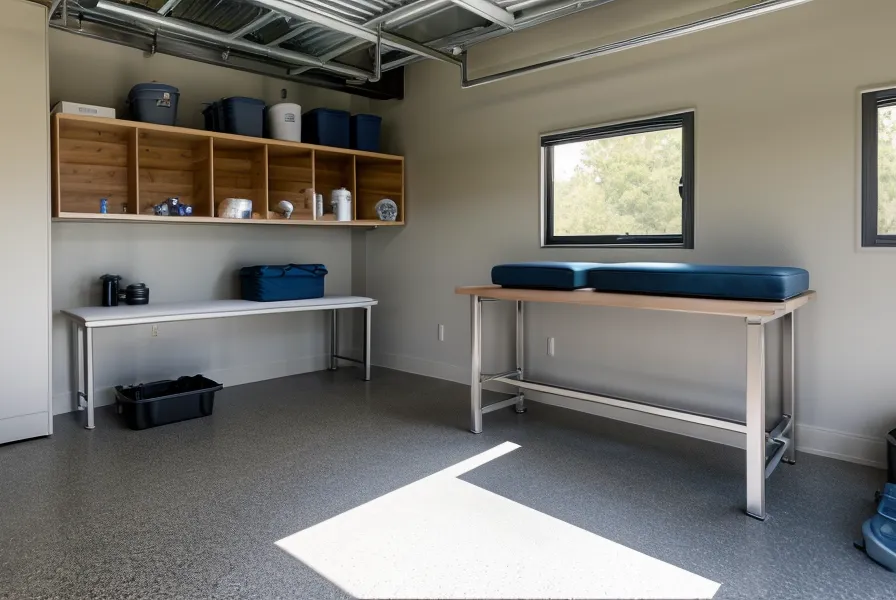
Instead of piling containers into a closet, I built a low platform out of three-quarter-inch plywood that runs across the floor joists along one wall of the guest room, rather than resting between them. Spreading thirty gallons across an eight-foot bench instead of a two-foot closet floor cuts the load per square foot down to almost nothing, and it keeps every container where a problem would actually get noticed. A linen skirt and a cushioned top turn the whole thing into a bench guests use to put on their shoes, not a utility shelf they would ever ask about.
Leak Prevention Starts Before the First Drip
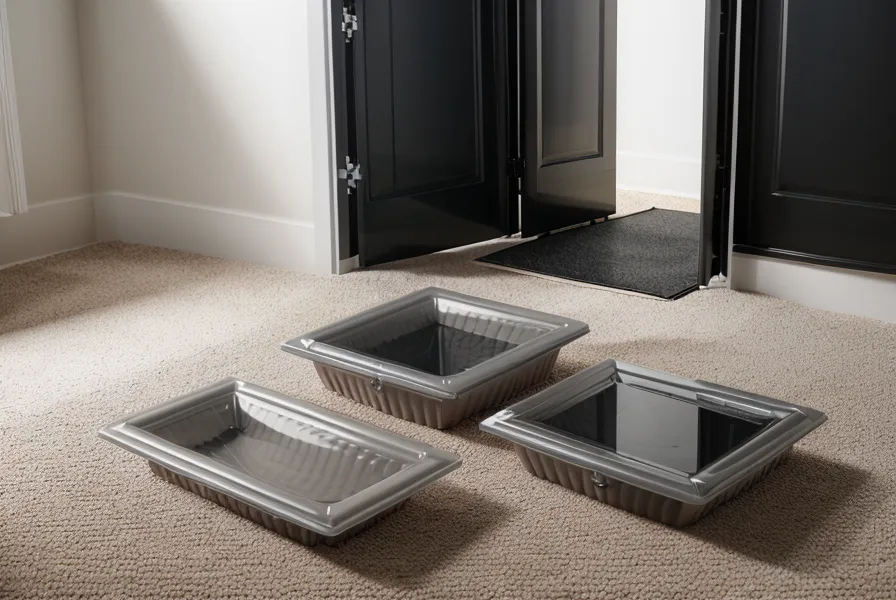
Weight is only half the problem — the other half is containment. Every container sits inside a rigid polypropylene tray with a raised lip, the same style sold for washing-machine drip pans, so a cracked seam fills the tray instead of the carpet. I stopped buying the thin gallon jugs I used to grab at the H-E-B on Mason Road, since their blow-molded HDPE seams split under pressure changes that heavy-walled containers shrug off. Stored water does not last forever either, which is the whole reason I keep track of whether bottled water expires during long-term storage instead of assuming a filled container is a finished task.
The Setup, Step by Step
Getting this right in an actual bedroom comes down to a short sequence, and skipping a step is how you end up with a dent in the carpet. Start by finding the floor joists below — a stud finder works from the ceiling of the room underneath, or you can read the subfloor fastening pattern — and set your platform running perpendicular across at least two of them instead of parallel between them. Lay a closed-cell foam mat or a heavy vinyl runner over the carpet first, so the setup is not grinding against the pile every time you check on it, then set the drip trays on top with sidewalls at least two inches tall. For the containers themselves, I spent a long stretch comparing stackable food grade water containers for suburban homes before settling on rigid five-gallon cubes that lock together without sliding, and I rinse and air-dry every one before it goes back into rotation, since a container that looks clean is not the same as one that is actually sanitized. Cover the whole array with a breathable canvas or linen drape before any bench cushion goes on top, both to keep light and dust off the containers and to muffle the sloshing when a door closes. A battery-powered moisture sensor dropped into the base of each tray is the cheap insurance on top of all of it — three drops of water and it chirps long before anything reaches the floor.
It Still Feels Like a Guest Room
My in-laws stayed in that room for three nights last summer and never once suspected what was under the window bench where they drank their morning coffee. By week twelve of running the setup this way, I left town for a week in July and came back half-expecting a damp patch somewhere — instead every seam was still dry and every cap was still tight, which told me more about the setup than any inspection I could have staged myself. A reader named Darnell Fontenot has been emailing me since he found the site after last year's flooding, and he is upfront that he cannot throw money at every upgrade on a list like this, which is exactly why starting with a plywood platform and a few drip trays, instead of a built-in system, is the part worth copying first.
The real lesson is not about plywood or drip trays — it is that hidden storage and safe storage are not the same thing, and defaulting to "out of sight" is how a small leak turns into real damage. Spread the weight out, keep every container visible, and build in a second layer of containment, and emergency water stops being something you dread finding when you open the closet.