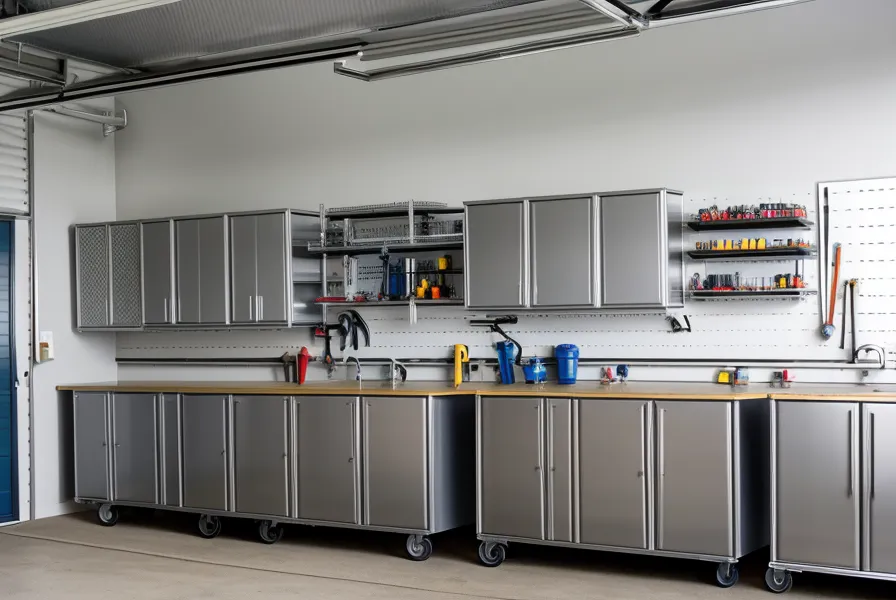
A flooded street is the emergency everyone photographs. A barrel of water sitting untouched in a garage two days later is the one that can actually make a family sick, and almost nobody thinks about it until it's too late to matter. That gap — between water you stored and water you can still trust once floodwater has been anywhere near it — is the real flood preparedness problem, and it barely shows up in the suburban readiness advice you'll find with a quick search. I got serious about emergency water storage safety after Hurricane Beryl left our taps dry for four days in 2024, and the lesson that took longest to sink in wasn't how to store water. It was how easily a flood can quietly ruin water that was stored correctly in the first place.
Neighbors bring me some version of the same handful of questions every time a storm shows up in the forecast, so here's what I actually tell them once we're past the small talk about generators.
Elevation Beats a Tighter Lid
Getting containers up off the slab does more good than any lid upgrade ever will. Floodwater in a suburban garage is a plumbing event the same way a server room taking on water is a plumbing event — the fix isn't a better seal, it's keeping the hardware off the floor before there's a problem to solve. Shelving anchored into wall studs, not just resting against them, handles the weight fine; a full stack of containers is heavier than it looks, and unsecured shelving under that kind of load turns into its own hazard once water starts moving things around.
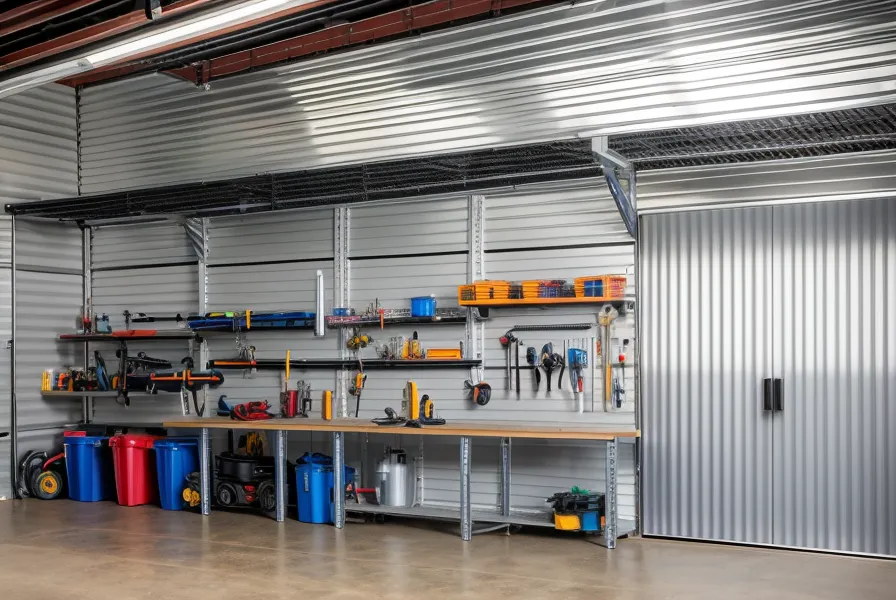
How much of your garage you dedicate to that kind of vertical shelving versus floor space is its own trade-off depending on the layout you're working with. Heat does its own kind of damage to that setup too, separate from flooding, which is why I've gone into what a full Houston summer does to stored containers in what months of garage testing taught me about water stress — worth a look before assuming plastic sitting near a garage door in July behaves the same as plastic in a closet.
Can a Flood Really Get Through a Sealed Screw-Top Lid?
Screw-top barrels get treated like a finish line — seal it, forget it, done. Floodwater doesn't play along that way. If the base of a footer-a116d1 sits in standing street water for a couple of days, that water can still find a way into the threads, something a chemistry textbook would file under capillary action, and a gasket with even a hairline gap won't stop it. What's sitting on your street after a flood isn't just rain runoff either — it's officially black water, everything that was on the road and under people's lawns, all mixed together.
A neighbor a couple of streets over, Preethi Ramachandran, asked me about this exact scenario, except she wasn't thinking about germs at all. She wanted to know about the chemical side — what runs off a driveway or leaches out of a flooded garage floor and ends up pressed against a footer-a116d1 seal. Biological contamination and chemical contamination aren't the same threat, and which method actually catches which is a big enough comparison to deserve its own article instead of a paragraph here.
The fix I use is dumb-simple: wrap the threads of larger barrels in silicone tape before storm season, which gives you a physical barrier a gasket alone doesn't have. It's a pain to peel off later, but it beats finding out the hard way. If you're tight on space and can't build out a full elevated setup, how to store potable water long term in a small backyard has some workarounds worth a look.
Old Plastic Becomes the Weak Link Faster Than You'd Think
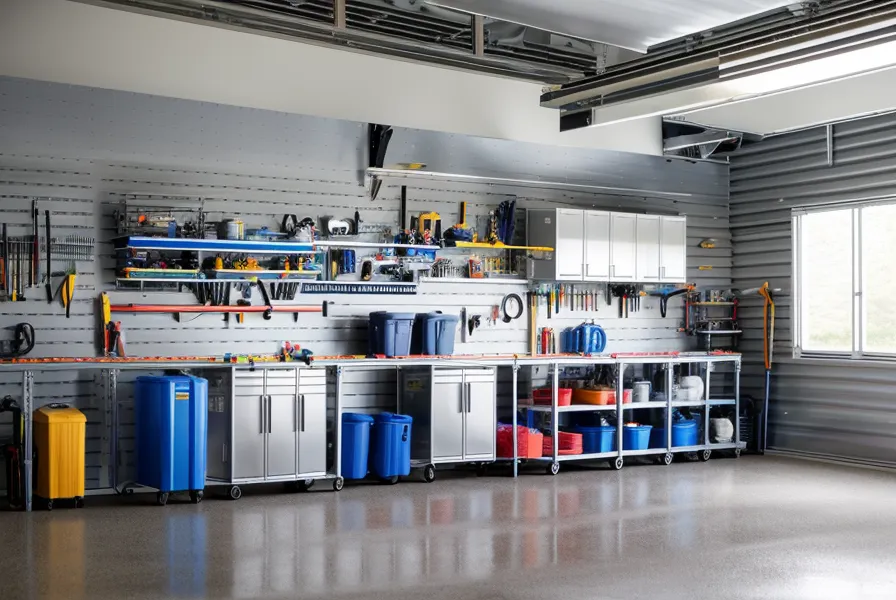
Plastic containers age whether you ever flood them or not, and that matters more once a flood actually happens. Most stored water sits in HDPE 2 containers, which is the food-grade standard for a reason, but a jug that's spent several summers baking in a garage isn't the same jug it was on day one. Sitting in stagnant, contaminated water for days is a bigger ask for aged plastic than most people realize, and I don't trust a five-year-old jug the same way I trust a new one.
This is why I rotate older plastic bins out on a set schedule instead of waiting for them to look bad, and why cleaning a footer-a116d1 properly before refilling it is its own routine, not just a rinse under the tap. I keep longer-term water in glass on the top shelf for the same reason — it doesn't age the way plastic does. If you're weighing different storage form factors against each other, I ran a SmartWaterBox vs Dark Reset comparison that gets into footer-a116d1 integrity specifically.
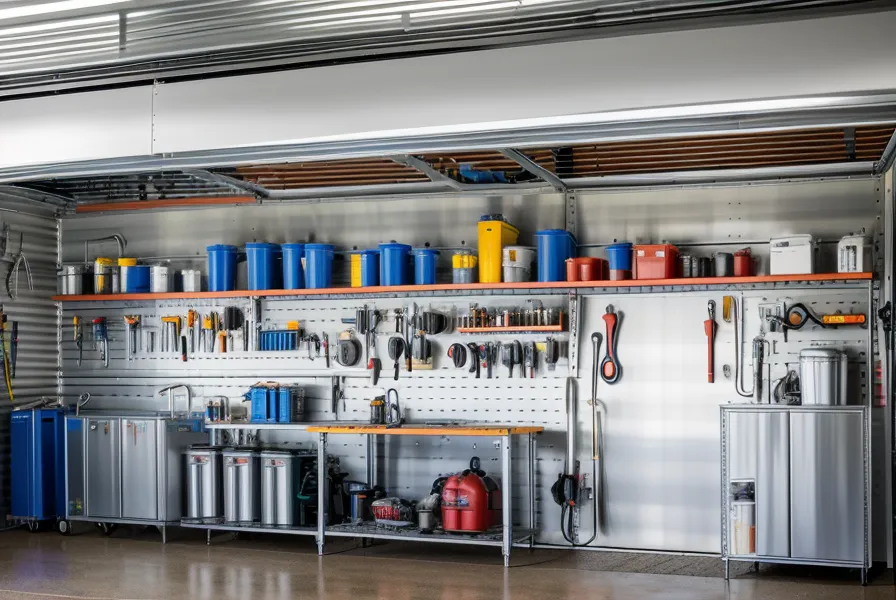
The clearest proof I've gotten that a batch was still good, honestly, came from the dog and not a test strip. She put her face in a bowl I'd filled straight from the Dark Reset containers and drank without even sniffing it first, the same way she does with water she already trusts.
How Much Emergency Water Should Actually Be on That Shelf?
This is usually the next question, and it's really two questions stacked together — how many gallons per person per day, and how much total capacity actually fits your garage. The per-person daily number is baseline math that changes with household size and how many days you're planning for, and I'd rather point you to a dedicated breakdown than shortcut it here. Total capacity planning — how many containers of what size actually fit a given footprint without turning your garage into an obstacle course — is a similar rabbit hole worth its own comparison.
None of this touches what you'd grab if you had to evacuate instead of shelter in place, either. A bulk water supply sitting on a shelf and a portable supply you can throw in the car solve two different problems, and conflating them is how people end up prepared for the wrong scenario.
What Do You Do If You Think a Container Got Compromised?
Have a purification backup ready before you need it, because you will not want to be reading instructions in the moment. The first time I actually needed one, I reached for a pack of iodine tablets left over from an old camping kit. Technically they worked. Practically, the water came out the color of weak tea, and my kids took one look and refused to touch it, which taught me that safe and something your family will actually drink under stress are two different requirements.
Purification and filtration solve different problems — a filter clears out sediment and some organisms, a purification method targets pathogens without necessarily removing anything solid — and mixing the two up is a common mistake. A gravity filter is another option some people keep as backup, though how fast it actually keeps up with a thirsty household under pressure is a question worth answering on its own. Whatever chemical treatment you keep as a fail-safe, check it occasionally too — chlorine drops and tablets don't last forever on a shelf, and that's a shelf-life question separate from the footer-a116d1 question.
Checking the Tap Again Once the Water Recedes
Getting your stored water right is only half of it. Knowing when the tap itself is trustworthy again is the other half, and it's not something you can eyeball. A friend I met through a local prep group, Craig Delacroix, has told me more than once that most of what he knows about how utilities actually fail didn't come from a manual — it came from watching one fail in real time. When I asked him how he decides it's safe to trust the tap again after a boil notice lifts, his answer wasn't technical at all: wait for the utility to confirm it, then wait a bit longer anyway. Verifying water quality after a storm is genuinely its own process, with its own steps, and it deserves more space than a paragraph at the end of this one.
Craig and I traded notes on this after a trip that took me out toward Galveston — that week's surge had chewed up sections of the Galveston Island seawall walk I usually take, which is its own reminder that water hanging around somewhere doesn't mean that water is fine.
None of this is complicated once you've done it a couple of times — it's closet-organizing logic applied to something that can actually make your family sick if you skip a step. Keep containers up off the floor, don't trust a lid by itself, rotate plastic before it gets old enough to matter, and have a backup purification plan you've actually tested before a flood forces the issue. Some mornings after a storm, the only tell that the garage came through clean is thin bars of early sun slipping through the door panels and landing across the footer-a116d1 lids, nothing shifted — a lower bar than it sounds like, and still not one you get for free.