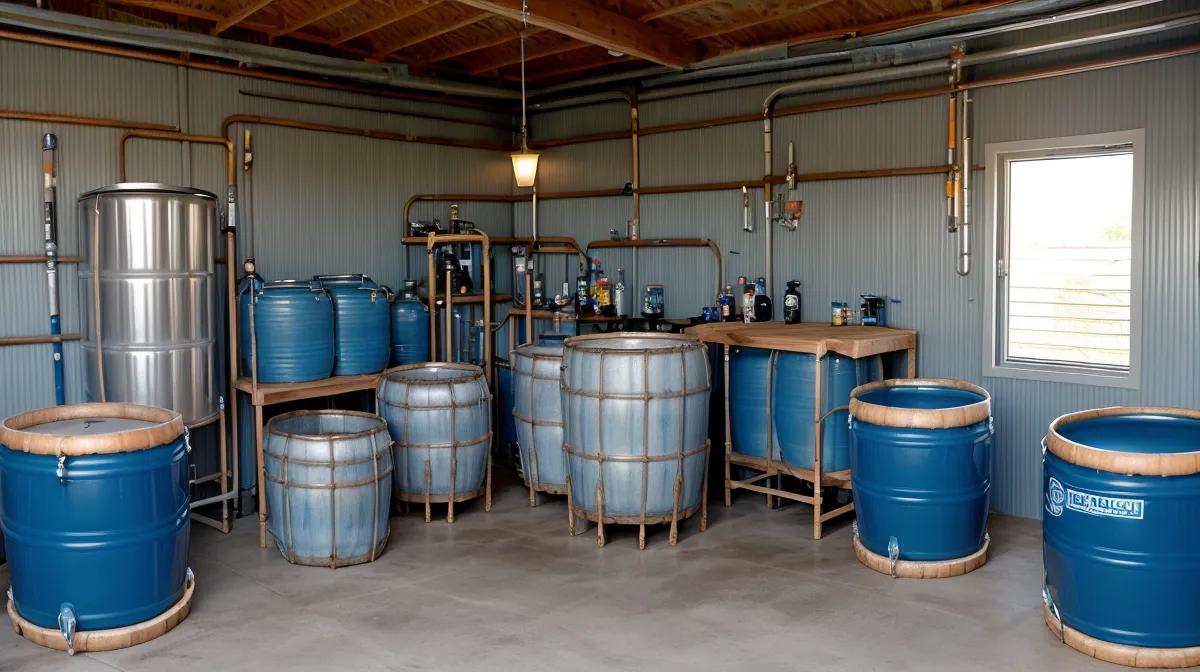
A filled 55-gallon drum weighs roughly as much as a parked motorcycle. A case of bottled water weighs about as much as a bag of mulch. That weight gap is the whole reason my emergency water storage setup ended up taking over half my suburban garage instead of living quietly on a closet shelf, and it's the gap most people never do the math on before their tap actually runs dry. I work in IT support, so my instinct when something fails is to ask what the backup plan actually is, not whether one exists on paper. After Hurricane Beryl cut water to my house for four days back in 2024, the backup plan I'd assumed I had turned out to be two cases of bottled water and a vague faith that the city would sort it out. Everything below is what I've worked out since then about bulk storage, garage organization, and keeping a water-rotation habit going without losing a parking spot in the process — plus the questions neighbors keep asking once they find out I'm the unofficial water guy on the street.
Will My Garage Floor Actually Hold That Much Water?
Two full drums sitting against one wall is the first thing most people worry about, and it worried me too the first time I lined mine up back there (right around the same moment I noticed the lawnmower now needed a three-point turn to get past them). A standard garage slab is built to support a parked car rolling in on four small tire contact patches, which concentrates more pressure per square inch than a wide, flat-bottomed drum spreading the same weight across a much bigger footprint. That doesn't mean a dozen drums stacked in one corner is automatically fine, as clustering that much weight in a single spot is a different problem than parking a sedan, but for a couple of drums spread along a wall, the math worked out better than my nervous brain expected. Mel, my neighbor who fixes HVAC systems for a living, walked through it with me one afternoon and pointed out I was thinking about it backward: the slab wasn't the weak point, the slightly uneven spots where the concrete had settled over the years were. He thinks about water pressure and flow the same way I think about router throughput, so when he tells me a system is balanced, I tend to believe him.
How Much Water Does a Family Actually Need to Store?
Everyone wants a single number, and FEMA and the CDC both point to roughly one gallon per person per day as the standard guidance, which is a reasonable floor, though it doesn't account for much beyond drinking and basic hygiene. My neighbor Sandra reached out after seeing some notes I'd posted on our neighborhood app, wanting to copy whatever spreadsheet I was using, and we ended up spending an afternoon in her garage planning a setup for her family of four. She kept padding the number upward as we talked — doubling it for cooking, then again for "just in case" — until the running total would have needed more drums than her garage could physically fit. I get the instinct, but a storage plan only works if the number you're solving for is realistic rather than the scariest version of the number. We settled on something closer to the baseline plus a reasonable hygiene buffer, and she walked away with a setup that actually fit against one wall instead of spilling into her driveway. The harder question underneath all of this isn't really the daily gallon count anyway — it's redundancy. A pile of bottled cases runs out in days. Systems that can also make use of less-ideal sources, including water that would otherwise just go down the drain as greywater, buy you a lot more runway than another case of bottles ever will.
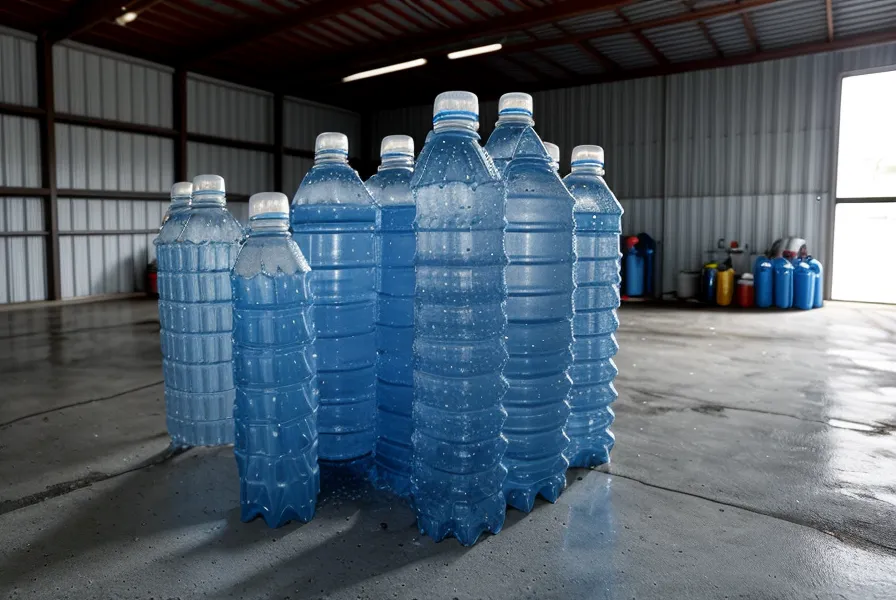
Bottled Water Alone Didn't Survive Hurricane Beryl at My House
My first attempt at emergency water, if I'm honest, wasn't a system at all. I'd stacked five cases of bottled water from Costco in a kitchen corner before Beryl hit, assuming that would carry us through whatever came next. It didn't — we were borrowing water from a neighbor by the second day, and I remember standing in front of an empty corner where five cases used to be, doing mental math on how badly I'd misjudged the whole thing. Cases of bottled water are fine for a short outage or a car kit, but they're not a plan for anything that stretches past a couple of days, and that gap is exactly what pushed me toward drums in the first place. It's a little humbling to admit that the "prepared" guy on the street started out just as unprepared as everyone else, but that's the honest version of how this began.
Garage Organization: Containers, Rotation, and the HDPE Question
Once the drums replace the bottled cases, the challenge shifts from "buy more water" to "manage what you already have," which is a far more manageable problem. Container material matters here: look for food-grade plastic, usually High-density polyethylene (HDPE), rather than a barrel that just happens to look clean, since the wrong plastic can affect how the water tastes over time. Mine sit along the left wall on a row of labeled containers, the tallest stack reaching about shoulder height, oldest fill date closest to the door so I grab it first without thinking twice. Everything else lives within arm's reach on a pegboard nearby — hose fittings, the hand pump, a couple of spare filter cartridges — with a cold-water tap at a small sink I set up specifically for rinsing gear between tests. I've gone into the actual mechanics of this in more detail in what I learned rotating my first 55-gallon water barrel, and it really is its own small skill — starting a siphon, keeping the hose angle right, not letting gravity win before you're ready for it.
Rotation is also where chemical treatment comes in, though I'll keep this part short, because the exact method deserves a full explanation rather than a rushed paragraph here. Plain, unscented bleach — the active ingredient being sodium hypochlorite — is the standard backup disinfectant if you're treating water that's been sitting a while or came from a source you're not fully sure about, but getting the ratio wrong is worse than skipping treatment altogether, so I'd rather point you toward a proper breakdown than guess at numbers from memory in passing.

What Texas Heat Does to Plastic Drums
Houston-area heat is its own variable, and a garage that isn't climate controlled can swing into triple digits for weeks at a stretch during summer. Plastic drums respond to that in ways that aren't dangerous so much as they're worth watching — slight bowing along the sides, a seal that needs a periodic check, that sort of thing. Mine sit raised slightly off the bare concrete on simple risers, partly for airflow and partly because it makes starting a siphon easier when the receiving bucket sits lower than the drum. I went deep on the heat-and-plastic side of this in my year testing suburban water storage systems, so I won't repeat the whole thing here — the short version is that nothing stays truly "set and forget" once Texas heat gets involved.
Do I Still Need a Filter If I Already Have Drums?
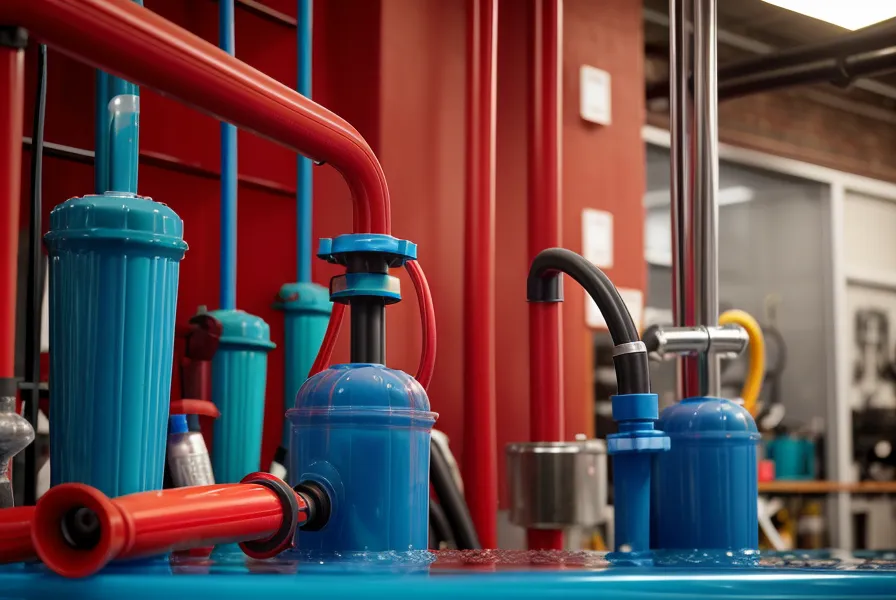
Short answer: yes, and the two solve different problems. Bulk drums are about volume — having enough water sitting around that you're not rationing on day one. A filter is about flexibility — turning questionable water into something drinkable when your stored supply runs low, or when you need something portable that doesn't involve rolling a drum anywhere. I tested a gravity filter early on mostly out of curiosity, half expecting it to be theater, and ended up holding a glass of the output up to the garage light just to look — I could see my hand clearly through it, not a hint of cloudiness, which did more to convince me than any spec sheet could have. That said, a filter isn't a substitute for stored volume any more than stored volume is a substitute for a filter; purification and filtration solve overlapping but genuinely different problems, and treating them as interchangeable is how people end up under-prepared in one direction or the other.
The Actual Lesson After a Year of This
Taking stock of the whole setup now — the drums, the labels, the rotation habit, the bleach bottle taped where I can find it in the dark — the gear only ever solves half the problem. The other half is the routine around it, and that's the part people skip because it's boring. I track all of it through an inventory habit adapted from server-monitoring logic at work, which I wrote up as my IT-style inventory system for emergency water storage — it keeps my spouse from feeling like the garage is slowly being annexed by blue plastic. Preparedness, at least the suburban version of it, isn't a finish line you cross once. It's closer to patching a server — something you keep doing quietly so the next outage reads as an inconvenience instead of a crisis. If you're starting from zero, don't buy a dozen drums at once: get one, learn how heavy it actually is, build the rotation habit, and let the rest scale from there. Your back — and your garage floor — will thank you.