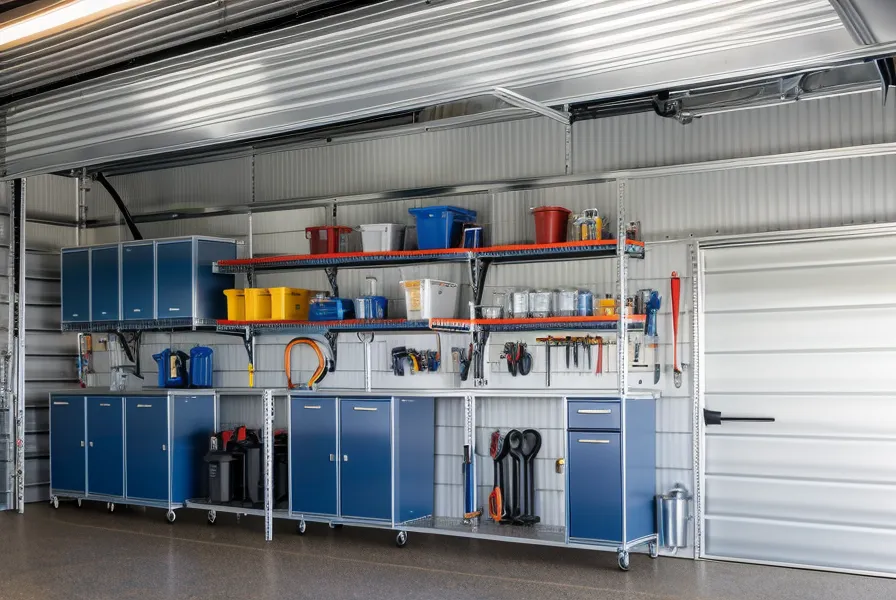
Deciding how much garage floor space to give up for three days of water, when it means hauling forty extra pounds every time you need to move it, is the trade-off at the center of stackable water storage systems. That's the question I keep coming back to every time I test another piece of emergency preparedness gear for the site.
Update (September 2026): Aqua Tower is no longer available for purchase; this article is kept for reference. Our current alternative pick in this category is Water Freedom System.
The short answer, after running the Aqua Tower stacking system in my own garage for a full year: if floor space is your bottleneck, it earns its spot. If you need to grab water and move fast, that answer changes. Since we're already here, quick disclosure: a few links in this piece are affiliate links, and buying through one costs you nothing extra while sending a small commission my way. I've put filters like David's Shield through the same kind of testing, and the Aqua Tower is the stacking system I keep coming back to whenever floor space, not weight, is the actual constraint.
When You Need Vertical Water Storage
Floor space in a suburban garage behaves like free ports on an old network switch. There's less of it than you think once real gear starts filling in around it. Each Aqua Tower unit holds 5 gallons, and the whole design exists to turn a row of separate containers into one vertical column instead of a sprawl across the concrete. FEMA's baseline is 1 gallon per person per day for at least three days, and I won't re-run the full gallon-per-person math here since that deserves its own breakdown. For a household of four, it still lands at 12 gallons just to clear the minimum.
How the Weight and Capacity Numbers Add Up
Water is heavy in a way that surprises people who haven't lifted a full container. A gallon runs about 8.34 lbs, so one full Aqua Tower unit clears 40 pounds before you've even added the cap. Stack three or four of them and you're not arranging water anymore — you're building a 120-to-160-pound column that answers to gravity and to whatever your garage floor happens to be doing underneath it. That number is the real reason the Aqua Tower earns its space: hitting 12 gallons for a family of four takes three stacked units, not three separate footprints scattered across the floor.
Where Stackable Containers Fail in Texas Heat
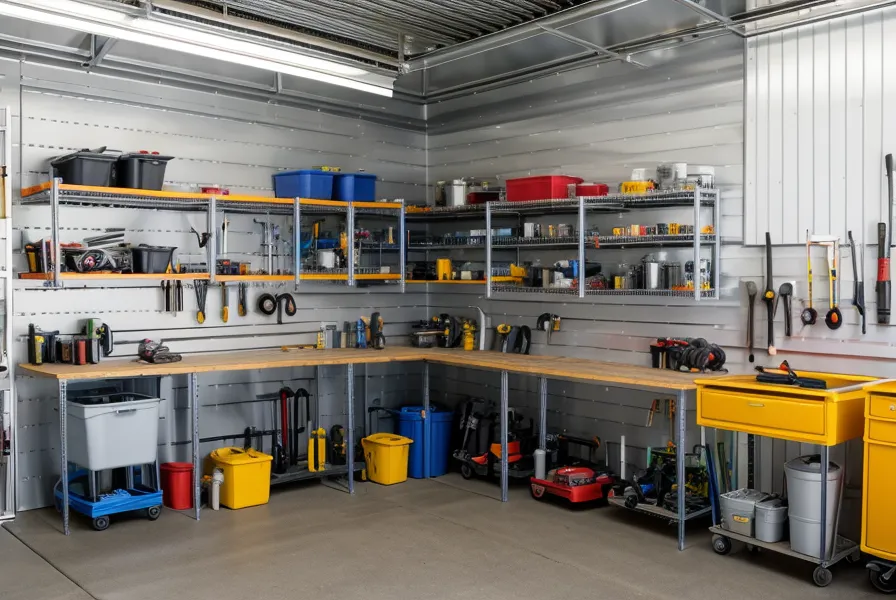
Before the Aqua Tower, my water lived in a cheaper stackable jug system, and one Texas summer in the garage was all it took for the seams to split open. The heat just worked at the plastic until it gave out. That failure is what got me paying attention to how a stacking system handles alignment and load, not just how many gallons it claims to hold. I was mid-way through setting up a better garage water rotation system when I put the Aqua Tower units through the same test, and the locking lugs need to seat precisely or the whole column leans. I caught a stack starting to tip toward my workbench once, on a garage floor tile that wasn't quite level, and my back reminded me for a week that shifting water doesn't care about your plans.
The system rewards patience it doesn't announce it needs: check that your floor is actually flat before you stack past two units, and don't assume the lugs are seated just because the column looks stacked. I came back from a week away in July and went straight to check the containers before I'd even brought in the mail. Every seam on that stack was still tight, no cracking, no crust line where the last system had failed me. Heat stress on plastic containers is its own deep subject and I won't pretend to cover all of it here, but it's the reason I stopped trusting bargain-bin jugs in a Houston garage. If portability matters more to you than density, that trade-off shows up clearly next to something like the SmartWaterBox vs Dark Reset comparison.
HDPE Plastic and Sanitizing Between Fills
HDPE 2 plastic is the food-grade standard the Aqua Tower is built from, and it skips the flat, plasticky smell that shows up on cheaper containers like the Dark Reset after a summer in the heat. That material choice matters more than people expect, but it's not a substitute for cleaning the footer-a116d1 before the first fill. I go through how to clean plastic water storage containers properly every single time, no exceptions.
None of this replaces actually treating your water or knowing the difference between filtering it and purifying it. Those solve two different problems, and mixing them up is where people get into trouble. Whether a given filter is even built to strip out what you're worried about is its own contaminant-removal question, separate from whether your storage footer-a116d1 is clean to begin with. Chemical treatment drops also lose potency sitting on a shelf, which is worth checking before you trust a bottle that's been in the garage for a few years. If a storm just rolled through and you're second-guessing your tap water before it even gets near a container, testing it is a separate checklist from anything covered here. I'm not a medical professional and I'm not going to pretend otherwise. If you have real concerns about long-term potable water safety in Houston heat, that's a conversation for a doctor or your local health department, not a gear review. What I can tell you is that footer-a116d1 quality is the one place in this whole setup where cutting corners shows up fastest, especially once you're moving past the bottle toward a high-capacity system.
Aqua Tower or SmartWaterBox: Which Actually Fits Your Plan?
A colleague of mine, Tiffany Bui, asked me about exactly this trade-off a while back and showed up to the conversation with an actual spreadsheet comparing footprint against how fast she could load water into a car. Everyone else in the room was just talking it through, and she'd already built a chart. That's really the whole decision: the Aqua Tower wins on storage-capacity planning, since fifteen gallons fit into the footprint one five-gallon bucket would otherwise eat up. The SmartWaterBox gives up some of that density in exchange for being something you can actually grab and move without a hand truck, which matters if your plan leans toward a portable supply rather than bulk water that's meant to sit still.
Gravity filters are a different category entirely, and how fast one processes a gallon isn't something I'm getting into here. That flow-rate question deserves its own comparison, not a paragraph tacked onto a storage review.
The Verdict on the Aqua Tower
Darnell Fontenot, a reader who's emailed me more questions than anyone else on this site, tends to run every product I write about against what actually held up during the storms he's lived through. His read on the Aqua Tower matched mine: it's built for a house that loses water access often, not for a family that might need to evacuate with everything they own in twenty minutes.
So here's the actual rule, not just an opinion: if your garage floor is flat and storage space is your real constraint, stack the Aqua Tower up to three or four units and don't think twice about it. If your plan involves grabbing water and leaving fast, keep your stack lower than you think you need to, or lean toward something built for transport instead. Mine has stayed stacked since I set it up, and the only real feedback I get on it these days is my spouse handing me a cold bottle from the fridge without saying much else. That's about as close to approval as gear testing in my garage ever gets. In a town where the power and water like to take unscheduled vacations, being the guy with a working system on the block isn't a bad reputation to have.
Aqua Tower
Pros
- ✔ Incredible space-saving vertical footprint
- ✔ High-quality HDPE 2 food-grade plastic
- ✔ Modular design allows for custom capacity
- ✔ Easy-to-use dispensing tap
Cons
- ○ Can become unstable if stacked too high on uneven floors
- ○ Very heavy and difficult to move once full
- ○ Requires precise alignment of locking lugs