A stainless benchtop gravity filter and a compact, pressure-driven unit like David's Shield get lumped into the same "emergency water filtration" category constantly, and that mix-up causes most of the bad buying decisions I see suburban families make. One is a countertop appliance built to make already-treated city water taste better. The other exists to turn ugly, untreated water into something safe to drink. Treating the two as interchangeable — which is exactly what happens in most benchtop-filter roundups — is the myth this piece is here to correct.
Quick disclosure before anything else: I earn a commission if you buy gear through the links on this page, at no extra cost to you. Nothing below came off a spec sheet — it's gear I've personally run water through in my own kitchen or garage. Full transparency policy lives elsewhere on the site if you want the fine print.
A reader named Darnell Fontenot sent the question that prompted this whole comparison. He's a third-generation Louisiana native who ended up in the Katy area after flooding pushed his family out of their old home, and he wanted to know why anyone would pick a pressure-driven filter over the "proven" gravity system his relatives back home swore by. Fair question from someone who's seen real storm damage — but it's backwards for most suburban households doing short-outage water prep rather than rebuilding after a flood. David's Shield and a benchtop canister solve different problems, not competing versions of the same one.
Why Do We Keep Comparing Benchtop Filters to Portable Water Filtration?
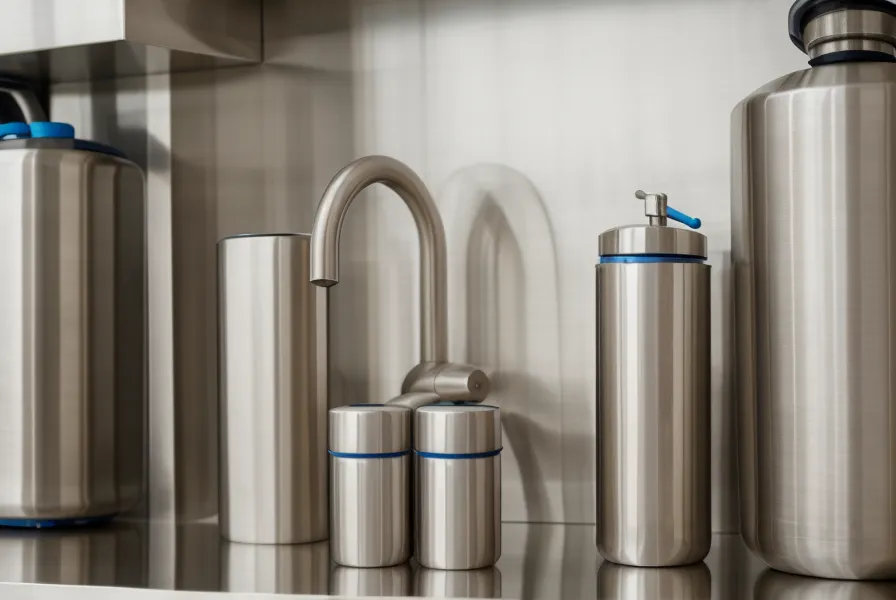
Picture the classic setup: two brushed-steel chambers stacked on top of each other, a spigot at the bottom, parked on the counter like a scaled-down water heater. The reservoir on most mid-size units holds around 2.25 gallons, stands close to two feet tall, and claims counter space you don't get back until you physically move it. That's the whole appeal for daily use — it just sits there, looking capable, turning tap water into something that doesn't taste like a pool.
Flow rate is where the comparison starts falling apart. Gravity units run fast when the top chamber is full and crawl to a near-stop once it's half empty — the kind of thing you only notice when you need three thermoses filled before a school-morning rush, not during a calm Saturday test pour. It's a lot like a home network that looks fine until everyone's trying to stream something at once; the weak point only shows up under load.
Setting Up David's Shield Without Giving Up Counter Space
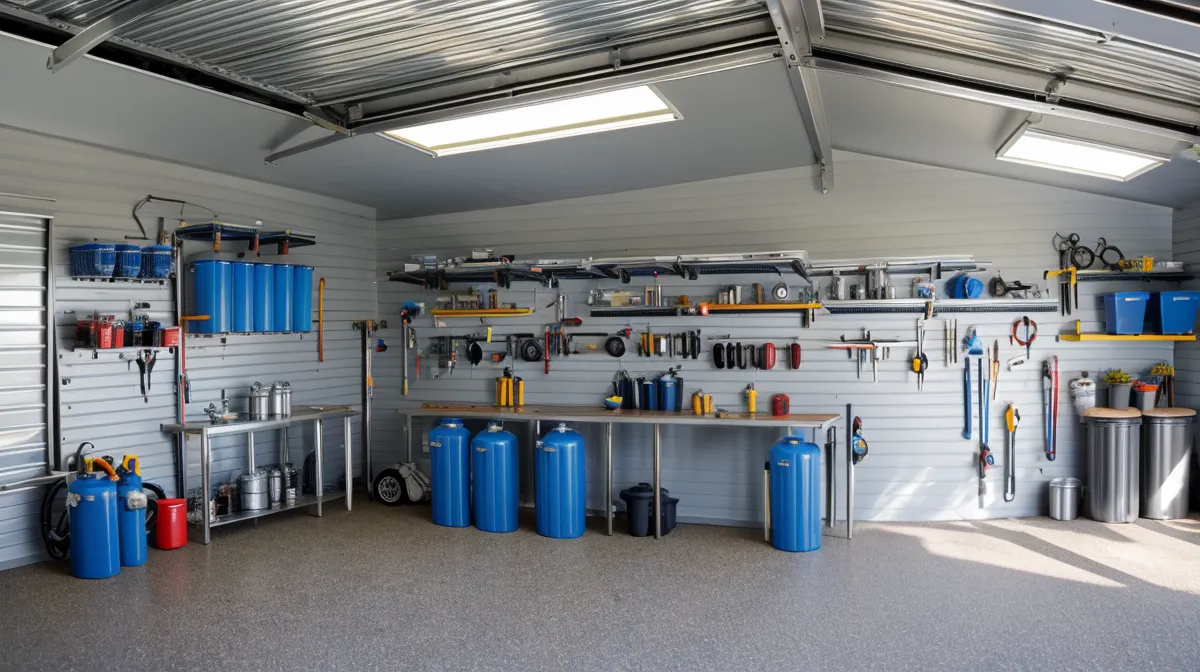
Benchtop units earn their keep on daily counter duty, which is also exactly why they're a poor fit for a go-bag or a pantry shelf. David's Shield takes the opposite approach: a compact, high-efficiency mechanical setup that stores flat in a cabinet or garage tote and only comes out when you actually need it, the same logic as keeping a spare travel router in a laptop bag instead of leaving a full network rack plugged in by the front door. I cross-referenced the setup against notes from my own garage storage testing — details are in my piece on managing bulk water storage in a suburban garage — and the workflow difference showed up immediately: no waiting on gravity, just direct flow on demand.
That difference sounds minor on a calm afternoon. It stops sounding minor once the power's out, the house is pushing ninety degrees inside, and a kid is standing at the counter asking why the water takes so long.
What Changes When the Water Isn't Clean to Start With
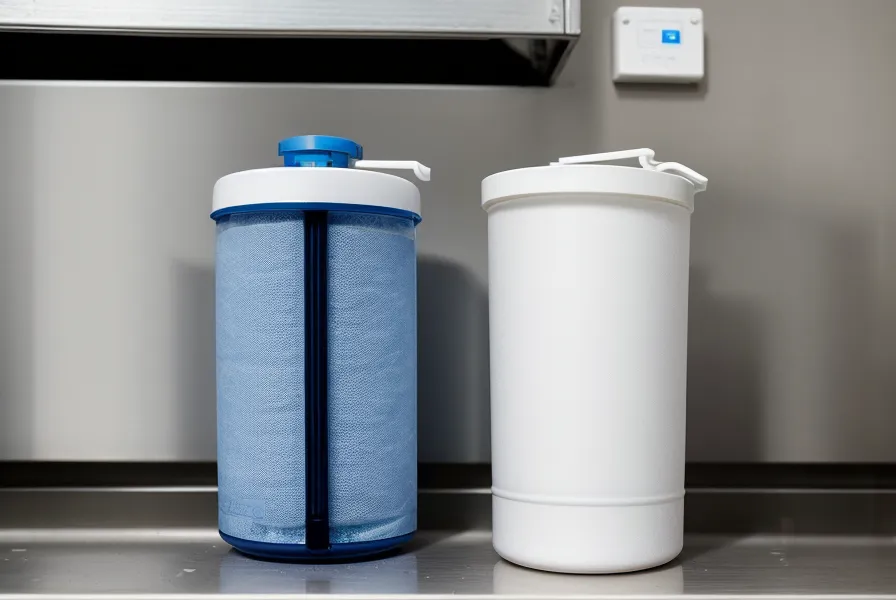
Here's the real dividing line, once you strip away the marketing: benchtop ceramic cores are built to catch ordinary sediment in water that's already been treated and settled by a utility. Flood runoff, murky rain-barrel overflow, or anything pulled out of a ditch after a storm is a different animal entirely — fine silt coats the outer layer fast, and a slow filter turns into a stopped one. I confirmed that the unpleasant way during a boil-water notice, when I grabbed the basic Brita-style pitcher filter off our fridge door and tried to push an afternoon's worth of jugs through it. That thing was never built for sustained volume, let alone water that sketchy — it wasn't rated for the job, and it showed within the first liter.
That same week, the H-E-B on Mason Road here in Katy had already sold out of bottled water by the time I got there after work, which tends to be how you find out a boil notice is serious before the city website even catches up. Running actual storm runoff through my benchtop unit afterward confirmed the lesson: it stalled before processing two full gallons, and I spent a wet, frustrating hour disassembling the housing and scrubbing the cores just to get it moving again. David's Shield, built around a staged filtration path meant for hostile, particulate-heavy sources, didn't share that problem — which is the entire point of owning one instead of a second benchtop unit.
How Much Water Are You Actually Planning to Process?
FEMA's rough benchmark lands around a gallon per person per day, and a four-person household blows through a 2.25-gallon benchtop reservoir before lunch, let alone across a multi-day outage. Pairing a faster filter with bulk containment — stackable containers, a staging drum, whatever you've already got — matters more than the filter brand itself once you're thinking in those volumes. Comparing setups like SmartWaterBox against build-it-yourself guides like the Water Freedom System is worth doing for exactly that reason; I wrote up the installation side separately in my Water Freedom System suburban installation notes if you want the long version.
One honest caveat here, from someone who troubleshoots networks for a living and not water chemistry: boiling kills biological threats like giardia or coliform just fine, but it concentrates heavy metals and chemical runoff instead of removing them. Check with your local water authority or an environmental health professional about your specific watershed before assuming any one method covers every risk.
Where Each Option Actually Belongs
None of these tools cover every scenario, so matching gear to your actual space and water source matters more than picking a single "winner." SmartWaterBox works best as a centralized storage and staging hub for households with dedicated garage or utility space, rather than a standalone filter. For the DIYer willing to source and assemble parts themselves, the Water Freedom System offers a detailed build backed by a money-back guarantee if it doesn't pan out. Dark Reset sits at the budget end of the lineup — I weighed that tradeoff at length in my Dark Reset vs David's Shield comparison — and it earned its spot on my shelf the day I filled our dog's water bowl straight from it and drank out of the bowl myself before she got near it, no sniff test, no hesitation, which is a strange way to build trust in a budget purifier but it worked.
Pricing on all of these shifts with manufacturing batches and component availability, so check each vendor's page directly for current figures rather than trusting anything printed here as gospel.
Pick Based on the Water, Not the Marketing
Boxing up two of our three benchtop units once the humidity broke felt less like giving up on preparedness and more like finally running the right tool for the job — my wife got her counter back, and nobody lost any actual water security in the trade.
Here's the usable version of all of this: if your water utility is intact and your only complaint is taste, a benchtop gravity filter does its job well and deserves its spot on the counter. If you're planning for the water pressure dropping out entirely, a boil notice dragging on, or pulling from a source that was never municipal to begin with, David's Shield is built for that job and the benchtop unit isn't — no matter how good either one looks sitting next to the toaster.