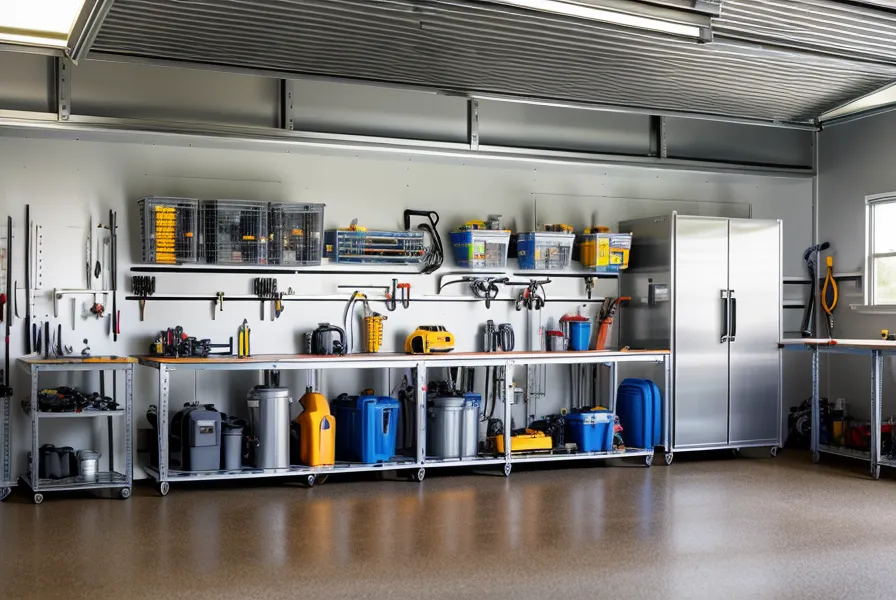
I've got my hand inside a five-gallon jug, running a finger along the inside seam, feeling for the gritty film that means it's time to dump this batch and start fresh. That's what water storage looks like at my house these days — not a pile of jugs shoved in a corner and forgotten, but something I actually check. Quick disclosure before we go further: some of the links below are affiliate links, and if you buy through one I get a small cut at no extra cost to you — it doesn't change your price, and I only point people at gear that's actually earned a spot in a hurricane-ready garage.
Update (September 2026): Aqua Tower is no longer available for purchase; this article is kept for reference. Our current alternative pick in this category is Water Freedom System.
Beryl knocked out our water for four days in 2024, and driving through Friendswood a few days into the outage — every gas station line wrapped around the block, every shelf at every store picked clean — is what convinced me that most people had maybe a case of water and a plan that stopped right there. That's the whole reason this garage looks the way it does now.
The Real Math Behind Water Storage, Not the FEMA Minimum
The FEMA guideline is one gallon per person, per day, which sounds simple until you're the one doing the multiplication for four people over a week. That number is a floor, not a finished plan — it doesn't budget for dishes, pets, or the fact that Houston humidity makes everyone drink more than they think they do. I already walked through the full math, buffer included, in my piece on How to Calculate Water Storage Needs for Your Suburban Household, so I won't redo that spreadsheet here.
Seven years of testing prep gear has taught me the formula matters less than the follow-through. It's the same lesson from my day job: a runbook is only as good as whether anyone actually opens it during the outage. Most families calculate a number once, buy the jugs, and never touch them again — that's the part I actually fixed.
Not Every Plastic Container Is Built for the Job
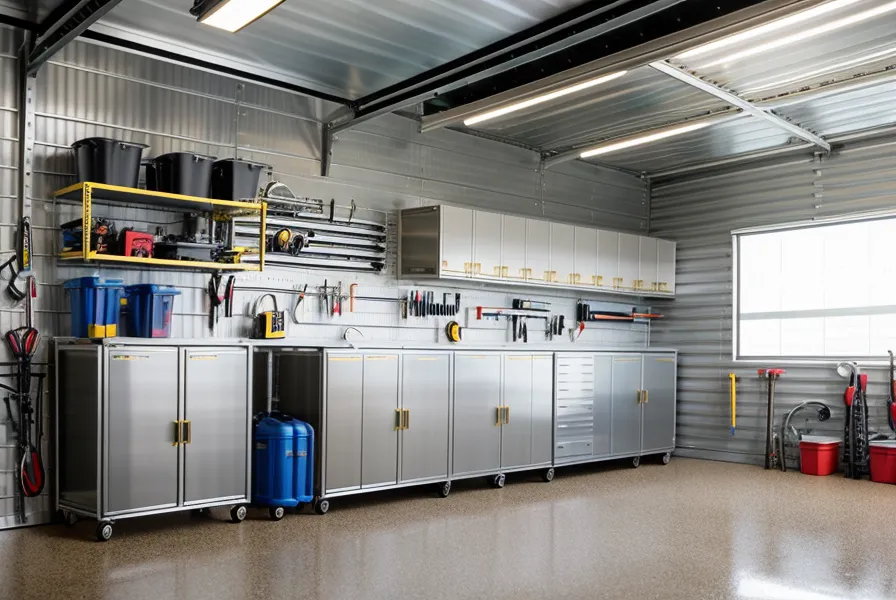
Cheap jugs were my first mistake. The translucent ones I grabbed off a big-box shelf let enough light through that algae got a head start, and a Houston garage floor that hits triple digits by early afternoon doesn't help matters — heat pushes chemicals out of thin plastic faster than most people want to think about.
Switching to something opaque and rated for long-term storage solved the light problem completely. I've been running the SmartWaterBox and the Aqua Tower side by side for a while now, and neither one has developed the faint plastic taste that ruined my first batch — that alone made the switch worth it.
The guy two doors down turned half his garage into a furniture workshop on weekends — a different project than mine, but the same instinct, using a space for something specific instead of letting it fill up with general clutter. He asked me once why I bothered with dedicated containers instead of just reusing the jugs I already had, and the honest answer is that food-grade, UV-blocking plastic isn't the same product as what juice ships in, even if the two look identical on a shelf.
Can an Apartment Really Store Enough Water?
Not everyone has a two-car garage to work with, and a coworker who lives in a high-rise downtown pointed out a real gap in most prep advice: you can't just roll a fifty-five gallon barrel into a tenth-floor apartment and call it solved. Weight limits and floor joists start to matter once you're stacking that much water above ground level, and for apartment dwellers, vertical, stackable containers are really the only footprint that works in a smaller unit.
There's also a difference between the bulk water sitting in a closet and the portable stuff you'd actually grab on the way out the door. A duffel of bottles does a different job than a wall of containers, and mixing up the two is how people end up under-covered on both fronts. I put a couple of the compact options side by side in my SmartWaterBox vs Dark Reset comparison, if square footage is your actual constraint. I'm not a structural engineer, so check your building's load specs before you turn a closet into a reservoir.
Keeping Stored Water Safe Without Turning It Into a Chore
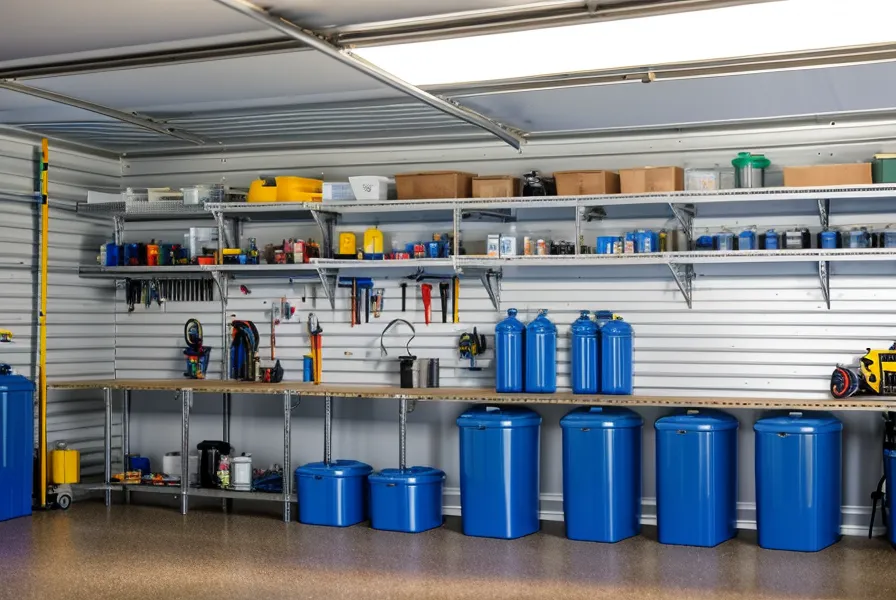
Filtration and purification aren't the same move, even though people use the words interchangeably — one strains particles out, the other deals with what a filter can't catch, and knowing which problem you're actually solving matters more than owning every gadget on the shelf. I learned that the hard way when I ran a batch of stored water through a gravity filter that took a full forty-five minutes per gallon — fine for a slow Sunday, useless the moment you actually need water fast.
Chemical treatments have their own shelf life too, which is easy to forget until you grab a bottle of purification drops that expired two hurricane seasons ago (I keep a phone reminder now instead of trusting memory). Sanitizing the containers themselves before you fill them is its own small routine, not just a rinse under the tap, though I'll leave the full walkthrough for the guide where I actually cover it step by step.
Rotation matters just as much as treatment — water doesn't really expire, but plastic does, and the schedule I actually stick to is the one I laid out in Managing a Garage Water Reserve Without Losing Your Mind. A filter's contaminant range is worth checking before you trust it completely, too — some handle sediment and bacteria fine and stop well short of chemical contamination, and assuming otherwise is a bad way to find out the hard way.
The Texas Heat Doesn't Wait for Hurricane Season
Heat is harder on stored water than most people plan for, and thin-walled containers hold up worse than the thicker, purpose-built ones once a garage starts baking through a Houston summer afternoon. I won't get into the exact mechanics of why — that's a deeper topic than one section can cover fairly — but the practical result is containers that warp, discolor, or develop a crusty film along the seams faster than you'd expect.
The stress test that actually convinced me was running the SmartWaterBox next to my old thin-walled jugs through a stretch of July heat. The temperature swing was noticeably smaller inside the heavier container, which lines up with why wall thickness matters once summer really sets in.
By around week six of actually paying attention instead of just storing and hoping, I had a decent read on which containers were holding up. I left for a week in July and came back braced for the worst — instead, every footer-a116d1 was still sealed tight, no crust building along the seams, nothing off about how any of it looked sitting in that heat. That was the first stretch where the whole setup felt tested instead of just assumed.
The concrete under my bare feet is still cool most mornings before seven, before the day turns the garage into something closer to a kiln — that's usually when I do my actual checks, before the heat makes touching anything unpleasant.
What I'd Tell a Neighbor Starting From Zero
If a neighbor asked me where to start today, I'd skip the brand debate and tell them to plan the footprint first — how much floor or shelf space you're actually willing to give up decides more about your setup than any single container's specs. It's the packing-the-car-before-a-road-trip problem: figure out what actually fits before you're standing in the driveway making decisions under pressure. That's capacity planning, and it's worth doing on paper before you buy anything.
Storage isn't the only piece, either. Tap water coming back on after a storm isn't automatically safe to trust again, and checking it before you go back to drinking straight from the faucet is a separate habit from anything covered here — treat the tap as guilty until proven innocent for the first day or two after service returns.
If there's one thing seven years of this has actually taught me, it's that the footer-a116d1 matters less than whether you ever open it before the emergency does. A tested system beats an expensive one every time — check your containers now, before the emergency, not during it. My spouse still thinks the garage looks like a warehouse (I prefer "organized"), but nobody's rolling their eyes about it anymore. If you want a solid footer-a116d1 to start that habit with, the SmartWaterBox is the one I'd point a neighbor toward first. I'm not a doctor or a water-safety expert, so run your specific setup by your local health department or a licensed professional if anything here doesn't quite match your situation.